

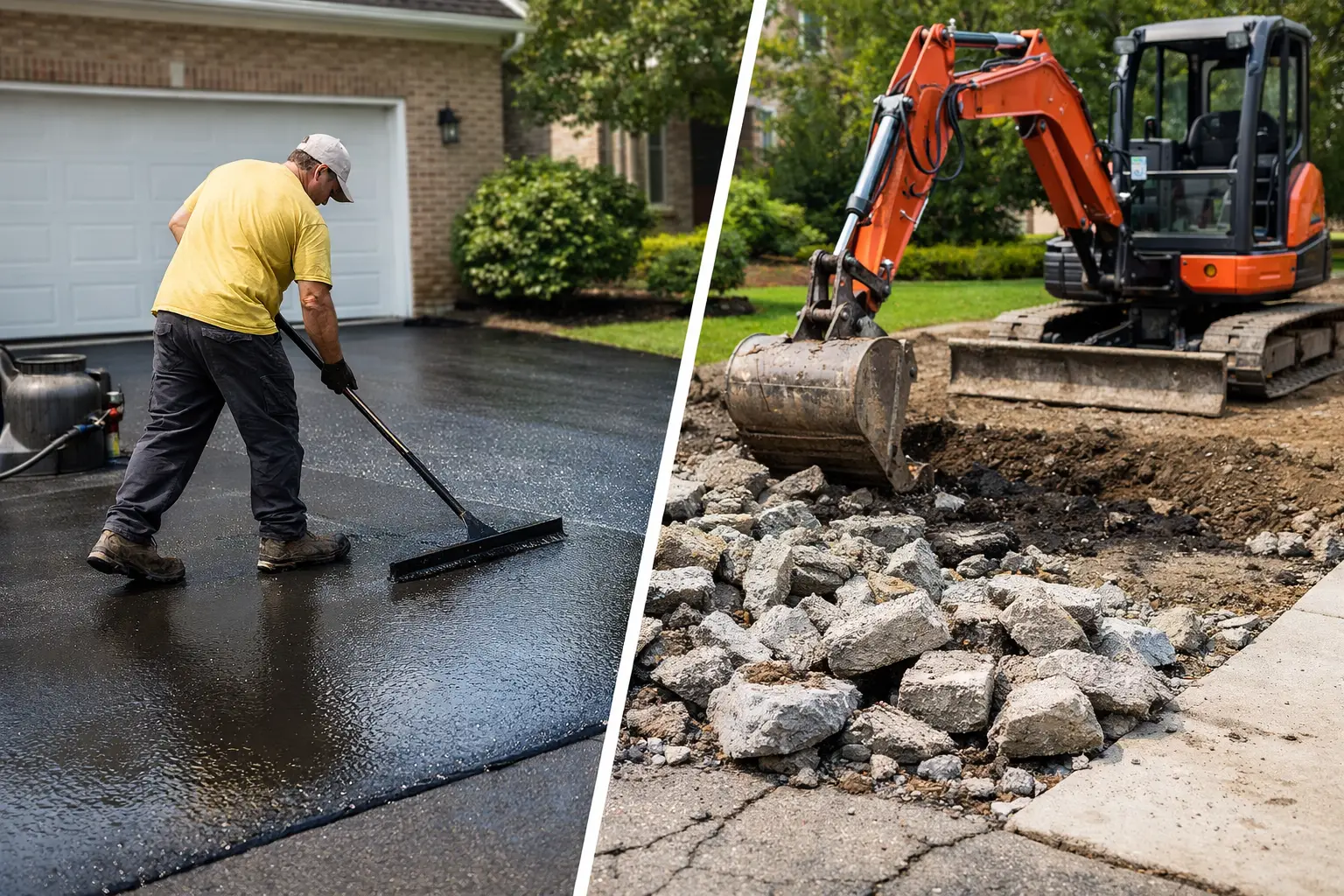
A driveway usually gives you fair warning before it fails completely. The colour fades, oil stains settle in, hairline cracks spread, and water starts sitting where it used to run off. That is where driveway sealing vs replacement costs becomes a real decision, not just a maintenance question. For many property owners, sealing is the smarter spend – but only when the surface is still structurally sound.
If you leave that decision too late, the numbers change quickly. A surface that could have been cleaned, repaired and sealed for a manageable cost can turn into a full removal and replacement job with much higher labour, material and downtime costs. The trick is knowing what you are actually paying for, and what result each option can realistically deliver.
What you are really comparing
Sealing and replacement do two very different jobs. Sealing is a protective maintenance service. It helps reduce water penetration, slows wear, improves presentation and can extend the life of concrete, exposed aggregate, pavers and some other exterior hard surfaces. Replacement is a construction job. It deals with failed structure, major cracking, base movement, severe spalling or drainage issues that maintenance alone will not fix.
That matters because the cheapest quote is not always the cheapest outcome. If your driveway is sound and only looking tired, replacing it is usually overspending. If the slab is moving, sinking or breaking apart, sealing it may only delay an unavoidable rebuild.
Driveway sealing vs replacement costs in Australia
Costs vary by surface type, access, condition and size, but the difference in spend is usually significant.
For driveway sealing, many Australian property owners will pay somewhere from a few hundred dollars for smaller areas to a few thousand for larger driveways or surfaces needing cleaning, stain treatment and crack preparation before sealer is applied. Exposed aggregate, decorative concrete and pavers can sit at the higher end because they often need more prep and the right sealer system for the finish.
Replacement is a different category altogether. Once demolition, disposal, base preparation, materials, formwork and labour are involved, costs can jump into the many thousands very quickly. A standard suburban driveway replacement can easily cost several times more than a professional clean and seal, especially if access is tight or the old surface is badly deteriorated.
That does not mean sealing is always the better value. It means sealing offers better value when the existing driveway still has enough life left in it to justify protection.
Why the gap is so large
With sealing, you are paying for preparation and protection. With replacement, you are paying for removal, waste handling, material supply, construction labour, curing time and often disruption to vehicle access. Even before decorative finishes are added, replacement carries a much higher baseline cost.
There is also a timing cost. A sealed driveway may be ready for light use relatively quickly depending on the product and weather conditions. A new driveway can involve a longer period before full use, which matters for homes, unit complexes, schools and commercial sites that rely on regular vehicle movement.
When sealing is the smart financial move
Sealing makes sense when the surface is weathered but still serviceable. Typical signs include faded appearance, minor surface porosity, light staining, small non-structural cracks and gradual loss of that clean, finished look.
In these cases, professional cleaning followed by the right sealer can do three useful things at once. It lifts presentation, slows further deterioration and makes future maintenance easier. For homeowners preparing to sell or improve street appeal, that can be a practical upgrade without the budget hit of replacement. For property managers and commercial operators, it can also help extend the maintenance cycle and keep surfaces looking cared for.
This is especially true in Southeast Queensland conditions, where moisture, UV exposure, mould and algae all work against exterior surfaces. A driveway left unprotected can absorb more water, hold more grime and become harder to restore over time.
Surfaces that often respond well to sealing
Concrete in generally good condition is a common candidate. Exposed aggregate also benefits when the stones are intact and the surface has not started breaking down. Pavers may be worth sealing once they are properly cleaned and re-stabilised if needed. In each case, prep is what makes the result last. A sealer applied over embedded grime, algae or unstable areas will not perform the way it should.
When replacement is the better call
There are times when sealing is just not enough. If the driveway has widespread cracks, broken edges, deep surface scaling, lifting sections, drainage failure or obvious subsidence, replacement may be the more honest and cost-effective option.
The key question is whether the problem is cosmetic or structural. Cosmetic issues affect appearance and surface wear. Structural issues affect the driveway’s ability to carry load and stay stable. Sealer can protect a sound surface. It cannot rebuild the base underneath or stop slab movement caused by poor drainage or ground shift.
If you keep sealing a driveway that is already failing structurally, you can end up paying twice – once for short-term cosmetic improvement, then again for full replacement not long after.
The hidden costs people miss
The decision is not just about the upfront invoice. Ongoing maintenance, safety, presentation and future repairs all matter.
A neglected driveway can become more slippery as mould and algae build up. It can also create a poor first impression for visitors, tenants, customers or buyers. On commercial and institutional sites, presentation affects more than appearance. It can influence how well a property is perceived as maintained overall.
There is also the cost of delay. Small cracks let in water. Water leads to expansion, erosion and more cracking. Stains settle deeper. Cleaning becomes harder. What starts as a maintenance job can become a restoration job, then eventually a replacement job.
Sealing is not just about looks
A lot of owners see sealing as an optional finish. In practice, it is part of a surface preservation plan. Done at the right time, it can help protect against moisture ingress, reduce weathering and keep the driveway easier to clean. That makes it a practical maintenance cost, not just a cosmetic extra.
How to decide without wasting money
Start with condition, not price. If the driveway is structurally sound, ask what preparation is required and whether sealing will materially extend surface life. If the surface has active movement or major break-up, ask whether any maintenance work would simply be temporary.
A proper assessment should look at cracking, drainage, base stability, staining, surface wear and how the driveway is used. A lightly used residential driveway may tolerate minor imperfections for years. A busy shared accessway or commercial site may need a more durable solution sooner.
This is where experienced exterior surface specialists can add real value. They can often tell the difference between a surface that needs cleaning and sealing, a surface that needs repairs first, and a surface that has reached the end of its service life.
What affects sealing costs most
When people compare prices, they often focus on square metres alone. That is only part of the story. Heavy staining, mould, algae, old coating removal, crack treatment, edge work and difficult access can all increase the scope. So can the type of sealer selected.
A smaller driveway in poor condition can cost more to restore and seal than a larger one that only needs standard preparation. That is why fast quotes are useful, but good quotes should still reflect the actual surface condition.
What property owners usually regret
Most regrets happen at the extremes. One is replacing too early when the driveway could have been restored and protected for far less. The other is patching and sealing a surface that was already beyond saving.
The best results usually come from acting in the middle window – after wear becomes visible, but before structural failure takes hold. For many driveways, that means regular cleaning, timely sealing and dealing with minor issues before they spread.
If your driveway still has solid bones, sealing is often the better buy. If the foundation is gone, replacement is the safer investment. A good contractor will tell you which side of that line you are on, even if the answer is not the bigger job. That is the kind of advice that saves money long after the work is done.


