

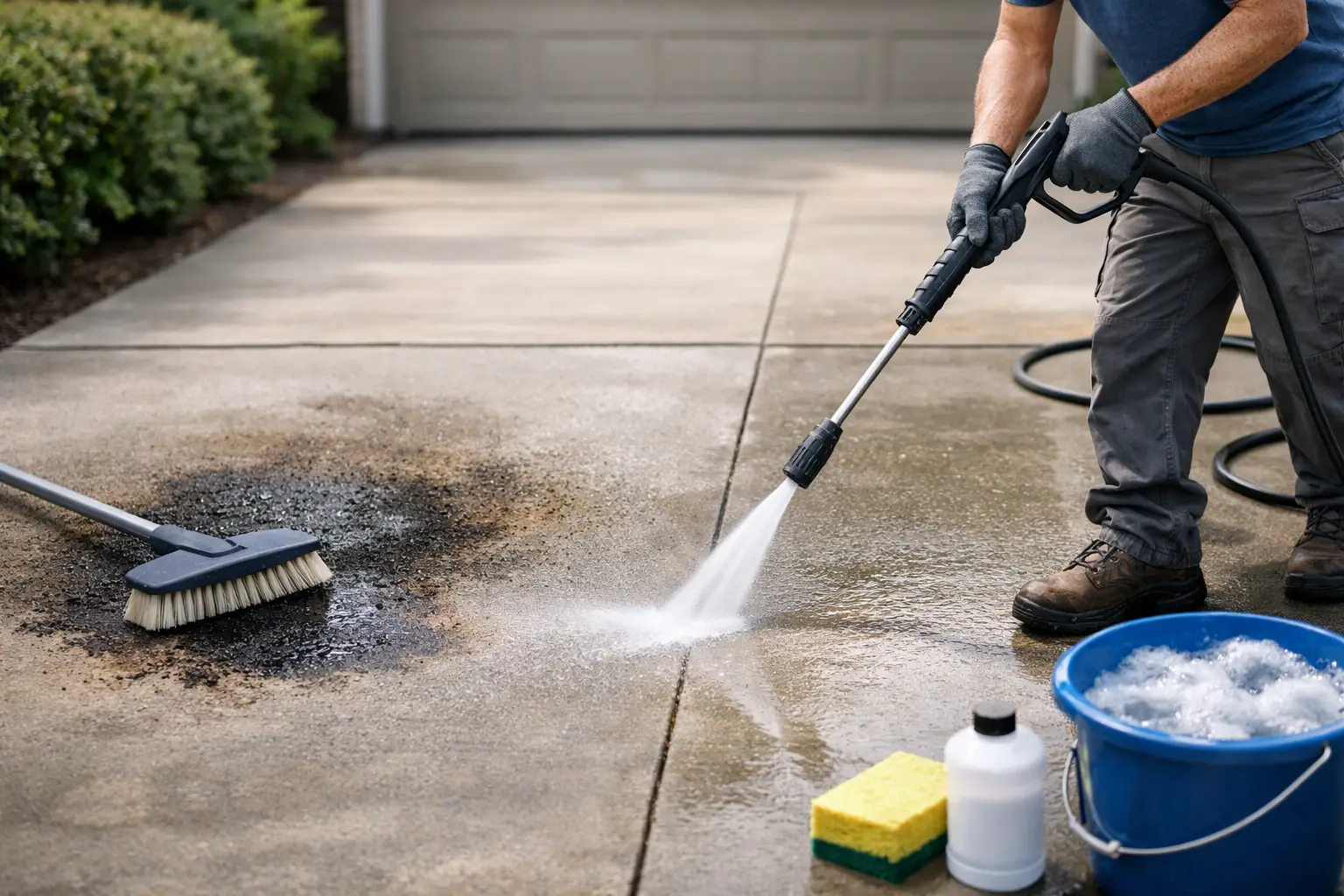
That dark patch near the garage rarely stays small for long. Oil spreads, rust sets hard, mould creeps back in damp corners, and before you know it the whole driveway looks older than it is. This driveway stain removal guide is built for property owners who want clear answers on what actually works, what can damage the surface, and when it makes more sense to bring in professional cleaning.
A clean driveway does more than lift street appeal. It helps reduce slippery growth, improves presentation for tenants, customers or buyers, and can extend the life of the surface when stains are treated properly instead of being blasted with the wrong pressure.
A driveway stain removal guide starts with the surface
Not every driveway should be cleaned the same way. Concrete, exposed aggregate, pavers and natural stone all react differently to pressure, dwell time and chemical treatment. That matters because the wrong approach can leave etching, strip jointing sand, dislodge sealer or create a bright patch that stands out more than the stain did.
Concrete is generally durable, but it is also porous. Oil, tannins and rust can soak in below the surface, which is why a quick hose-down rarely fixes the problem. Exposed aggregate needs extra care because aggressive pressure can loosen the top layer or create an uneven finish. Pavers can usually be restored well, but they often need re-sanding and sometimes resealing after a deep clean. Natural stone is the one to be most careful with, as acidic products and excess pressure can cause permanent damage.
This is where many DIY attempts go wrong. People focus on the stain and forget the material underneath.
Match the treatment to the stain
The best results come from identifying the stain first. Different marks need different chemistry, and pressure alone is rarely the full answer.
Oil and grease stains
These are the most common driveway marks, especially near garages, carports and parking bays. Fresh oil is much easier to treat than old oil that has baked into the surface. A proper degreaser can help break down the residue, but it usually needs time to work before rinsing or surface cleaning.
The trade-off is that heavy oil can leave a shadow even after treatment, particularly on older concrete. That does not always mean the cleaning failed. It may mean the contamination has penetrated deeply enough that several treatments are needed.
Rust stains
Rust often comes from fertiliser, metal furniture, parked trailers, bore water or tools left outside after rain. These stains usually need a dedicated rust treatment rather than a standard driveway cleaner.
This is one area where guesswork can backfire. Some off-the-shelf acid products can react badly with concrete or stone, leaving discolouration or surface damage. Rust can often be removed, but the product needs to suit both the stain and the substrate.
Mould, algae and black organic staining
In Southeast Queensland, shaded and damp areas are prime spots for organic growth. These stains are not just cosmetic. They can become slippery and unsafe, especially on sloped driveways and walkways.
A treatment designed to kill and lift organic growth usually gives a better, longer-lasting result than pressure washing on its own. If you only blast the visible layer off, spores can remain and regrowth can happen quickly.
Tyre marks and general traffic staining
Tyre marks, dirt build-up and general grime often respond well to professional surface cleaning. These marks are common on driveways with regular turning, braking and hot weather exposure.
They can look simple, but they are often a mix of rubber, road grime and embedded dirt. A combination of the right cleaning solution and controlled pressure is usually the most effective method.
Paint, leaf tannins and mystery stains
Paint splashes, soil marks from pot plants, leaf staining and runoff from garden beds all need a more tailored approach. Some can be lifted easily. Others leave permanent discolouration if they have been sitting for months.
If the source is unclear, test a small area first. That is always safer than treating the whole driveway with a strong product that may not be suitable.
What to do before you start cleaning
Good preparation makes a noticeable difference. Sweep away loose dirt, remove leaves and move vehicles, bins and outdoor items out of the way. If there are garden beds along the driveway, wet the surrounding plants first and protect sensitive areas before using any cleaning product.
It also helps to check whether the driveway has been sealed. Some sealers can handle cleaning well, while others may soften, whiten or strip if the wrong chemical is applied. If you are unsure, that is a sign to slow down rather than push ahead.
For smaller marks, spot treating can be enough. For widespread staining, cleaning the whole driveway usually gives a better finish. Otherwise, you can end up with one clean patch surrounded by years of built-up grime.
Common mistakes that damage driveways
The biggest mistake is using too much pressure. High pressure can remove dirt fast, but it can also scar concrete, damage decorative finishes and leave visible wand marks. On pavers, it can strip out jointing sand and lead to movement over time.
Another common mistake is using harsh chemicals without checking compatibility. Acid-based products are often treated as a quick fix, but they can alter the look of the surface, especially on natural stone or decorative concrete.
There is also the issue of uneven cleaning. DIY pressure washers often leave zebra striping or circular marks because the pressure is inconsistent and the operator is working too close to the surface. Professional surface cleaners help avoid that by cleaning more evenly across a broader area.
Then there is timing. Cleaning in the hottest part of the day can cause products to dry too quickly, reducing effectiveness and increasing the chance of streaking or residue.
When DIY is reasonable and when it is not
If the stain is recent, localised and on plain concrete, a careful DIY attempt can be worth trying. Fresh oil spots, light tyre marks or minor organic staining may respond well if you use the right product and keep expectations realistic.
But if the driveway is large, heavily stained, sealed, made from exposed aggregate or natural stone, or part of a commercial site where presentation matters, the safer option is usually professional cleaning. The same applies if you are preparing a property for sale, a tenancy changeover or an inspection. In those situations, the finish matters just as much as the cleaning itself.
Professional cleaning is not just about stronger equipment. It is about using the right pressure, the right treatment and the right method for the surface. That is how you get visible improvement without causing damage that costs more to fix later.
Why some stains come back quickly
Not every returning stain means the job was done poorly. Some driveways sit under trees, collect runoff from garden beds or stay shaded for most of the day. In those cases, the environment keeps feeding the problem.
Organic growth is the best example. If the spores are treated properly, the results last longer. But if moisture, shade and poor drainage remain, regrowth is still likely over time. The same goes for rust if the source is not removed, or oil if a leaking vehicle keeps using the same spot.
Cleaning works best when paired with prevention. Fix leaks, improve drainage where possible, keep the area swept, and do not let stains sit for months before dealing with them.
Sealing after stain removal
Once a driveway has been cleaned well, sealing can help protect the surface and make future maintenance easier. This is especially useful for porous concrete, pavers and decorative finishes that tend to absorb oil, dirt and moisture.
Sealing is not always essential, and it depends on the surface and its condition. But where it is appropriate, it can reduce staining, improve appearance and make routine cleaning more straightforward. The main thing is making sure the surface is properly cleaned and fully dry before any sealer goes down.
Choosing a professional service
If you are comparing providers, ask how they clean different surfaces and how they handle oil, rust and organic staining. A good operator will not promise that every stain disappears completely, because that is not always realistic. What they should do is explain the likely result, the risks, and whether the surface needs additional care such as sealing or re-sanding.
That practical approach matters. At Boost Exterior Cleaning, the focus is on using the correct pressure and treatment for the material, not taking a one-size-fits-all approach to every driveway.
A driveway can change the whole first impression of a home, unit complex, school or commercial property. If the stains are building up, the best time to act is before they settle in deeper and the surface starts wearing the cost of neglect.


