

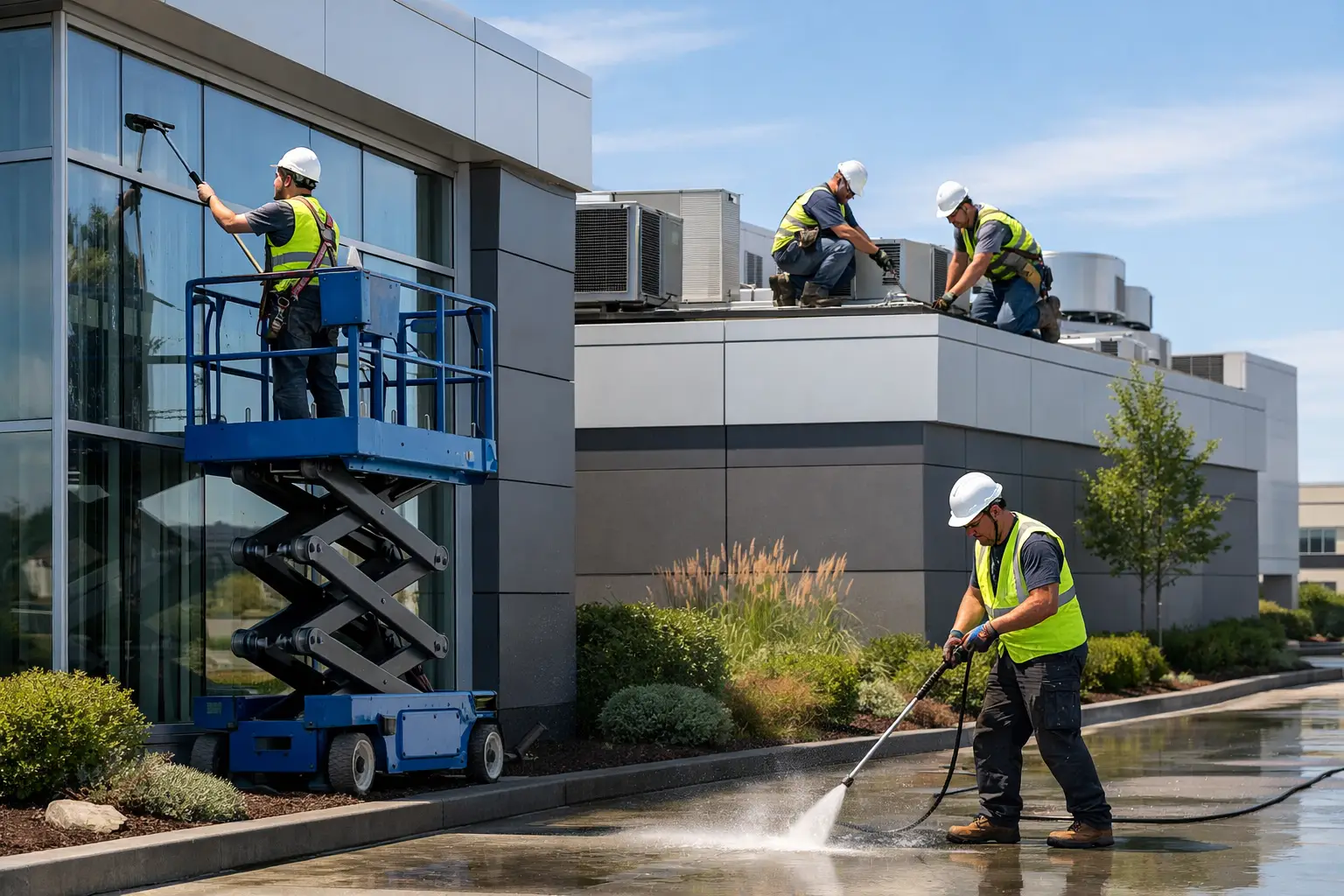
A clean commercial property sends a clear message before anyone reaches the front door. This guide to commercial exterior maintenance is designed for property managers, facility operators, body corporates and school representatives who need to keep buildings, paths and outdoor areas safe, presentable and protected in Queensland conditions.
Mould, algae, traffic grime, leaf debris and pollution do more than make a site look neglected. Left in place, they can create slip hazards, stain exterior finishes, block drainage and shorten the service life of hard surfaces. A planned approach helps you control costs, avoid reactive call-outs and maintain a property your tenants, customers and visitors can feel confident using.
Start with the areas people notice and use most
Not every surface needs the same cleaning schedule. The most effective maintenance plans focus first on high-traffic and high-visibility zones, then build out to the rest of the property.
Entry paths, ramps, stairs and handrail areas deserve close attention because moisture and organic growth can quickly make them slippery. Retail frontage, signage surrounds, awnings and windows shape the first impression of the business. Car parks, loading areas and bin surrounds collect tyre marks, oil residue, rubbish debris and grime that can make an otherwise well-kept site feel tired.
For schools, strata properties and larger commercial sites, also inspect shared walkways, courtyards, pool surrounds, tennis courts, boundary walls and exterior common areas. These spaces are often exposed to regular foot traffic, shade and weather, making them common trouble spots for algae and mould.
A practical inspection should check for four things:
- Green or black growth on concrete, painted walls, roofs, paths and shaded surfaces
- Staining from leaves, rust, irrigation, tyre traffic, oil or pollution
- Loose debris in gutters, drains, corners and car park edges
- Surface changes such as fading paint, deteriorating sealant, cracked concrete or damaged pavers
Photos taken during each inspection are useful. They provide a record of changes over time, help prioritise work and make it easier to explain maintenance decisions to owners or committees.
Match the cleaning method to the surface
One of the most common exterior maintenance mistakes is treating every surface with high pressure. While pressure cleaning is highly effective on suitable concrete, driveways, car parks and hard-wearing paved areas, too much pressure can damage paintwork, force water into vulnerable areas or mark softer materials.
Soft washing is often the safer choice for painted building exteriors, rendered walls, cladding, delicate finishes and surfaces affected by mould or algae. It uses a controlled application of cleaning treatment and low-pressure rinsing to break down organic contamination rather than relying on force alone. The result is a thorough clean that is gentler on the surface.
The right method depends on the age and condition of the material, the type of contamination and the expected finish. For example, a heavily soiled concrete loading area may need pressure cleaning and targeted degreasing, while a weathered painted façade needs a careful soft wash. Natural stone, tile, timber-adjacent areas and sealed surfaces also require a considered approach.
This is where professional assessment matters. The fastest-looking method is not always the best value if it damages a finish or creates an expensive repair later.
Build a schedule around Queensland weather and site use
Commercial exterior maintenance is not a one-size-fits-all calendar task. In Brisbane, Logan, the Gold Coast and the Sunshine Coast, warmth, humidity and wet periods can accelerate mould and algae growth. Shaded areas and sites near trees may need attention more often than open, sunny locations.
High-traffic retail sites, medical premises, schools and hospitality venues usually benefit from more frequent cleaning of entrances, paths and car parks. A smaller office building may only need a detailed exterior clean at longer intervals, supported by regular checks and spot cleaning. The key is to set a schedule that reflects how quickly the site gets dirty, how visible the areas are and the risk posed by slippery surfaces.
As a starting point, inspect key pedestrian areas monthly and after prolonged wet weather. Plan deeper cleaning before high-profile periods such as a tenancy inspection, sales campaign, school term, major event or property handover. Annual building washing is often a sensible baseline, but properties in damp, leafy or coastal environments may require more frequent treatment.
Treat safety as part of presentation
A clean exterior is a safety measure, not just a cosmetic upgrade. Algae-covered concrete, greasy car parks and wet tiled areas can increase the chance of slips and falls. Blocked drains can contribute to pooling water, while poor visibility around entry points and pedestrian paths can make a site feel less secure and less cared for.
Schedule work at times that minimise disruption to tenants, customers, staff and students. Cleaning contractors should manage access, use appropriate signage and take care around pedestrian routes, parked vehicles, landscaping and building entrances. For active sites, it may be better to complete the work in stages rather than close off large areas at once.
Chemical selection and runoff management also need to be considered. Treatments should suit the surface and the surrounding environment, particularly near gardens, stormwater drains, pools and outdoor eating areas. A professional cleaner will assess these details before starting rather than applying the same process everywhere.
Protect surfaces after cleaning
Cleaning removes built-up contamination, but protection can extend the time between major maintenance works. Sealing is particularly useful for suitable concrete, pavers, tiles and natural stone. It can help reduce moisture absorption, make future cleaning easier and improve the appearance of worn outdoor surfaces.
Sealing is not automatically right for every area. The surface must be properly cleaned, dry and in suitable condition before a product is applied. The wrong sealer, or a sealer applied over trapped moisture or remaining contamination, can lead to patchiness, peeling or a finish that does not perform as expected.
Consider sealing where staining, water absorption or regular traffic is an ongoing problem. Driveways, pedestrian paths, pool areas and certain paved commercial spaces can be good candidates. Ask for advice based on the specific material and its use, rather than choosing a treatment purely for appearance.
Plan for tenancy turnover and property value
Exterior presentation has a direct effect on how a commercial property is perceived. A stained façade, grimy footpath or neglected car park can undermine otherwise good leasing, sales or operational efforts. On the other hand, a clean frontage and well-maintained common areas make a site easier to market and more welcoming for occupants.
Before a new tenant moves in, a property changes hands or an annual inspection takes place, assess the full exterior rather than only the main entry. Building walls, windows, paths, parking bays, bin areas, fencing and outdoor amenities all contribute to the overall impression. A full-property clean can deliver a visible reset without the cost and disruption of replacement work.
For body corporates and site managers, planned maintenance also makes budgeting more predictable. Instead of waiting until mould is widespread or surfaces become slippery, you can schedule work before the problem affects safety, appearance or tenant satisfaction.
Choose a contractor who understands surface care
Commercial cleaning should not be selected on price alone. Ask whether the contractor can assess different surfaces, explain when soft washing is preferable to pressure cleaning and work around the needs of an operating property. Clear communication, suitable equipment and reliable scheduling matter just as much as the final before-and-after result.
Boost Exterior Cleaning works with commercial, institutional and strata clients across Southeast Queensland, using surface-appropriate cleaning methods for building exteriors, car parks, shopping centres, school grounds, paths and shared outdoor areas. The goal is straightforward: remove the grime, mould and algae affecting your site while taking proper care of the materials underneath.
A well-maintained exterior is easier to manage, safer to use and better for business. Walk your site regularly, deal with early signs of growth before they spread, and arrange professional cleaning before small presentation issues become larger maintenance problems.


