

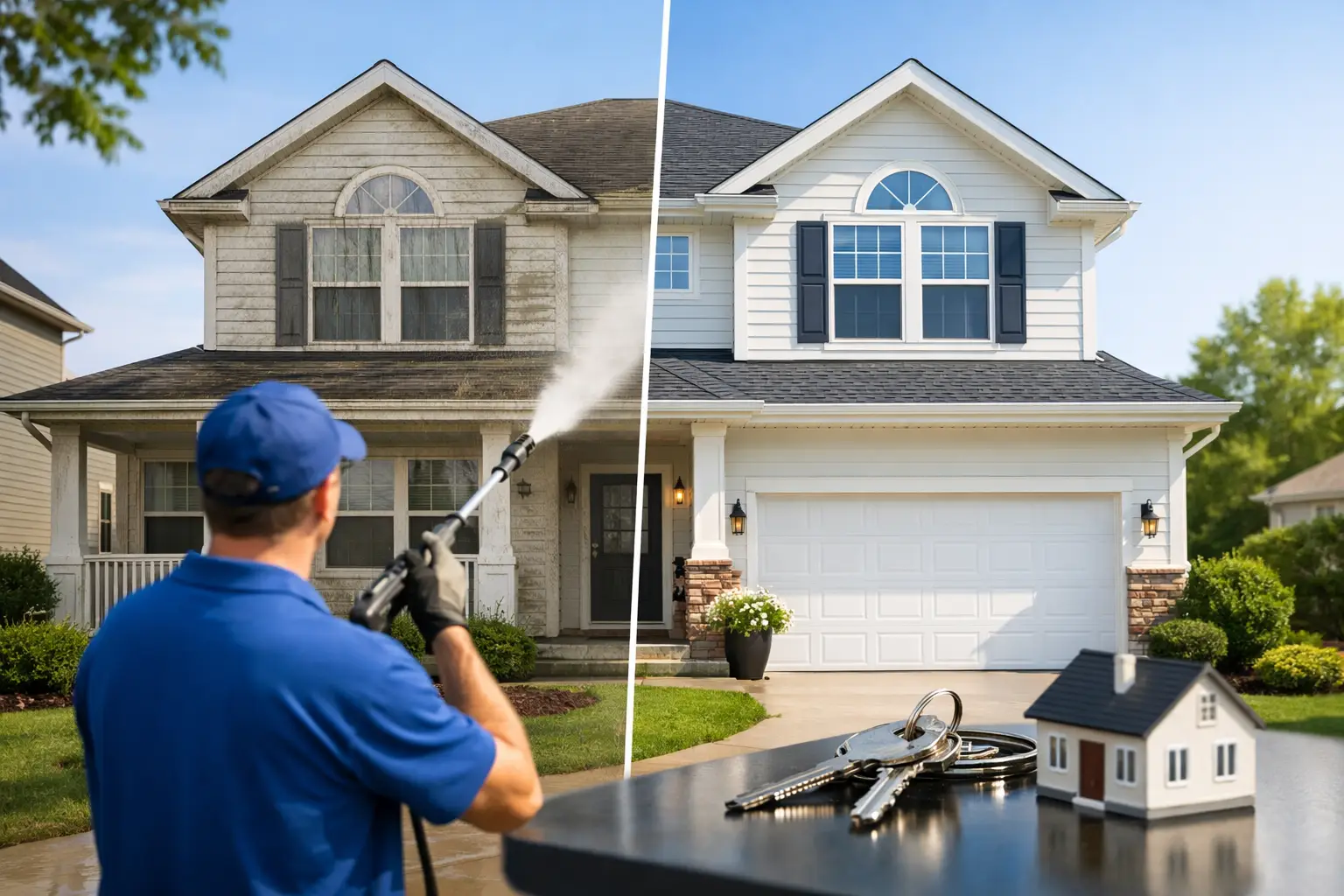
A stained front path, green mould on the eaves and a dusty driveway can make a well-kept home look tired before a buyer has even reached the front door. Strong house washing before sale results do more than make a property look cleaner. They remove the visual distractions that can make buyers question maintenance, paint condition and the overall care given to a home.
For sellers across Brisbane, Logan, the Gold Coast and the Sunshine Coast, exterior cleaning is often one of the fastest ways to improve presentation before photography, inspections and auction day. The right approach matters, though. A high-pressure blast is not suitable for every surface, particularly painted walls, render, older cladding and delicate exterior finishes.
Why the exterior carries so much weight at sale time
Buyers form an opinion early. They see the letterbox, roofline, walls, windows, driveway and entry before they notice the new kitchen or renovated bathroom. When these surfaces are marked by mould, algae, cobwebs or traffic grime, the property can appear less cared for than it really is.
A professionally cleaned exterior creates a clearer first impression: the home feels brighter, more maintained and more ready to move into. It also improves the setting for real estate photography. Clean walls reflect light more evenly, paths look more defined and landscaping stands out rather than competing with stained concrete or darkened surfaces.
This does not mean washing will hide every age-related issue. It will not repair flaking paint, cracked render, damaged guttering or deeply etched stains. What it can do is reveal the home at its best, without a layer of biological growth and built-up dirt dulling the finish.
House washing before sale results buyers can see
The most noticeable results are usually found on the areas buyers see from the street and along the route to the front door. Soft washing can lift mould, mildew, algae, dust, pollen and general grime from exterior walls, fascias, soffits and painted surfaces without relying on excessive pressure.
On many Queensland properties, shaded sides of the house develop green growth first. This is common around eaves, behind gardens, near downpipes and on southern-facing walls. Once treated correctly, these areas can return closer to their original colour, making the paintwork look fresher and more consistent.
Driveways and paths also make a large difference. Oil marks, tyre tracks, leaf tannins and slippery algae can draw the eye away from the home itself. Pressure cleaning the right hard surfaces helps restore contrast and definition, particularly around exposed aggregate, concrete, pavers and entry paths.
Windows are another practical finishing touch. After exterior walls and hard surfaces have been cleaned, clear glass helps a property look cared for from both inside and outside. For a pre-sale presentation, the combined effect is often far stronger than cleaning only one area.
Soft washing versus pressure cleaning before selling
Choosing the correct method is as important as choosing to clean. Exterior house washing is generally best handled with a soft wash process. This uses low pressure with an appropriate cleaning treatment to break down mould, algae and grime, then rinse it away safely. It is designed to protect painted surfaces, render, weatherboards and other more sensitive materials.
Pressure cleaning has its place on durable hard surfaces such as concrete driveways, footpaths, pool surrounds and some paved areas. Used at the wrong pressure or too close to the surface, however, it can damage paint, force water where it should not go, disturb loose material or leave uneven marks.
The right method depends on the property’s materials, condition and age. An older home with weathered paint needs more care than a newer rendered façade. Natural stone, tiles and sealed surfaces may also require a different treatment. A professional assessment avoids the false economy of a quick clean that creates repairs just before the property goes on the market.
Which areas are worth cleaning first?
If time or budget is limited, begin with the surfaces that shape the arrival experience and feature most heavily in listing photos. These are typically the front elevation, entry, driveway, paths and visible outdoor entertaining areas.
For a more complete pre-sale clean, consider these key areas:
- Exterior walls, eaves, fascias and gutters affected by mould or grime
- Driveways, pathways, front steps and entry paving
- Windows, frames and exterior glass doors
- Patios, pool surrounds, retaining walls and visible fencing
- Roof-adjacent surfaces, such as soffits and downpipes, where staining is obvious
The rear of the home should not be overlooked. Buyers often inspect decks, patios, pool zones and backyard access closely, especially when outdoor living is a selling feature. A clean entertaining area makes it easier for buyers to picture using the space rather than mentally adding cleaning jobs to their to-do list.
Timing your exterior clean around the sales campaign
Book exterior cleaning before professional photography wherever possible. This ensures the online listing shows the property at its best from day one, rather than relying on buyers to imagine what it could look like after maintenance.
For most homes, arranging the work one to two weeks before photography gives enough time to complete any touch-up painting, garden work or minor repairs revealed by the clean. If the property is going straight to market, cleaning can still be valuable in the days before the first open home.
Weather can affect timing. Rain does not always prevent soft washing or pressure cleaning, but severe weather can delay safe work or affect drying conditions. If you are selling during a wet Queensland period, allow a little flexibility in the schedule rather than leaving exterior presentation until the last minute.
What a professional clean does not replace
Pre-sale washing is a presentation and maintenance service, not a substitute for building repairs. If cleaning exposes peeling paint, rotten timber, cracked tiles or deteriorated sealant, those issues may need separate attention. In many cases, identifying them early is useful because you can decide whether a small repair is worthwhile before buyers see it.
Be realistic about permanent staining as well. Rust marks, oxidation, old paint runs, concrete etching and deeply embedded oil can improve with specialist treatment, but results vary according to the surface and how long the stain has been present. A reliable exterior cleaner should explain what is likely to lift, what may remain, and how the surface can be treated safely.
This straightforward advice is particularly valuable before sale. The goal is not to overpromise a brand-new finish. The goal is to present a clean, well-maintained property with no avoidable grime, mould or algae undermining its appeal.
A practical pre-sale cleaning plan
Start by walking from the kerb to the front door as if you were a buyer. Look for green growth on the walls, dark marks under the eaves, dirty paths, cobwebs around lights, stained paving and cloudy windows. Then repeat the walk through the backyard and outdoor living area.
Next, coordinate cleaning with your agent, photographer, gardener and painter. Exterior cleaning is often best completed before final gardening and window cleaning, although the ideal order can vary if heavy driveway cleaning may create splash or if painting is required. A good contractor can advise on the sequence for your property.
Boost Exterior Cleaning uses surface-appropriate soft washing and pressure cleaning methods to help sellers achieve visible, surface-safe results. The focus is on removing the grime and biological growth that makes a property look neglected, while treating paintwork and exterior materials with the care they need.
A clean exterior will not set the sale price on its own, but it can help the property make a stronger first impression when attention matters most. Before the photographer arrives or the first buyers walk up the path, make sure the outside gives them a reason to step inside with confidence.


