

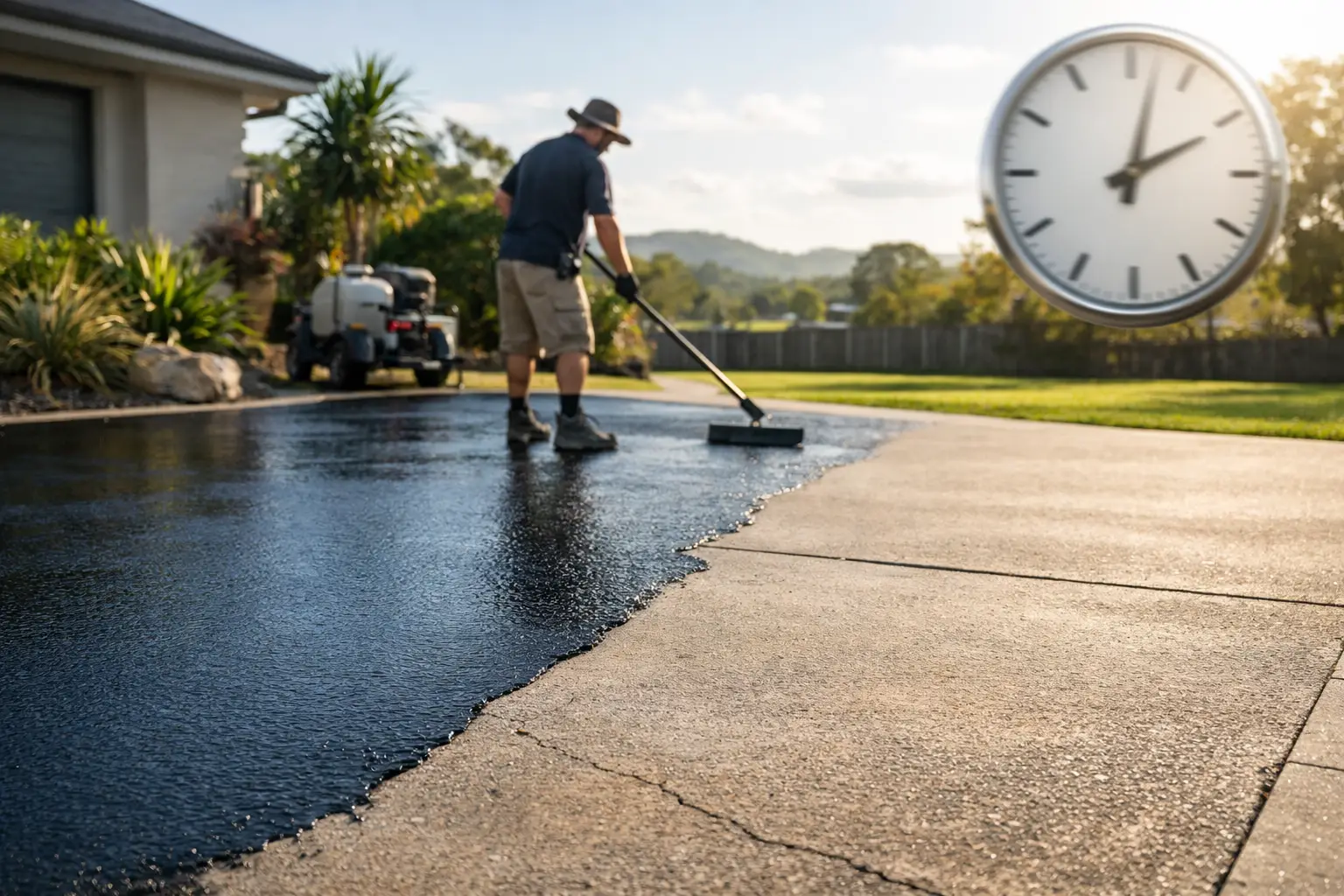
A driveway can look excellent on the day it is sealed, then face months of harsh sun, summer downpours, tyre traffic and leaf stains. So, how long does driveway sealing last? For most residential driveways in Southeast Queensland, a professionally applied sealer typically lasts around two to five years. The exact lifespan depends on the surface, the sealer used, the preparation work and how the driveway is treated after sealing.
Sealing is not a one-off fix that makes concrete or pavers maintenance-free forever. It is a practical protective layer that helps reduce staining, slows moisture penetration and improves the finished appearance of your driveway. When it is applied to a properly cleaned, dry surface, it can make routine maintenance easier and help preserve the surface underneath.
How Long Does Driveway Sealing Last?
As a general guide, exposed aggregate, plain concrete and concrete pavers often need resealing every two to four years. Driveways with light traffic, good drainage and some protection from the weather may stay in good condition for closer to five years. Busy driveways that receive full sun, frequent rain, heavy vehicles or regular chemical spills may need attention sooner.
There is no single schedule that suits every property. A shaded driveway under trees may deal with mould, algae and organic staining more often. A wide, unshaded concrete driveway in full Queensland sun may suffer more from UV exposure and heat. Both can shorten the useful life of a sealer, although for different reasons.
The best approach is to monitor the surface rather than waiting for a set date on the calendar. When water no longer beads on the driveway, stains start soaking in quickly or the finish becomes patchy, it is time to assess whether cleaning and resealing are needed.
What Determines How Long a Driveway Sealer Will Last?
The condition of the surface before sealing is one of the biggest factors. Sealer cannot compensate for a driveway covered in embedded grime, mould, algae, tyre marks or old failing coatings. If contaminants are trapped beneath a new sealer, the finished result can look uneven and the coating may not bond as intended.
Professional driveway preparation usually involves selecting the right cleaning method for the material, treating organic growth where required and thoroughly rinsing the surface. The driveway then needs enough drying time before sealer is applied. This matters particularly in humid conditions or after wet weather, when moisture can remain inside concrete pores longer than it appears to on the surface.
The type of sealer also makes a difference. Penetrating sealers absorb into porous materials and help repel water without dramatically changing the appearance. Film-forming sealers sit closer to the surface and can provide a stronger colour-enhancing, satin or gloss finish, depending on the product. They can look impressive, but may require more careful maintenance and proper preparation to avoid peeling, whitening or uneven wear.
Traffic is another practical consideration. A driveway used by one or two family cars will generally wear differently from a property with multiple vehicles, a heavy ute, delivery access or regular trailer movement. Repeated turning tyres are especially tough on sealed surfaces. You may notice wear first around garage entrances, tight turning areas and the edges where vehicles commonly park.
Queensland Weather Puts Sealers to Work
In Brisbane, Logan, the Gold Coast and the Sunshine Coast, driveways are exposed to a demanding mix of UV, heat, humidity and sudden heavy rain. These conditions do not mean sealing is a poor investment. They simply mean the product and preparation need to suit the surface and local environment.
Strong sunlight can gradually dull some sealers and increase the chance of uneven wear on exposed sections. Heavy rain can carry soil, tannins and garden debris across the driveway. In shaded or damp areas, mould and algae can grow on top of the sealer, making the surface look neglected and potentially slippery even when the coating itself is still doing its job.
Salt air can also matter for coastal properties. While sealing can help reduce water and contaminant penetration, it should be part of a regular cleaning plan rather than the only maintenance step. Keeping salt residue, sand and organic material off the driveway helps the surface and the sealer perform better for longer.
Signs Your Driveway Is Ready for Resealing
A driveway does not always need resealing just because it has lost some shine. In some cases, a professional clean is enough to remove surface grime and restore its presentation. The more useful signs are changes in how the surface behaves.
Watch for water soaking into concrete or pavers instead of beading or sitting on top. Look for oil marks that are harder to remove, fading colour, patchy sheen, worn tyre paths or areas where the coating appears to be lifting. On pavers, increased sand loss from joints can also be a sign that maintenance is due, although this should be assessed alongside the overall condition of the paving.
If a coating is peeling, flaking or turning milky, applying more sealer over the top is not always the right answer. The old coating may need to be removed or carefully prepared first. This is where professional advice can prevent a costly result that looks worse than the original problem.
Cleaning Between Seals Extends the Life of the Finish
Routine care makes a noticeable difference to the lifespan of driveway sealing. Sweep away leaves, soil and grass clippings before they break down and leave stains. Clean oil, fuel, fertiliser and paint spills promptly, as these can discolour surfaces or damage certain sealers if left in place.
Avoid using harsh chemicals or aggressive pressure settings without considering the type of driveway and coating. Excessive pressure can damage weaker concrete, disturb paver joints or strip sections of a surface coating. A safer approach uses the appropriate pressure, cleaning solution and technique for the material, particularly on older concrete and decorative finishes.
For driveways that develop black mould, green algae or stubborn grime, professional exterior cleaning can restore the surface without taking unnecessary risks. At Boost Exterior Cleaning, the focus is on matching the method to the driveway, whether that calls for pressure cleaning, targeted treatment or careful preparation before resealing.
Is Driveway Sealing Worth It?
For many homeowners and property managers, sealing is worthwhile because it improves presentation while making day-to-day cleaning more manageable. A sealed driveway can be easier to rinse down, more resistant to common stains and better protected from moisture entering a porous surface. It can also lift kerb appeal before a sale, tenancy inspection or commercial site presentation.
The trade-off is that sealing needs to be maintained. A poor-quality application or the wrong product can create problems such as slippery finishes, uneven gloss or premature peeling. Choosing a suitable sealer, preparing the surface thoroughly and allowing proper curing time gives the job the best chance of lasting.
New concrete also needs special consideration. It should be fully cured before sealing, and the required curing period can vary depending on the concrete, weather and product specifications. Sealing too early can trap moisture and affect adhesion, so it pays to get advice before rushing the process.
When to Book a Professional Assessment
If your driveway is heavily stained, slippery, faded or showing signs of coating failure, an assessment can clarify whether it needs cleaning, repair work, resealing or a combination of services. This is particularly useful for large driveways, strata properties, schools and commercial premises where appearance and slip risks both matter.
A good sealing job starts well before the sealer is opened. With the right preparation and regular surface care, you can expect your driveway to stay cleaner, look sharper and remain better protected through Queensland’s changing conditions.


