

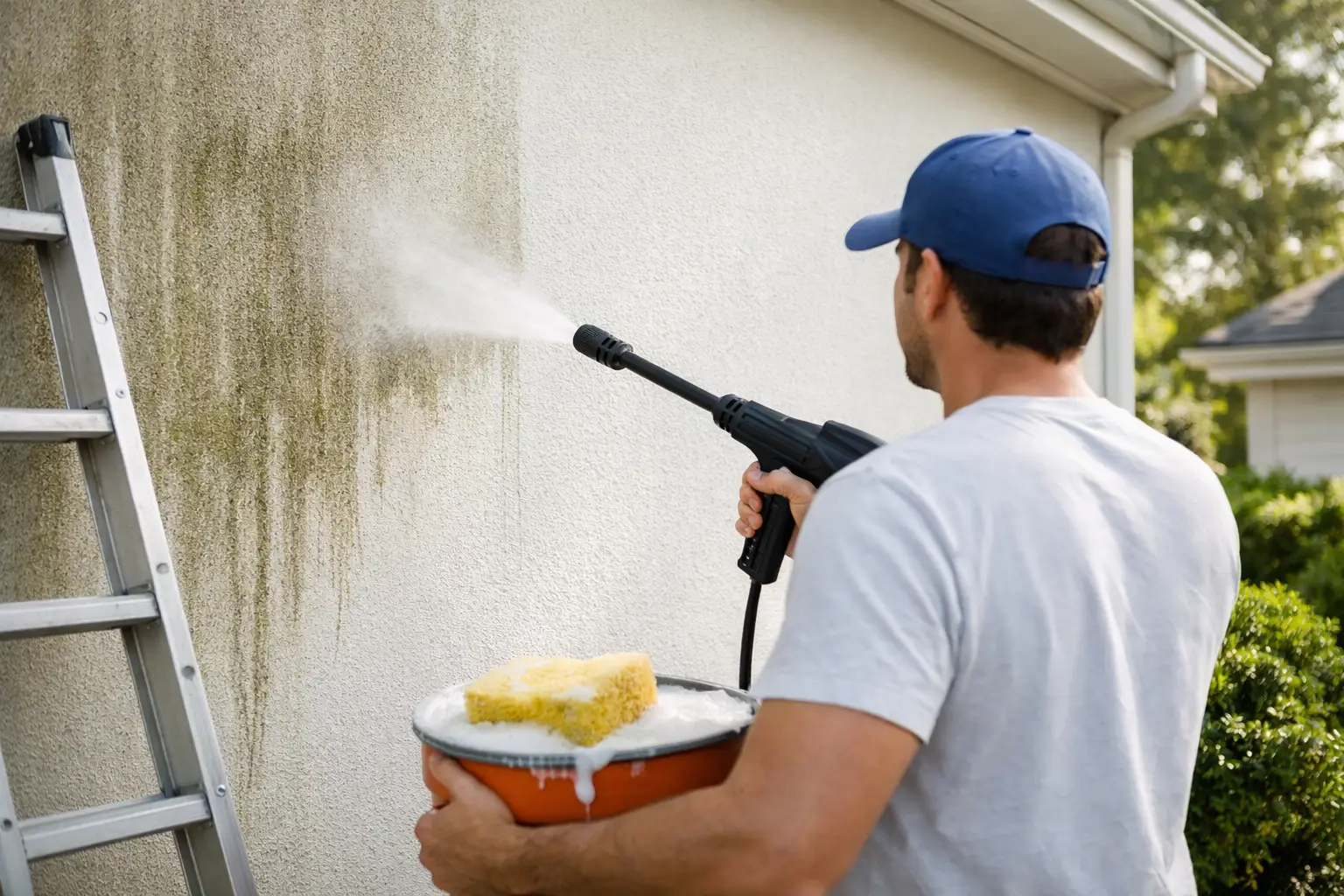
Most wall damage does not start with a crack – it starts with the wrong clean. A quick blast from a pressure washer can strip paint, force water behind cladding, and leave older surfaces worse than they were before. If you are looking at how to clean exterior walls safely, the real goal is not just to remove dirt. It is to get a visibly cleaner finish without shortening the life of the surface underneath.
That matters whether you are maintaining a family home, preparing a rental for new tenants, freshening up a school facade, or keeping a commercial property presentable. Exterior walls cop plenty in South East Queensland – mould, algae, road grime, dust, salt air in coastal areas, and the general build-up that makes a property look tired well before its time.
Why safe wall cleaning matters
Exterior walls are not all built to handle the same treatment. Painted weatherboards, rendered walls, brick, fibre cement, cladding, and natural stone all react differently to water pressure and cleaning solutions. What works on a hard masonry wall can damage a painted finish or drive moisture into vulnerable joins.
The safest cleaning method usually comes down to three things – the wall material, the level of contamination, and the condition of the surface. If paint is already chalking, if render has hairline cracks, or if sealants are failing around windows and doors, even a standard clean needs more care.
This is where many DIY jobs go wrong. People focus on force when they should be thinking about compatibility. More pressure is not the same as a better result.
How to clean exterior walls safely on different surfaces
The first step is identifying what you are cleaning. Painted walls generally need the gentlest approach, especially on older homes where the coating may be weathered. A soft wash method is often the better choice here because it uses low pressure combined with the right treatment to break down mould, algae and grime without hammering the paintwork.
Rendered walls also need caution. Render can hold dirt in its texture, but it can also be marked, etched or weakened by excessive pressure. If there are existing cracks, water intrusion is a real risk. A controlled soft wash or low-pressure clean is usually safer than trying to blast staining out.
Brick is more forgiving, but not all brickwork is equal. Older mortar joints can be worn and sandy, and high pressure can accelerate deterioration. Efflorescence, mould and general grime may each need a different treatment. In many cases, the right chemical application does more of the work than the pressure itself.
Cladding, especially around laps, seams and fixings, should never be treated like a concrete driveway. Water forced upward or directly into joins can end up where you do not want it. Technique matters just as much as equipment.
Start with a wall inspection
Before any water goes near the wall, inspect the surface properly. Look for peeling paint, cracked render, loose mortar, gaps around windows, damaged seals, oxidised finishes, rust stains, and signs that water may already be getting in. If there is heavy mould or black algae, note where it is concentrated. Shaded sides of buildings and walls near gardens often need extra treatment.
Also check what sits below and around the area. Outdoor furniture, electrical fittings, light fixtures, security cameras, vents, and nearby plants all need to be considered before cleaning starts. Safe wall cleaning is as much about setup as it is about washing.
The safest cleaning method is often soft washing
For many residential and painted exterior surfaces, soft washing is the safest and most effective option. That is because the treatment does not rely on brute force. Instead, it uses a carefully chosen cleaning solution to kill organic growth and loosen grime, followed by a low-pressure rinse.
This approach is especially useful for mould, mildew and algae. If you only use water pressure, you may remove the visible layer without properly treating what is embedded in the surface. The wall can look clean for a short time, then stain again faster than expected.
Soft washing usually gives a better long-term result on delicate finishes because it cleans more thoroughly while reducing the risk of surface damage. It is one reason many property owners choose a professional service rather than hiring a machine and guessing the settings.
When pressure cleaning can be used
Pressure cleaning has a place, but it should be used selectively. Harder surfaces such as some brick walls, retaining walls and certain commercial exterior areas may handle more pressure, provided the operator adjusts the machine correctly and keeps the spray angle and distance under control.
The problem is that consumer pressure washers do not come with judgement. Used carelessly, they can scar paint, gouge soft materials, strip mortar, and blow water behind trims and joints. The skill is not in owning the machine. It is in knowing when not to lean on pressure.
If a wall needs aggressive cleaning to remove built-up staining, the better solution may still be a targeted treatment first, then a lower-pressure rinse. Safer cleaning is about using the least force needed to get the result.
Cleaning products matter as much as pressure
A lot of exterior wall staining is biological rather than just surface dirt. Green film, black spotting and slippery residue usually point to algae, mould or mildew. That means the product used has to do more than lift grime. It needs to treat the growth properly.
Not every chemical is suitable for every wall. Some products can affect painted finishes, nearby landscaping, or surrounding metal fixtures if they are used incorrectly. Dilution, dwell time and rinse control all matter. Too weak and the treatment does little. Too strong and you can end up with unnecessary risk.
This is another reason professional wall cleaning gets better results. The right operator matches the treatment to the contamination and the surface, rather than reaching for a one-size-fits-all mix.
Common mistakes that cause damage
The biggest mistake is starting too hard. High pressure at close range can do immediate damage, especially on older homes and already weathered coatings. Another common issue is skipping the test patch. Even if a wall looks sound, a small test area can reveal how the paint, render or cladding will respond.
Poor rinsing technique is also a problem. Spraying upward under laps, into vents, or around compromised seals can force water into cavities. Cleaning in full sun can create streaking or cause products to dry too quickly before they work properly. And rushing the job often means organic growth is only partially treated, which shortens the clean result.
Homeowners and site managers also underestimate ladder and access risks. Second-storey walls, sloping ground, and awkward side access can turn a simple clean into a safety issue very quickly.
DIY or bring in a professional?
If the wall is single-storey, structurally sound, lightly soiled and made from a durable material, a careful DIY clean may be reasonable. That said, the method still needs to match the surface, and the setup needs to be safe. You should know what product you are using, protect nearby plants, avoid electrical hazards, and keep water away from vulnerable joins.
If the walls are painted, rendered, multi-storey, heavily affected by mould, or part of a commercial or strata property, professional cleaning is usually the smarter option. The cost of getting it wrong can be far higher than the cost of getting it done properly.
For property managers and commercial operators, there is also the practical side. A proper clean is not just cosmetic. It helps maintain presentation, supports tenancy turnover, reduces slip and grime issues around adjacent surfaces, and protects the building envelope over time.
What to expect from a proper exterior wall clean
A well-executed wall clean should remove built-up grime, reduce or eliminate mould and algae staining, and lift the overall presentation of the property without damaging the substrate. On some walls, especially older painted surfaces, realistic expectations matter. Cleaning can dramatically improve appearance, but it will not fix failing paint or underlying material defects.
The best results come when the operator assesses the wall first, chooses the right treatment, uses the appropriate pressure, and works with the building rather than against it. That is the difference between a quick wash and proper exterior surface care.
At Boost Exterior Cleaning, that surface-by-surface approach is exactly what makes the result safer and more reliable. Different walls need different methods, and getting that call right is what protects both the finish and the value of the property.
If your exterior walls are looking tired, stained or affected by mould, the safest next step is not to hit them harder. It is to choose the method that cleans properly while keeping the surface intact for the years ahead.


