

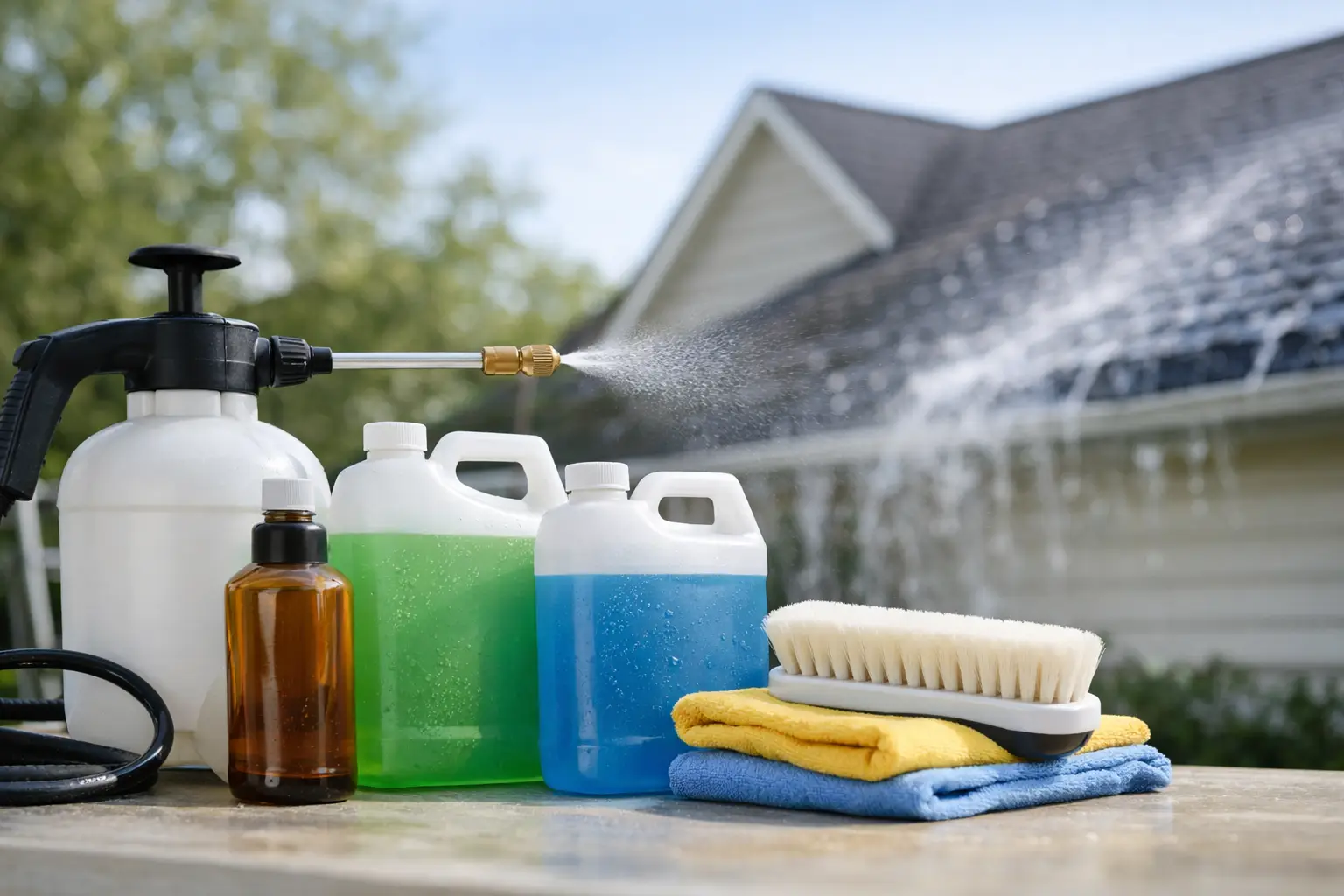
A roof covered in black streaks or a painted wall turning green with algae does not need brute force. It needs the right treatment. That is why soft wash chemicals explained properly matters for homeowners, property managers and facility operators who want a clean result without damaging paint, render, roofing or other delicate exterior surfaces.
Soft washing is often misunderstood as simply using less pressure. Pressure is only part of the method. The real work is done by specialised cleaning solutions designed to kill organic growth, loosen contamination and help surfaces stay cleaner for longer. When the chemical side is handled correctly, soft washing is not a shortcut. It is the safer and more effective option for many exterior surfaces across Southeast Queensland.
What soft wash chemicals actually do
Soft wash chemicals are used to treat the cause of staining, not just the visible mess sitting on top. Mould, mildew, algae, lichen and bacteria embed themselves into porous and painted surfaces. If you only rinse the surface, you may improve the appearance for a short time, but the growth often returns quickly because it has not been properly treated.
A soft wash solution is designed to break down that contamination at a microbial level. It sanitises the surface, helps lift staining and allows grime to be rinsed away with low pressure. This is why soft washing is widely used on house exteriors, roofs, fences, rendered walls, shaded paths and commercial buildings where high pressure could cause damage.
The exact mix changes depending on the surface and the contamination. A painted weatherboard home, a tile roof and a concrete retaining wall do not all need the same approach. That is where experience matters.
Soft wash chemicals explained by type
There is no one-size-fits-all blend. In practice, professionals adjust the solution based on the material being cleaned, the level of growth and the surrounding environment.
Sodium hypochlorite
This is the main active ingredient in many soft wash treatments. It is a cleaning and sanitising agent used to kill mould, algae, mildew and bacteria. On the right surfaces, sodium hypochlorite is highly effective at removing organic staining and restoring a cleaner finish.
It is especially useful on roofs, exterior walls, gutters, driveways and other areas where biological growth is the main issue. The strength has to be carefully controlled. Too weak, and it may not treat the growth properly. Too strong, and it can affect sensitive materials or nearby landscaping if not managed correctly.
Surfactants
Surfactants help the cleaning solution spread more evenly and cling to the surface for longer. That extra dwell time matters because it gives the active ingredients a better chance to work. Surfactants also help lift dirt and grime so the rinse is more effective.
Without a good surfactant, the solution can run off too quickly, especially on vertical surfaces such as walls, fences and cladding.
Degreasers and specialty cleaners
Not every stain is biological. Some surfaces collect traffic film, grease, tannin marks, pollution residue or general built-up grime. In those cases, a soft wash process may include additional cleaners suited to that contamination.
This is common in commercial settings, around bin areas, loading zones, car parks and high-traffic pedestrian spaces. The wrong product can be ineffective or leave a patchy result, so matching the chemical to the stain is a big part of getting a proper clean.
Neutralisers and rinse aids
On some jobs, neutralising products are used after treatment to balance residues or protect more sensitive areas. Rinse aids can also improve the final finish. These are not needed on every project, but they can make a difference where surface sensitivity or site conditions call for extra control.
Why chemical strength matters
One of the biggest mistakes in exterior cleaning is thinking stronger always means better. It does not. The right strength is the one that removes contamination effectively while staying appropriate for the surface.
A painted home exterior may need a gentler mix than a heavily stained concrete wall. A school building with regular pedestrian access needs careful treatment planning. A body corporate property with gardens, common areas and mixed surfaces needs a balanced approach that considers appearance, safety and material preservation.
This is where soft washing becomes more than just spraying detergent around. Dwell time, dilution rates, rinse method, weather conditions and runoff control all affect the result. Hot days, direct sun and wind can change how a chemical behaves on the surface. So can age, porosity and previous coatings.
Soft wash chemicals explained for common surfaces
Painted exteriors and render
Painted walls and rendered surfaces are common candidates for soft washing because high pressure can strip paint, leave marks or force water where it should not go. A properly mixed chemical treatment removes mould and algae while keeping the cleaning method gentle.
That said, old or chalky paint can still require extra care. If the coating is already failing, cleaning may reveal those issues rather than cause them. A good operator will explain that upfront.
Roof tiles and metal roofing
Roof cleaning is one of the clearest examples of where chemicals do the heavy lifting. Moss, lichen, mould and black staining can take hold on roofing materials, especially in humid or shaded conditions. Soft washing treats that growth more effectively than relying on pressure alone.
For tile roofs, this helps preserve the surface and reduce unnecessary wear. For painted metal roofs, it lowers the risk of damaging the coating. The trade-off is that some stubborn staining may improve in stages rather than disappear instantly, particularly where growth has been sitting for years.
Concrete, pavers and driveways
Hard surfaces can often handle more pressure than painted walls or roofs, but chemicals still play an important role. If algae, mould or black spotting are present, treatment helps kill the growth before or during cleaning. That usually leads to a better result and can slow regrowth.
On decorative concrete, sealed surfaces or older pavers, a balanced method is still important. Aggressive cleaning can leave visible inconsistencies if the surface is already worn.
Safety and environmental considerations
When people hear the word chemical, they often worry about damage, harshness or environmental harm. That concern is fair. The answer is not to avoid treatment altogether. It is to use the right products in the right way.
Professional soft washing includes site assessment, controlled application, correct dilution and careful rinsing. Wetting surrounding plants, managing runoff and protecting adjacent areas are all part of the job. Sensitive sites such as schools, aged care facilities, unit complexes and retail areas need even more planning.
There is also a practical reason to use chemicals responsibly. Overuse wastes product, adds cost and can create avoidable risks. Underuse leads to poor results and faster regrowth. The best outcome sits in the middle – effective treatment with surface-safe application.
Why DIY soft washing often falls short
Store-bought cleaners can be tempting, especially when the staining looks straightforward. The problem is that many DIY attempts either under-treat the growth or use a mix that is too aggressive for the surface. Both outcomes cost more in the long run.
You can end up with streaking, plant damage, patchy cleaning or surfaces that look better for two weeks and then turn green again. On upper storeys, roofs or large commercial areas, there is also the safety side to consider. Access, runoff and consistent coverage are not small details.
A professional service is not just about equipment. It is about knowing when soft washing is the right method, what chemical blend suits the material, and how to clean thoroughly without creating a new problem.
Soft wash chemicals explained in one practical question
The most useful question is not, what chemical do you use? It is, why are you using that chemical on this surface?
A reliable exterior cleaning specialist should be able to explain the reason clearly. Is the goal to kill mould on painted render? Remove algae from a shaded driveway? Treat lichen on roof tiles? Clean a commercial façade without affecting finishes? Each answer points to a different approach.
That is how good exterior cleaning protects value as well as appearance. The right treatment improves presentation now, but it also helps reduce wear, limit premature deterioration and support ongoing maintenance. For homes, that can mean better street appeal and less risk to painted finishes. For commercial and institutional properties, it means a cleaner site, a stronger first impression and fewer maintenance headaches over time.
At Boost Exterior Cleaning, that practical thinking sits behind every soft wash job. The aim is not to throw pressure at every stain. It is to choose the method that gives the best result for the surface in front of us.
If you are comparing cleaning options, look past the machine and ask about the treatment. The right chemical process is often the difference between a surface that simply looks rinsed and one that is properly cleaned, sanitised and set up to stay better for longer.


