

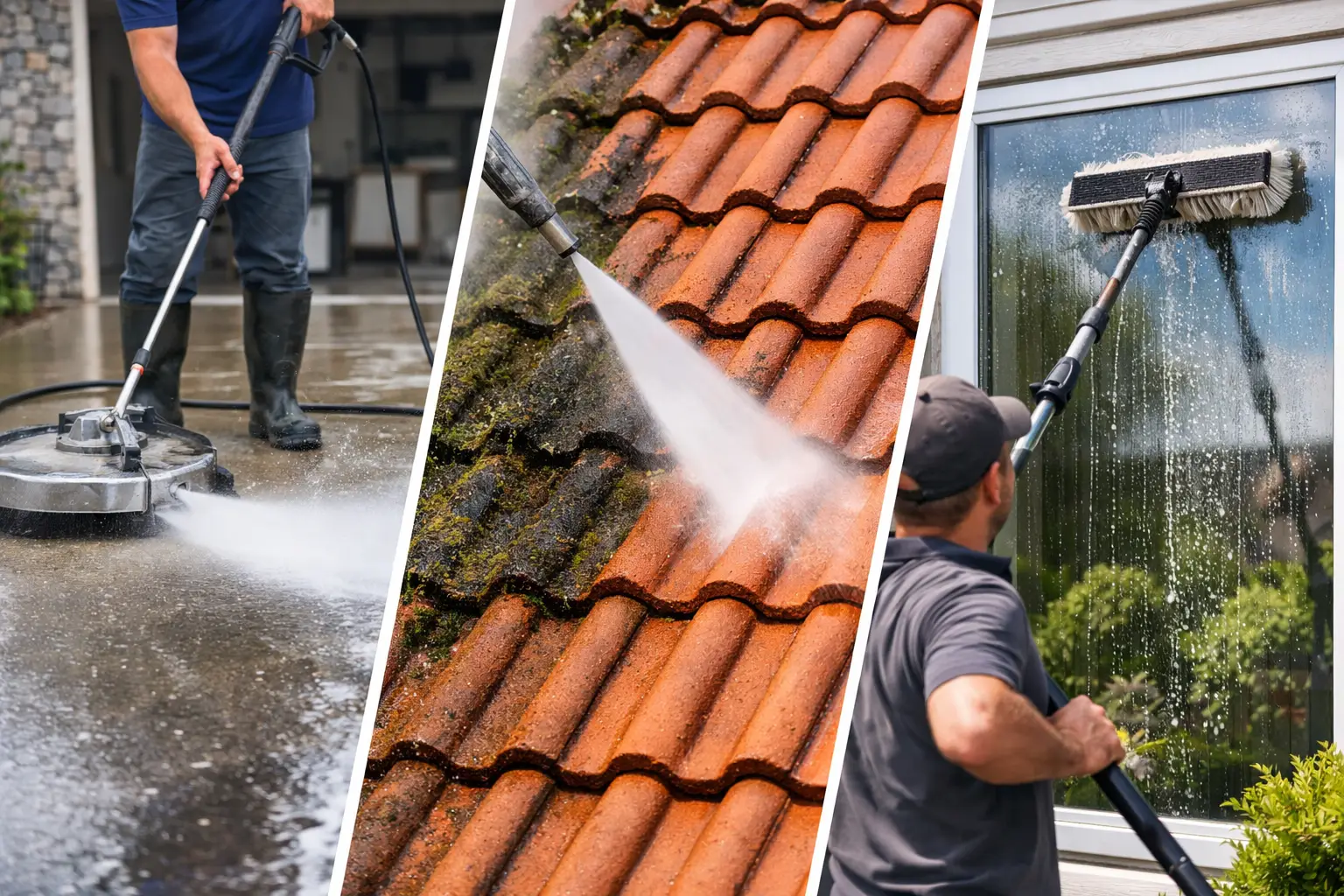
A property can look tired long before it is actually worn out. In Southeast Queensland, mould, algae, dust, traffic grime and moisture build-up can make walls, roofs, driveways and outdoor areas look older than they are. That is why choosing the best exterior cleaning methods matters – not just for presentation, but for protecting surfaces and avoiding damage caused by using the wrong approach.
The biggest mistake people make is treating every exterior surface the same. Concrete is not painted weatherboard. A tiled pool area is not natural stone. Render, Colorbond, timber, exposed aggregate and sealed surfaces all respond differently to water pressure, detergents and dwell time. Good exterior cleaning starts with matching the method to the surface.
What makes the best exterior cleaning methods effective?
The best results usually come from a combination of the right pressure, the right cleaning solution and the right technique. It is rarely about blasting away dirt with as much force as possible. In fact, high pressure is often the wrong tool for the job, especially on painted homes, delicate finishes and older properties.
An effective method should do three things well. It should remove visible contamination, treat the organic growth causing the problem, and do it without shortening the life of the surface. If a clean looks good for a week but strips paint, marks timber or drives water where it should not go, it was not the right method.
This is where professional exterior cleaning stands apart from a weekend hire machine. The equipment matters, but the bigger factor is knowing when to use soft washing, when to use pressure cleaning, and when a surface needs sealing or restoration after cleaning.
Soft washing for painted homes, render and delicate surfaces
When people ask about the best exterior cleaning methods for houses, soft washing is often the answer. It is designed for surfaces that need a thorough clean without aggressive pressure. That includes painted exteriors, rendered walls, weatherboard, eaves, gutters, fences and many commercial facades.
Soft washing uses low pressure combined with specialised cleaning solutions to break down mould, algae, mildew and built-up grime. Instead of relying on force alone, it treats the source of the staining. That usually gives a more even result and helps surfaces stay cleaner for longer.
For homeowners, the main benefit is protection. Paintwork and finishes are less likely to be stripped or scarred. For property managers and facility operators, it also makes sense from a maintenance point of view. A safer clean helps avoid preventable repair costs while still delivering the visual lift people expect.
Soft washing is especially useful on older homes across Brisbane, Logan, the Gold Coast and the Sunshine Coast, where painted surfaces may already be weathered. These jobs need judgement. More pressure does not mean a better result.
Pressure cleaning for hard-wearing surfaces
Pressure cleaning has an important place, but only where it suits the material. It is highly effective on durable surfaces such as concrete driveways, pathways, parking areas, some pavers, retaining walls and certain commercial hardstands.
Used correctly, pressure cleaning cuts through compacted dirt, tyre marks, algae, leaf staining and slippery build-up that standard hosing will never shift. It can quickly improve the look and safety of outdoor areas, particularly around driveways, school grounds, loading zones and high-traffic commercial entries.
The trade-off is that pressure cleaning needs control. Too much pressure can etch concrete, disturb jointing sand, damage mortar, lift coatings or leave obvious wand marks. On decorative or aged surfaces, a lower-pressure treatment or a combination approach may be the better choice.
For many properties, pressure cleaning is best used as part of a broader exterior maintenance plan. A driveway may need cleaning first, then sealing to reduce future staining and wear. A shopping centre walkway may need scheduled cleaning to manage slip risks and presentation without overworking the surface.
Surface-specific cleaning is where good results come from
No single method deserves to be called the best unless it is right for the surface in front of you. That is the practical reality of exterior cleaning.
Natural stone is a good example. Stone can be porous, uneven and sensitive to harsh treatment. The wrong chemical or excessive pressure can leave it patchy or weakened. Pool surrounds also need extra care because slip resistance, drainage and nearby glass all affect how the job should be handled.
Windows are another area where technique matters. Exterior glass cleaning is not just about rinsing off dust. Water spotting, frame build-up and nearby cobwebs all affect the finish. The same goes for tennis courts, where surface cleanliness needs to be balanced with preserving coating integrity and playability.
Commercial properties raise a different set of priorities. Presentation matters, but so do safety, access and minimising disruption. School cleaning, car park cleaning and building washing often need to be scheduled around site use, public movement and risk management. The best method is the one that gets visible results while fitting the realities of the site.
Why chemical treatment matters as much as pressure
People often focus on the machine, but the chemical side of exterior cleaning is just as important. Organic growth such as mould, mildew and algae needs to be treated properly. If it is only rinsed from the surface, it often returns quickly.
The right treatment helps break down contamination and kill off the growth causing dark streaks, green film and patchy staining. That means a longer-lasting clean and a better finish. It also reduces the temptation to use unnecessary pressure to chase a result.
Of course, chemical use needs care. Product choice, dilution and application all need to suit the material being cleaned. This is one reason surface-safe cleaning matters so much. A method that works brilliantly on one substrate can stain, fade or weaken another.
In practical terms, the best exterior cleaning methods are not defined by one piece of equipment. They are defined by how well the operator balances treatment, pressure, dwell time and rinsing for the material at hand.
When sealing should follow cleaning
Some surfaces benefit from more than a clean. Concrete, pavers, tiles and natural stone may also need sealing after washing, especially in exposed outdoor areas. Cleaning removes the grime and biological growth, but sealing can help protect the surface from moisture penetration, staining and early wear.
This matters on driveways, pool surrounds and entertaining areas where presentation and durability go hand in hand. A freshly cleaned driveway can look excellent, but if it is porous and unprotected, it may quickly start absorbing dirt and developing new staining. Sealing adds a layer of defence and can make routine maintenance easier.
It depends on the age and condition of the surface. Not every area needs sealing, and not every sealer suits every finish. But where it is appropriate, it can extend the value of the cleaning work.
How to choose the right method for your property
If you are comparing the best exterior cleaning methods for your home, strata property or commercial site, start with the surface types, not the equipment. Ask what is being cleaned, what is causing the staining, and whether the area has coatings, paint, sealers or age-related wear that change the approach.
Then think about the result you actually want. Sometimes the goal is presentation before sale or lease. Sometimes it is annual maintenance. Sometimes it is reducing slip hazards or restoring a neglected area to a standard fit for tenants, customers or students. The right method should match that goal without creating extra repair work later.
This is where a service provider with both soft washing and pressure cleaning capability has an advantage. They are not locked into a one-method answer. They can assess the property and recommend the safest and most effective option for each area.
At Boost Exterior Cleaning, that surface-first approach is central to getting strong results without unnecessary risk. It is a practical way to clean properties properly, whether the job is a house wash, driveway restoration, school grounds clean-up or a full commercial exterior refresh.
Clean exteriors do more than improve street appeal. They help protect what the property is made of, keep outdoor areas safer and make day-to-day maintenance less of a battle. The best method is the one that gives you that result while respecting the surface underneath.


