

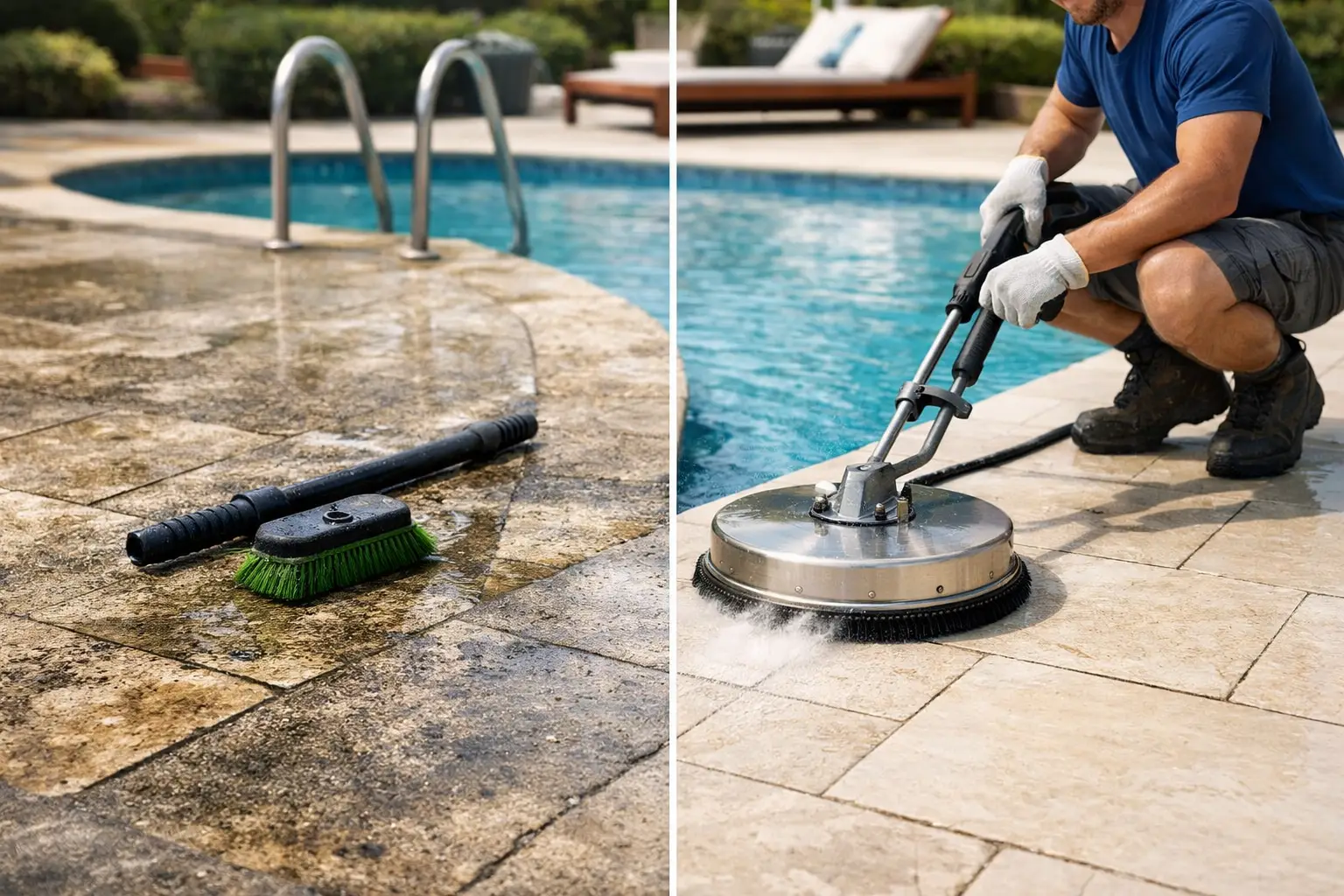
A pool area can go from looking fresh to tired surprisingly quickly. One wet season, a bit of leaf drop, a stretch of humid weather, and suddenly the surrounds are stained, slippery and older than they should look. If you are wondering how to restore dirty pool surrounds without damaging the surface, the answer comes down to using the right method for the material, not just blasting everything with high pressure.
Pool surrounds deal with more than ordinary dirt. They collect sunscreen residue, organic staining, mould, algae, leaf tannins, pool chemicals and general foot traffic. In Southeast Queensland, where moisture and heat work together for most of the year, that build-up tends to hold on tightly. The good news is that most dirty pool surrounds can be brought back to a much cleaner, safer and more presentable condition with a careful approach.
Why pool surrounds get dirty so fast
Pool areas sit in a harsh little environment of their own. Water splashes out, humidity hangs around, and shaded edges stay damp long after the rest of the yard has dried. That creates ideal conditions for mould and algae, especially on textured concrete, pavers and natural stone.
Then there is the chemical side. Salt, chlorine and other pool treatments can leave residue on surrounding surfaces. Add dust, soil, leaves and everyday use, and the grime starts to bond to the surface rather than just sitting on top of it. What looks like a simple wash-down job is often a mix of organic growth, mineral marks and embedded dirt.
That is why the method matters. A surface that needs a soft wash treatment followed by controlled pressure cleaning can be permanently marked by going in too hard too early.
How to restore dirty pool surrounds without causing damage
The first step is identifying the surface. Concrete, painted concrete, exposed aggregate, sandstone, travertine, porcelain pavers and sealed tiles all respond differently to water pressure and chemical treatment. There is no single setting or product that suits every pool area.
On plain concrete and some pavers, pressure cleaning can be very effective, but only when it is matched to the condition of the surface. Too much pressure can etch the top layer, create striping, dislodge jointing sand or open up the surface so it soils faster next time. On natural stone, the wrong chemical can cause discolouration, while the wrong pressure can roughen the finish and shorten the life of the material.
A proper restoration usually starts with a pre-treatment. This loosens organic growth and helps break down grime before rinsing begins. It also reduces the need for aggressive pressure. For many pool surrounds, this is the difference between a clean result and a damaged one.
Start with an honest surface check
Before any cleaning begins, inspect the area closely. Look for black or green staining, white mineral deposits, rust marks, worn sealer, cracked grout or loose pavers. Also pay attention to how slippery the surface feels when wet. A pool surround that looks only mildly dirty can still be carrying a film of algae that makes it unsafe underfoot.
This inspection tells you two things. First, what type of contamination you are dealing with. Second, whether the surface is already vulnerable. Older concrete, soft natural stone and previously patched areas often need a gentler process.
If the area has been sealed before, that matters as well. Some sealers are still sound and simply need cleaning. Others have broken down unevenly and may need to be stripped or professionally assessed before the best result can be achieved.
The right cleaning approach for each surface
Concrete and exposed aggregate
Concrete is common around pools because it is practical and cost-effective, but it can hold a surprising amount of grime. Plain concrete often responds well to a combination of treatment for mould and algae, followed by controlled pressure cleaning. Exposed aggregate needs extra care because the textured finish traps dirt deeply and can be uneven to clean.
If it is cleaned too aggressively, concrete can end up looking patchy or furred. A slower, even clean usually delivers a better finish and helps preserve the surface.
Pavers
Pavers around pools often develop dark staining in the joints and around edges where water sits. They can usually be restored well, but joint stability is important. High pressure can wash out sand and leave movement in the pavers if not handled correctly. After cleaning, some areas may need re-sanding once fully dry.
Natural stone
Travertine, sandstone and limestone look excellent around pools, but they are not surfaces to guess on. These materials can be sensitive to harsh cleaners and strong pressure. They often need a softer wash process with surface-appropriate treatment to lift staining without damaging the face of the stone.
Stone also tends to show the difference between a basic clean and a proper restoration. Done well, it regains a more even colour and cleaner finish. Done poorly, it can end up blotchy or prematurely worn.
Why DIY pool surround cleaning can go wrong
A lot of property owners start with a hire machine or a pressure cleaner from the shed. That can work for light dirt in some cases, but it is where many avoidable problems begin. The most common issue is using pressure as the only solution.
High pressure might remove surface grime quickly, but it does not always treat the cause of the problem. Mould and algae can remain rooted in porous surfaces, which means the staining returns sooner. On top of that, uneven wand marks, damaged grout lines, etched concrete and disturbed paver joints are all common DIY outcomes.
Chemical choice is another issue. Products that are too strong can affect nearby landscaping, stain surrounding materials or react badly with certain types of stone. Around pool areas, overspray and runoff need to be managed carefully.
That is where professional cleaning earns its place. The goal is not just to make the surface look better for a week. It is to clean it thoroughly, safely and in a way that helps the result last.
How to keep restored pool surrounds cleaner for longer
Once you have taken the time to restore dirty pool surrounds, a little maintenance goes a long way. Regular sweeping helps stop leaves and soil from sitting in corners and breaking down into staining. Hosing down light dirt before it settles also helps, especially in shaded areas.
Watch the spots that stay damp. These are usually where algae returns first. If there are overhanging trees, trimming them back can improve light and airflow. That simple change often reduces moisture retention and slows regrowth.
For some surfaces, sealing may be worth considering after cleaning. A good sealer can help reduce staining, improve ease of maintenance and extend the life of the finish. It is not right for every material or every condition, but in the right setting it can make future cleaning easier and improve presentation.
When professional restoration is the better option
If the pool area is heavily stained, slippery, patchy after previous cleaning or made from delicate material, it usually makes sense to bring in a specialist. The same goes for larger residential properties, body corporate pool areas, schools and commercial facilities where presentation and safety both matter.
A professional service should assess the surface first, select the correct pressure and treatment, and clean with the finish in mind. That matters around pools because these are high-visibility areas. People notice when the surrounds are dirty, but they also notice when a surface has been damaged by poor cleaning.
For many property owners, the real value is not only the visual improvement. It is reducing slip risk, extending surface life and lifting the overall presentation of the property. Whether you are preparing for inspections, improving a shared facility or simply wanting the area to look right again, proper restoration is a practical investment.
At Boost Exterior Cleaning, that is exactly how we approach pool areas – with the pressure, treatment and surface care suited to the material, not a one-size-fits-all clean.
How to know the job has been done properly
A well-restored pool surround should look evenly clean, not streaky or scarred. The surface should feel safer underfoot, with less slime and residue, and there should be no obvious damage to grout lines, joints or surrounding finishes. On porous surfaces, some deep staining may remain if it has been left too long, but the area should still be noticeably fresher, brighter and more consistent overall.
Good restoration is not about making every surface look brand new at any cost. It is about getting the best possible result while protecting the material underneath. That balance is what keeps a pool area looking good now and holding up well into the next season.
If your pool surrounds are looking dull, slippery or weather-stained, the best next step is simple: treat the surface correctly the first time, and you will save yourself a lot of avoidable repair and re-cleaning later.


