

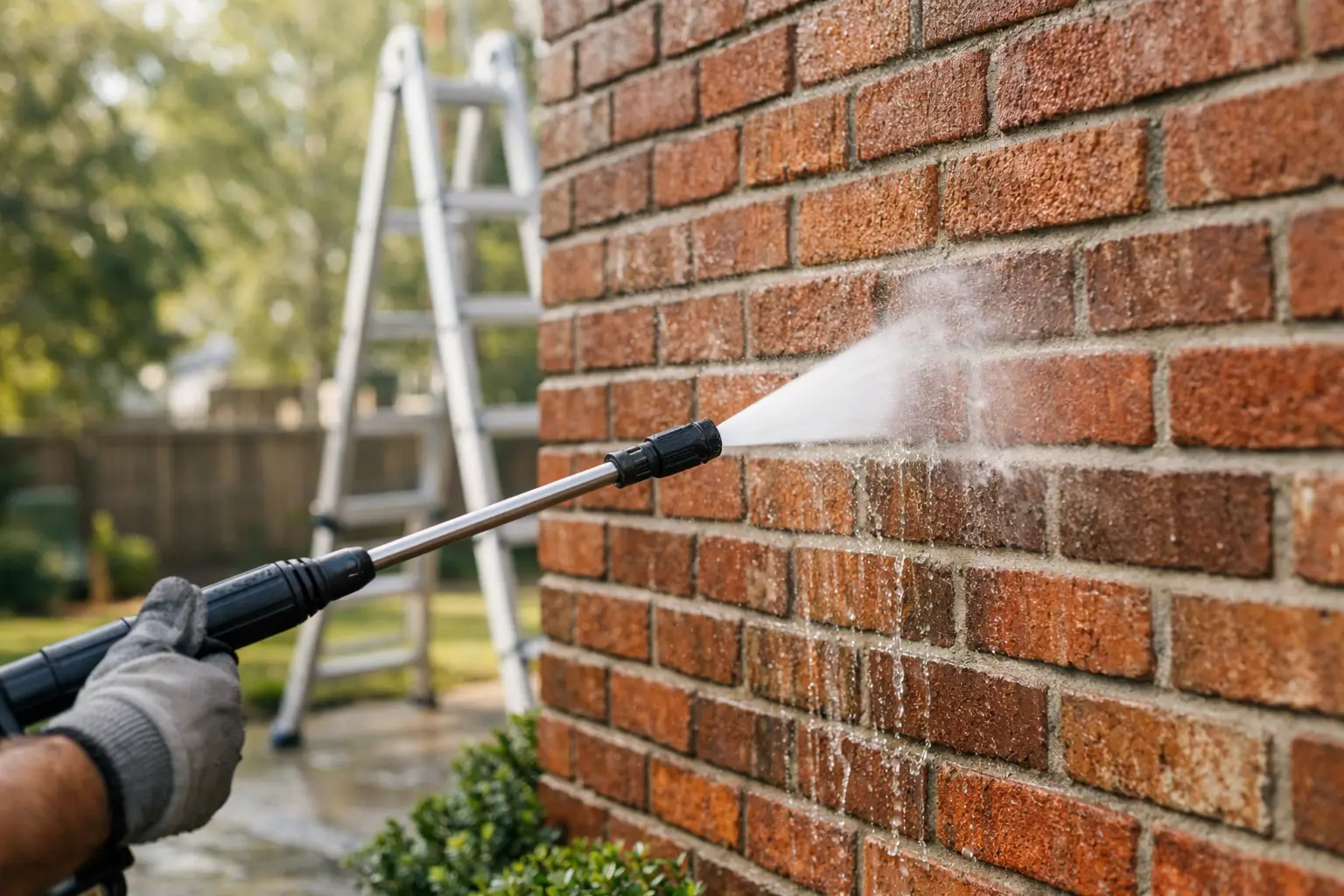
Brick can handle a lot, but it does not respond well to rough cleaning. We see it often – a wall covered in algae or traffic grime gets blasted with too much pressure, and suddenly the face of the brick is scarred, the mortar joints are weakened, and the whole surface looks older than it did before. If you are wondering how to wash exterior brickwork properly, the goal is simple: remove the contamination without shortening the life of the surface.
That means matching the method to the condition of the brick. Some homes have newer, hard-fired brick that can cope with more force. Older homes, painted brick, soft brick, and weathered mortar usually need a gentler approach. In many cases, soft washing does the heavy lifting, while pressure is used carefully and only where it makes sense.
How to wash exterior brickwork without causing damage
Start by looking closely at what you are cleaning. Brickwork can hold onto general dust, cobwebs, dirt splash, mould, algae, lichen, and pollution staining. Those contaminants do not all come off the same way. If you treat every stain like stubborn grime and reach straight for high pressure, you risk doing more harm than good.
The first check is the condition of the wall itself. If the mortar is cracking, powdery, or missing in spots, washing needs extra care. Water forced into weak joints can loosen material and create moisture problems behind the wall. Efflorescence, which looks like a white chalky residue, is another sign to slow down. That is usually a moisture-related salt deposit, and aggressive washing can make the appearance worse if the underlying cause is not addressed.
Before any cleaning starts, clear the area around the wall. Move outdoor furniture, cover delicate plants if needed, and make sure windows and vents are shut. Pre-wetting nearby garden beds can also help dilute any runoff from cleaning solutions. The setup sounds basic, but it matters, especially on residential properties where overspray can affect paintwork, metal fixtures, and landscaping.
For light dirt and routine maintenance, a low-pressure rinse combined with a suitable exterior cleaner is often enough. Apply the solution as directed, allow it to dwell for the recommended time, and then rinse thoroughly. The dwell time matters because it gives the treatment a chance to break down organic growth and grime, so you are not relying on force alone.
When mould or algae is present, a soft wash treatment is usually the safer option. This approach uses specialised cleaning solutions to kill growth at the source and lift staining from the surface. It is especially useful on shaded walls, southern sides of buildings, and damp areas where organic growth returns quickly. The visible result is important, but so is treating what is living on the brick, not just rinsing off the top layer.
Pressure washing brickwork – when it works and when it does not
Pressure cleaning has its place, but brick is not one-size-fits-all. Dense, modern brick in good condition may tolerate moderate pressure if the nozzle selection, distance, and spray angle are all controlled properly. Even then, the pressure should be lower than many people expect.
Older brickwork is where problems usually start. Soft or aged brick can lose its outer fired surface under excessive pressure, leaving it patchy, rough, and more porous. Once that protective face is damaged, the wall tends to hold more moisture and grime in future. Mortar is even more vulnerable. If the joints are hit too hard, they can wash out, opening the way for water entry and future repair costs.
A lot depends on the operator, not just the machine. A domestic pressure washer in inexperienced hands can still mark brick, stripe walls, or drive water into gaps around windows and doors. That is why surface testing is so important. Start on a small, less visible section and check the result before cleaning the whole area.
As a general rule, use the least aggressive method that will still get the job done. On many properties, that means chemical treatment first and pressure second, rather than the other way around. It takes a bit more patience, but the finish is cleaner and the brickwork stays intact.
The best method for different types of brick
Not all brickwork should be cleaned the same way. Standard face brick on a newer suburban home is very different from old heritage-style brick or painted brick on a renovation.
Unpainted modern brick is usually the most straightforward. If the mortar is sound and the staining is surface level, a combination of detergent or soft wash treatment and controlled rinsing usually delivers a strong result. You still want to avoid getting too close with the lance or using a pinpoint nozzle.
Older brick needs more caution. These surfaces can be softer, more absorbent, and more affected by years of weathering. Soft washing is often the better option because it removes mould, algae, and grime without stripping the face of the brick. If pressure is used at all, it should be reduced and carefully tested.
Painted brick is another category again. High pressure can lift or peel paint, especially where the coating is already failing. In those cases, washing is more about cleaning the painted finish than the brick underneath. That means low pressure, suitable detergents, and careful rinsing.
Commercial brick buildings often carry heavier pollution staining, splashback marks, and gum or grease around entries and service areas. These jobs can require a mixed approach, with soft washing for broad wall areas and targeted pressure cleaning for specific problem spots. The right method depends on what is on the wall and how well the substrate is holding up.
Common mistakes when washing exterior brickwork
The biggest mistake is assuming stronger always means better. High pressure can remove dirt quickly, but it can also etch the brick, blow out mortar, and leave obvious cleaning lines. Once that damage is done, you cannot wash it back into shape.
Another common problem is using the wrong chemical. Some acidic products can react badly with mortar or leave uneven results, particularly on older walls. Others may not be suitable near plants, painted surfaces, or metal fixtures. The product has to match both the staining and the material.
Not allowing enough dwell time is also a wasted opportunity. If the cleaner is rinsed off too early, it has not had time to break down the contamination. The operator then compensates with more pressure, which is exactly what you want to avoid.
People also tend to ignore the cause of the staining. If a wall is constantly damp because of poor drainage, leaking gutters, or heavy shade, the mould or algae will return sooner. Cleaning improves presentation straight away, but longer-term results often depend on fixing the moisture issue as well.
DIY or bring in a professional?
For a small area of lightly soiled brick, DIY cleaning can be reasonable if you use the right products, keep pressure low, and take the time to test first. The key is restraint. If you are hiring a machine for the weekend, resist the urge to turn it up and race through the job.
For larger walls, second-storey areas, older homes, painted surfaces, or heavy biological growth, professional cleaning is usually the safer call. This is particularly true where presentation matters, such as pre-sale preparation, tenancy turnover, schools, body corporate properties, and commercial sites. A professional will know when to soft wash, when to pressure clean, and when the surface needs a more specialised treatment.
That balance is where the result really comes from. At Boost Exterior Cleaning, the focus is not just on making brick look cleaner on the day. It is about using the right pressure and treatment so the wall looks better without unnecessary wear.
Fresh brickwork can lift the whole look of a property, but only if it is cleaned with some care. If the surface is valuable, weathered, painted, or visibly fragile, slow down and choose the method that protects it as well as cleans it. A better result is not always about more force – often it is about better judgement.


