

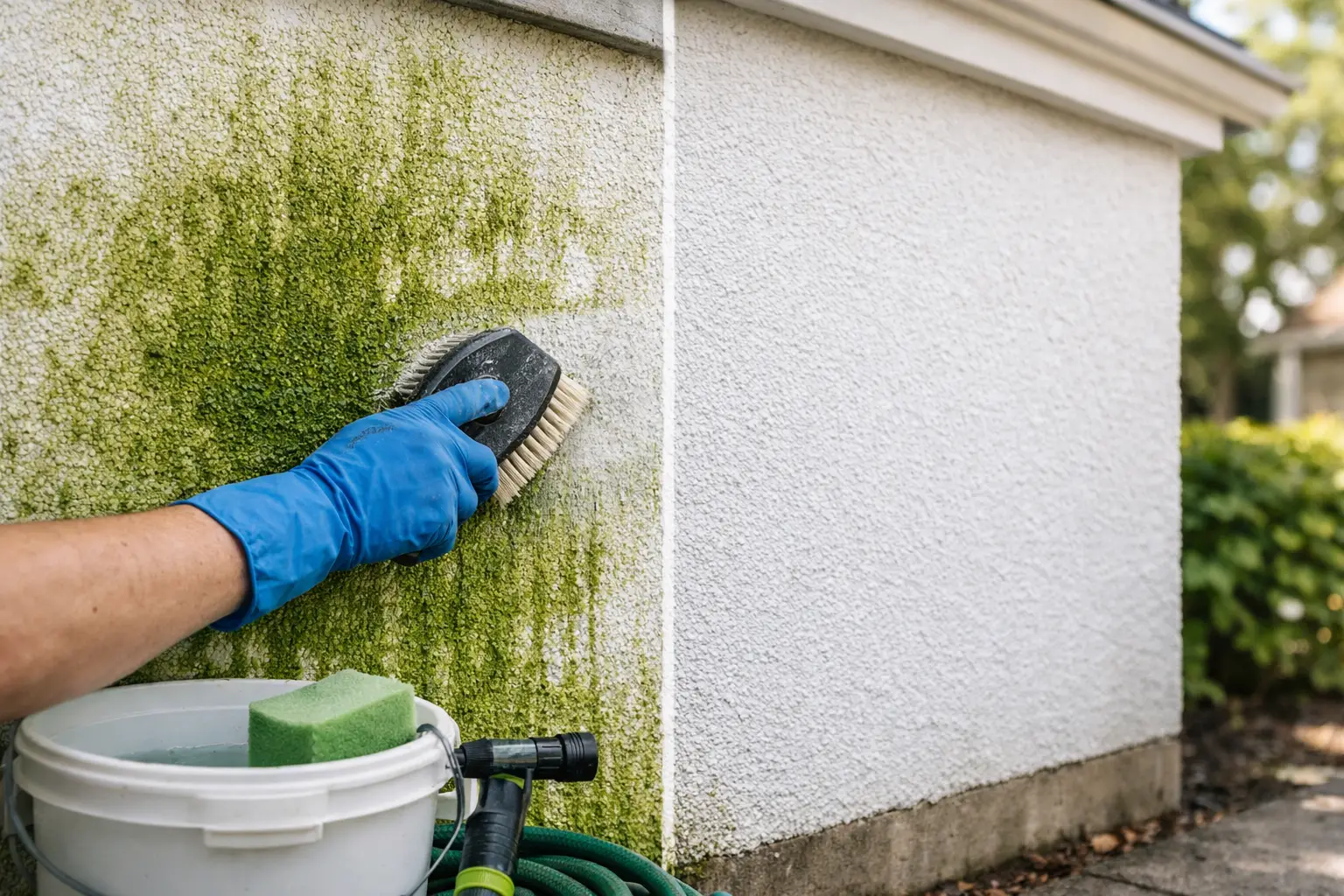
Green streaks on a painted wall can make an otherwise well-kept property look neglected fast. If you’re wondering how to stop algae on exterior walls, the answer is not just washing it off and hoping it stays away. Algae grows where moisture, shade and surface build-up give it the right conditions, so lasting control comes from cleaning the wall properly and fixing what keeps it damp.
In Southeast Queensland, this is a common issue. Humidity, rainfall, tree cover and coastal air all help algae take hold on homes, schools, unit complexes and commercial buildings. The good news is that it can be managed well when the treatment matches the surface.
Why algae keeps coming back
Algae is usually a symptom of the environment around the wall, not just the wall itself. South-facing or heavily shaded areas stay damp longer after rain. Walls near gardens, retaining walls, pool areas or poorly drained paths tend to hold more moisture. Dust, pollen and organic residue also give algae something to cling to.
That is why a quick blast with high pressure often gives only a short-term result. It may remove the visible growth, but it does not always kill the spores properly. On painted surfaces, render and other more delicate finishes, too much pressure can also mark the wall, strip paint or force water where it should not go.
How to stop algae on exterior walls properly
The most effective approach has three parts – remove the growth, treat the surface and reduce the conditions that allow it to return.
Start with the right cleaning method
This is where many property owners go wrong. High pressure sounds like the obvious fix, but exterior walls are not the same as a concrete driveway. Painted walls, render, weatherboards and some cladding materials usually respond better to soft washing. Soft washing uses lower pressure with an appropriate cleaning solution to break down algae and treat the biological growth at the source.
That matters for two reasons. First, it gives a cleaner, more even result. Second, it helps protect the finish of the wall. If the surface is older, chalky, flaking or already weathered, pressure alone can do more harm than good.
On tougher masonry surfaces, a controlled pressure clean may be suitable, but it still needs the right pressure setting and chemical treatment. The method should match the wall material, its condition and how badly the algae has spread.
Kill the growth, not just the stain
Algae often leaves behind more than a visible mark. Microscopic residue can stay in the pores of the surface, especially on render, brick and textured coatings. If the treatment only removes the top layer, regrowth can happen quickly.
A proper wash should include a solution designed to treat organic contamination. This helps kill remaining spores so the wall stays cleaner for longer. It is one reason professional wall washing usually outlasts a basic hose-down or DIY pressure clean.
There is a trade-off here. Stronger chemicals are not automatically better. The wrong mix can affect paint, plants or nearby finishes. The goal is a safe, effective treatment that suits the material and the site conditions.
Fix the moisture issues around the wall
If you want to know how to stop algae on exterior walls for the long term, look closely at where the water is coming from. Cleaning removes the problem you can see. Moisture control deals with the reason it developed.
Improve drainage and runoff
Overflowing gutters, blocked downpipes and poor stormwater flow are common triggers. Water spilling down a wall after every shower creates the perfect breeding ground for algae. Even a small leak can keep one section damp enough for growth to keep returning.
Check that gutters are clean, downpipes are discharging properly and the ground around the property falls away from the building where possible. On some sites, splashback from paths or garden beds also contributes to persistent staining.
Cut back shade and improve airflow
Walls hidden behind dense shrubs or overhanging trees stay wet longer and collect more organic debris. Trimming vegetation back can make a bigger difference than many people expect. More light and airflow means the wall dries faster, and that alone makes algae less likely to return quickly.
This is especially relevant for body corporate properties, schools and commercial sites where landscaping can gradually close in around buildings over time. A wall that barely sees sunlight for months is always going to be a higher-risk area.
Watch irrigation and pool splash
Reticulation systems that regularly hit the wall, or pool areas with constant splash and humidity, can feed algae growth. Sometimes the fix is as simple as adjusting sprinklers or changing watering times. In other cases, the issue is repeated overspray on the same elevation and needs a more deliberate maintenance plan.
Surface type matters more than people think
Not every exterior wall should be treated the same way. Painted render, bagged brick, weatherboard, fibre cement and raw masonry all react differently to cleaning. The age of the coating matters too.
A newer painted surface may clean up well with a gentle soft wash and rinse. An older wall with brittle paint may need extra care, because even moderate pressure can lift weak sections. Porous masonry can hold contamination deeper, so the treatment may need more dwell time to work properly.
This is where experience counts. The best result is not the most aggressive clean. It is the clean that removes algae effectively while preserving the finish underneath.
DIY or professional cleaning?
For a small, easily accessible patch on a robust surface, some owners will try a DIY clean. That can work if the product is suitable, the wall is in good condition and you are careful around windows, plants and painted areas. But there are limits.
The main risk with DIY pressure cleaning is using too much force. Home machines are often used with the nozzle too close to the wall, which can leave lines, etch softer materials or drive water behind cladding and trims. Chemical misuse is the other issue. A mix that is too weak may do very little, while one that is too strong can damage surrounding areas.
For larger walls, second-storey sections, delicate finishes or recurring algae problems, professional treatment is usually the smarter option. A service-based approach saves time, reduces surface risk and tends to deliver a longer-lasting result.
How often should walls be cleaned?
There is no single schedule that fits every property. Some homes need attention every 12 months, while others can go much longer between treatments. It depends on shade, rainfall, nearby trees, wall orientation and the type of surface.
Commercial sites, schools and multi-unit properties often benefit from planned maintenance because presentation matters year-round and algae can spread gradually before it becomes obvious from ground level. Regular washing is usually more cost-effective than leaving the growth to build up heavily and then dealing with staining, coating wear or tenant complaints later.
As a guide, if you are seeing early green discolouration, dark spotting or a wall that never seems to dry out, it is better to act early. Light contamination is easier to treat than a well-established bloom.
Preventive steps that actually help
Prevention does not need to be complicated, but it does need to be consistent. Keeping gutters clear, trimming vegetation, redirecting sprinklers and scheduling periodic exterior washes all make a real difference. So does checking problem sides of the building after wet seasons.
For investment properties and managed sites, routine inspections help catch algae before it affects presentation or starts breaking down coatings. For homeowners, an annual clean can protect street appeal and help surfaces last longer.
When algae is already established, prevention starts with a proper first clean. After that, maintenance is what keeps the wall looking right.
When to get help
If the wall is painted, rendered, high-set, heavily shaded or showing repeated regrowth, it is worth having it assessed properly. The same applies if you are preparing a property for sale, handing over a tenancy, managing a school campus or maintaining a commercial frontage where appearance matters.
A professional exterior cleaning service can identify whether the issue is mainly organic growth, runoff staining or a broader moisture problem. From there, the wall can be cleaned with the right pressure and treatment for the surface. That is the approach Boost Exterior Cleaning takes, because a better result starts with choosing the right method, not the harshest one.
Algae rarely appears by accident. It shows up where moisture is winning. Deal with that, clean the wall the right way, and you give the surface a much better chance of staying cleaner for longer.


