

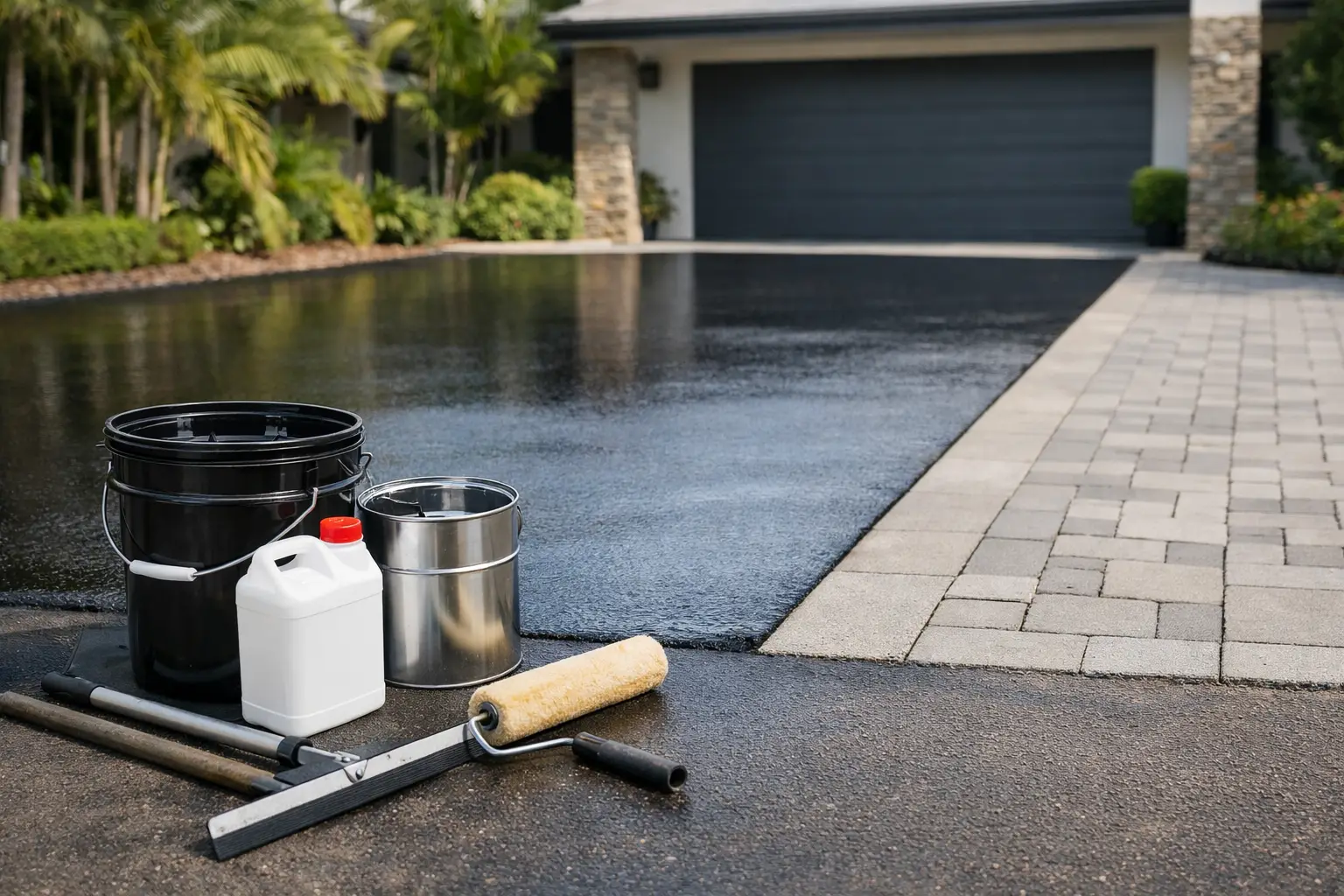
A freshly pressure-cleaned driveway can look outstanding, but Queensland weather quickly tests that finish. This driveway sealer types review explains what each common option does, where it works best and why choosing the wrong product can leave concrete patchy, slippery or difficult to maintain.
For most homes and properties, sealing is not about making a driveway look overly glossy. It is about reducing water absorption, slowing stain penetration and making routine cleaning easier. The right sealer depends on the driveway material, its condition, how much traffic it receives and the finish you want to maintain.
Why driveway sealing matters in Southeast Queensland
Concrete is porous. Without protection, water, tyre marks, oil, leaf tannins, fertiliser, mould and algae can work their way into the surface. In shaded areas, moisture sitting in those pores also creates the conditions for green growth and dark staining.
Sun adds another challenge. Strong UV exposure can fade some coatings, while heavy rain and humid conditions can shorten the life of products that are applied to a damp or poorly prepared surface. A good seal helps the driveway resist everyday contamination, but it cannot compensate for cracks, failing concrete or poor drainage.
Preparation matters just as much as the product. A driveway should be properly cleaned, treated for mould or algae where needed, thoroughly rinsed and allowed to dry before sealer is applied. Sealing dirt into concrete only locks in the problem.
Driveway sealer types review: the main options
Penetrating sealers
Penetrating sealers soak into the concrete rather than creating a visible coating across the top. They are commonly made with silane, siloxane or similar water-repellent compounds. Once cured, they help reduce moisture absorption while leaving the driveway looking close to its natural finish.
This is often a practical choice for plain concrete driveways where the owner wants protection without a sheen. Because there is little or no surface film, penetrating products generally do not peel in the way a topical coating can. They also preserve the natural texture of the concrete, which can be useful on sloped driveways or areas where slip resistance is a priority.
The trade-off is appearance. A penetrating sealer will not usually deepen the colour, hide old marks or deliver the darker wet-look finish some homeowners expect. It also offers more limited protection against heavy oil staining than a quality surface coating. If the driveway is already badly marked, a penetrating sealer may preserve the look rather than transform it.
Acrylic sealers
Acrylic sealers are one of the most common choices for residential concrete. They sit on or near the surface and are available in water-based and solvent-based formulas, as well as matte, satin and gloss finishes. They can enrich the colour of exposed aggregate, coloured concrete and pavers, producing the clean, revived look many property owners want after professional cleaning.
Water-based acrylics tend to have lower odour and are often easier to work with around occupied homes. Solvent-based acrylics may give a stronger colour enhancement or wet-look result, depending on the product. Either type can make the driveway easier to wash down by reducing the amount of grime that clings to the open concrete surface.
Their limitation is that they form a film. In high-traffic turning areas, near garage entrances and under parked vehicles, that film gradually wears. A driveway may need maintenance coats to keep its finish even. Applying too much product, or applying it over moisture, can cause whitening, bubbling, patchiness or a slippery surface when wet.
Acrylic is a sound option when presentation matters and the driveway is in good condition. The finish should be selected carefully, especially around pool paths, steep sections and shaded areas where water can sit.
Epoxy coatings
Epoxy is a heavier-duty coating most often associated with garages, workshops and protected concrete areas. It creates a thicker film than acrylic and can provide strong resistance to chemicals, tyre marks and abrasion when properly specified and applied.
For an outdoor driveway, however, epoxy is rarely the straightforward answer. Standard epoxy can yellow, chalk or break down under sustained UV exposure unless it is protected with a suitable UV-stable topcoat. Surface preparation is also demanding. The concrete must be clean, dry and mechanically prepared so the coating can bond correctly.
Epoxy can work for selected covered entries, carports or commercial areas where a tougher decorative coating is needed. For an open Queensland driveway, its complexity and UV sensitivity often make acrylic or a penetrating sealer the more sensible choice.
Polyurethane and polyaspartic coatings
Polyurethane and polyaspartic systems are premium coating options designed for durability, chemical resistance and, in many cases, better UV stability than epoxy alone. They are used more often in commercial settings, workshops and high-performance decorative flooring systems than on a typical suburban driveway.
These products can deliver excellent results, but they are not a shortcut. They require close attention to moisture levels, surface profile, application conditions and compatible primers. They also cost more than conventional sealing systems. For a heavily used commercial forecourt or a specialised finish, the investment may be justified. For a standard domestic driveway, it can be more product than the surface needs.
Paver and natural stone sealers
Not every driveway is concrete. Clay pavers, concrete pavers and natural stone need products matched to their material and finish. Some sealers are designed to stabilise jointing sand, some repel water while retaining a natural look, and others provide colour enhancement.
Using a concrete coating on porous stone or pavers without checking compatibility can create blotchy absorption, surface haze or a finish that becomes difficult to strip later. Natural stone is particularly variable. Travertine, sandstone, granite and bluestone do not all respond the same way, so a small test area is worthwhile before treating the full driveway.
How to choose the right sealer
Start with the surface, not the label on the tin. Plain broom-finished concrete often suits a penetrating product where a natural, low-maintenance outcome is preferred. Exposed aggregate and decorative concrete can suit a quality acrylic if you want colour enhancement and a more polished presentation.
Next, consider the driveway’s use. A home with several vehicles, frequent turning movements or a workshop area needs a finish that can be maintained realistically. If vehicles regularly leak oil, deal with the source as well as the stain. Sealer helps limit absorption, but it is not a permanent shield against neglected spills.
Think about exposure too. A sunny driveway needs a UV-stable system. A damp, shaded driveway should be cleaned and treated for biological growth before sealing. A steep driveway or an area near a pool needs a finish with appropriate slip resistance. A high-gloss coating may look sharp on day one, but it is not always the best long-term choice.
Common sealing mistakes that shorten the result
The most common issue is applying sealer to a driveway that is not fully clean or dry. Even a driveway that looks dry can retain moisture in the pores after rain, pressure cleaning or humid weather. That moisture can interfere with adhesion and leave cloudy areas beneath a film-forming sealer.
Another mistake is choosing gloss for the sake of shine. Gloss can highlight colour and exposed aggregate, but it also makes application overlap and wear more noticeable. It may increase slipperiness if the system is not designed with an anti-slip additive.
Over-application causes problems as well. More coats do not automatically mean better protection. Excess topical sealer can pool, remain tacky, trap moisture or crack and peel under tyres. Product instructions, surface porosity and local weather conditions all affect coverage rates.
Finally, do not expect sealer to repair a failing driveway. Cracks, spalling, sinking slabs and drainage issues should be assessed before sealing. Protecting a damaged surface may improve its appearance temporarily, but it will not stop structural movement or concrete deterioration.
A practical maintenance approach
A sealed driveway still needs care. Sweep away leaves and soil, clean spills promptly and arrange periodic exterior cleaning before grime becomes embedded. Avoid harsh acids or aggressive degreasers unless they are suitable for the specific sealer, as the wrong chemical can dull or weaken the finish.
For homeowners, body corporates and facility managers, the best result usually comes from treating cleaning and sealing as one maintenance plan. At Boost Exterior Cleaning, we assess the surface condition first, use the right cleaning method for the material and recommend a sealing approach that suits how the area is actually used.
The right driveway sealer should make your property easier to maintain, not create another surface problem to manage. Choose protection that fits the concrete, the climate and the level of finish you want to keep.


