

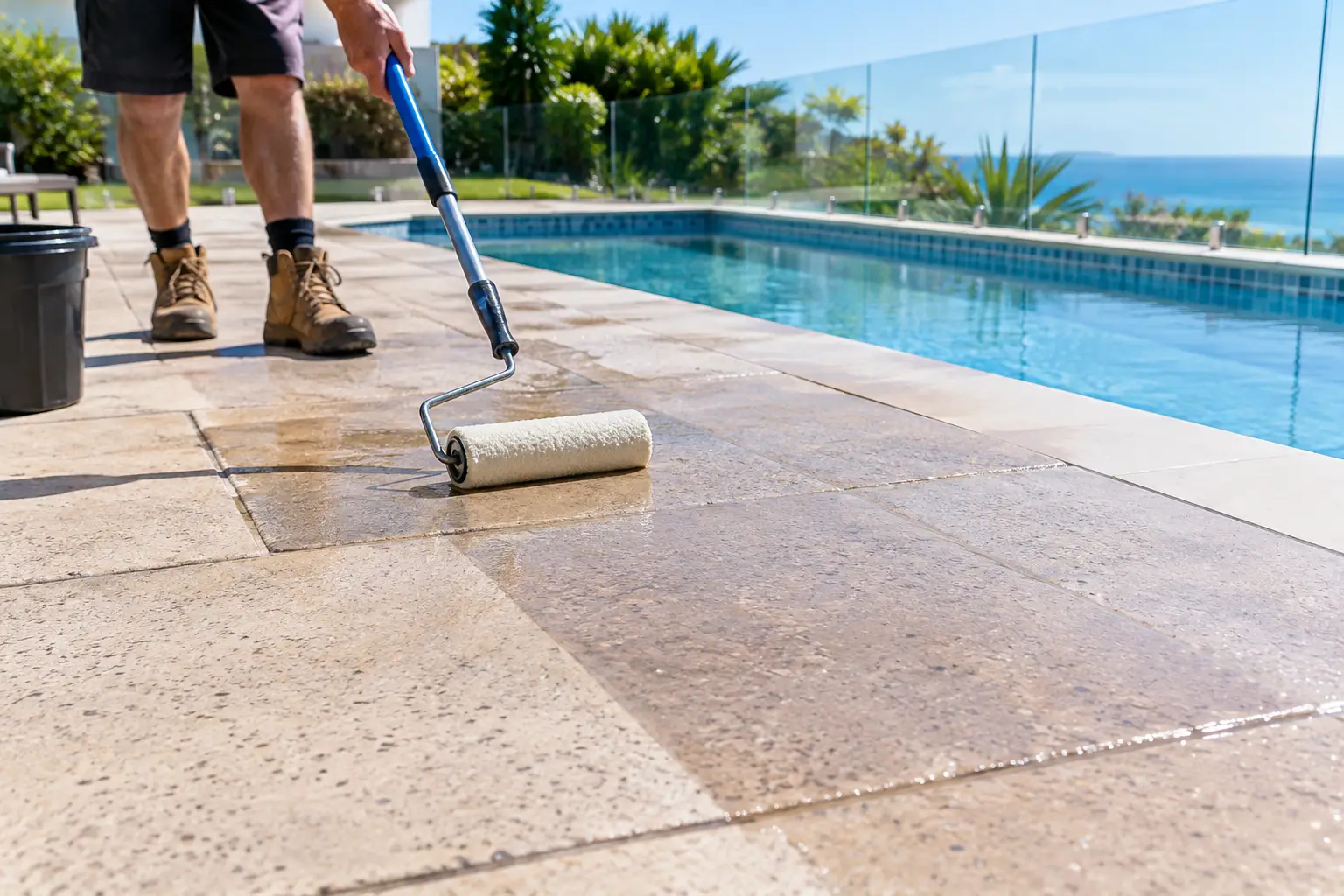
A pool deck can go from bright and inviting to stained, slippery and tired-looking faster than most homeowners expect. To seal pool deck pavers properly, the surface must be thoroughly cleaned, completely dry and matched with a sealer that suits both the paver material and the wet conditions around a pool.
Sealing is not simply about making pavers look darker or glossier. Done well, it helps reduce water absorption, makes sunscreen and drink spills easier to clean, slows down mould and algae growth, and protects the presentation of one of the most visible areas of your property. Done poorly, it can leave patchy colour, trapped moisture, a slippery finish or peeling sealer that is expensive to remove.
Why pool deck pavers need a different approach
Pool surrounds deal with more than ordinary foot traffic. They are regularly exposed to chlorinated or salt water, wet feet, sunscreen, leaf tannins, food spills, high UV and the humidity that encourages mould. In Southeast Queensland, afternoon storms and warm, damp weather add another layer of maintenance pressure.
The right sealer can make the deck easier to maintain, but it is not a substitute for cleaning or safe drainage. If water ponds on the surface, algae keeps returning from nearby garden beds, or the pavers have become loose, those issues should be addressed before sealing begins.
Material matters too. Concrete pavers, travertine, sandstone, slate and porcelain do not respond the same way to cleaning chemicals or sealers. A product that improves one surface can cause problems on another. Natural stone in particular may need a breathable penetrating sealer rather than a surface coating that changes its appearance.
Start with the paver type and condition
Before choosing a sealer, identify what is actually underfoot. Older pool areas are sometimes made from concrete pavers that resemble stone, while newer areas may use dense porcelain pavers or natural stone with a honed finish. If you are uncertain, test a small inconspicuous area or ask a professional to assess it.
Look closely for existing coatings. Signs of old sealer include uneven sheen, water beading in isolated patches, whitening, flaking or a darker colour in protected areas. Applying fresh sealer over a failing coating is rarely a fix. The old product may need to be stripped first so the new sealer can penetrate or bond evenly.
Also check the paver joints and edges. Sand loss, rocking pavers, cracked grout, lifting coping or failed expansion joints can let water move where it should not. Sealing over these problems may improve the appearance briefly, but it will not stop the underlying deterioration.
Clean before you seal pool deck pavers properly
Sealer locks in the condition of the surface beneath it. That is why preparation is the most important part of the job. Any mould, algae, tanning stains, sunscreen residue, dust or detergent left behind can show through the final finish or stop the sealer from performing as intended.
A pool deck should be cleaned with a method suited to its material. High pressure can etch softer stone, blast out jointing sand and leave visible lines across some pavers. Controlled pressure cleaning, paired with the correct treatment for organic growth, is often more effective than simply turning up the pressure.
Pay attention to shaded corners, along garden edges, under outdoor furniture and around the waterline side of the coping. These are the places where dampness and residue build up. Rinse thoroughly after treatment. Chemical residue can interfere with sealer performance, and residue near a pool is not something to leave unmanaged.
For heavily stained surfaces, cleaning may need to be repeated or targeted stain treatment may be required. Rust, leaf tannins, oil and calcium deposits are different problems and should not be treated with a one-product-fits-all approach.
Let the pavers dry all the way through
A clean deck is not automatically ready to seal. Moisture trapped in pavers or joints can cause whitening, cloudy patches and poor adhesion, particularly with film-forming sealers. The surface can feel dry while the material below still holds water.
Allow for a genuine dry-weather window after cleaning. The required drying time depends on the paver type, how saturated it became during cleaning, shade levels, humidity and the sealer manufacturer’s directions. Dense porcelain may dry differently from porous concrete or natural stone.
Avoid sealing if rain is expected before the sealer has cured. Morning dew is another consideration, especially in cooler or humid conditions. Start only when the pavers are dry and the forecast gives the coating enough time to cure without rain, pool splash or heavy use.
Choose a sealer for safety, not just shine
The most noticeable finish is not always the best finish for a pool area. Gloss and wet-look sealers can deepen colour and make pavers look freshly installed, but they may also alter slip resistance. Around water, safety should carry more weight than appearance.
Penetrating sealers are often a practical option for porous concrete pavers and natural stone. They are designed to soak into the surface, helping repel water and stains without creating a thick film on top. Depending on the product and material, they can retain a more natural look and avoid the peeling associated with some topical coatings.
Topical sealers can be suitable in the right setting, especially where a colour-enhanced or low-sheen finish is wanted. However, they demand careful surface preparation and application. If you choose one, confirm that it is suitable for pool surrounds and that the final surface maintains appropriate slip resistance when wet.
Porcelain and other very dense pavers are a separate case. They are generally low-porosity and may not need conventional sealing at all. Grout lines or surrounding stone features may still benefit from protection, but applying a standard paver sealer to porcelain can leave streaks or residue. Always follow the paver supplier’s care advice.
Apply in thin, even coats
Test the sealer first in a small, out-of-the-way section. This lets you check colour change, absorption, sheen and wet slip feel before treating the whole pool area. It is a simple step that can prevent a costly surprise.
Apply only as much product as the paver can accept. With penetrating sealers, excess product left sitting on the surface can dry unevenly and leave sticky or glossy spots. With film-forming products, heavy coats can create a finish that is too slick, prone to bubbling or more likely to peel.
Use the application method recommended for the product, which may be a low-pressure sprayer, roller, lambswool applicator or brush for edges. Keep a wet edge and work in manageable sections so lap marks do not develop. Cut in carefully around coping, drains, fences and garden edges rather than allowing sealer to pool in corners.
If a second coat is needed, apply it within the product’s recommended recoat window. More is not always better. The correct coverage rate matters far more than building up extra layers.
Keep the deck off limits while it cures
Once sealed, keep people, pets, furniture and pool toys off the area until the stated curing time has passed. Do not assume the deck is ready because it feels dry underfoot. Some sealers need longer to reach full water resistance and durability.
Avoid hosing the deck, moving heavy furniture or using aggressive cleaners during this period. If the area borders the pool, take reasonable care to prevent overspray and runoff entering the water during application and clean-up.
Maintain the finish without damaging it
A sealed deck still needs regular care. Sweep away leaves and garden debris before they stain, rinse off sunscreen and spills promptly, and treat mould early rather than waiting for it to spread. Gentle, suitable cleaning methods will help preserve both the pavers and the sealer.
The resealing interval depends on traffic, UV exposure, pool chemicals, paver porosity and the product used. Rather than sealing to a calendar, watch for changes in water absorption, staining and overall finish. When water starts soaking in quickly and the deck is harder to clean, it may be time for another assessment.
For large pool areas, older pavers or surfaces with mould, staining and failed sealer, professional preparation is often the better value. Boost Exterior Cleaning uses surface-appropriate cleaning methods to prepare outdoor areas carefully before protection is applied.
A properly sealed pool deck should still feel like a pool deck: clean, comfortable underfoot and safe when wet. Put the work into preparation and product selection, and the result will look better for longer without sacrificing the practical safety your family, guests or tenants rely on.


