

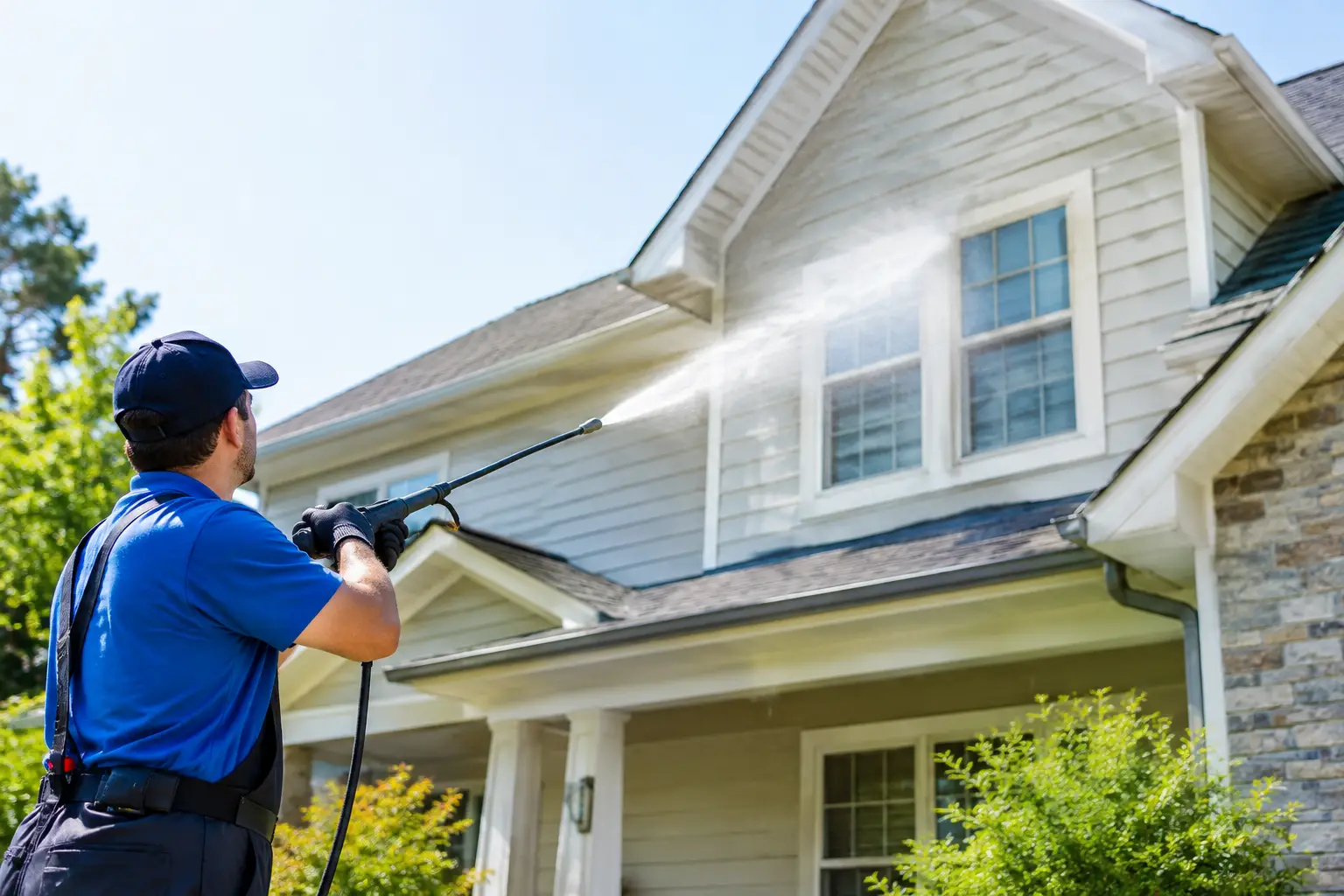
A green tinge on painted walls, dark marks under eaves and slippery algae around the pool are more than cosmetic problems in Southeast Queensland. The top benefits of soft washing come from treating the biological growth causing those marks, rather than simply blasting the surface until it looks better for a short time. For homes, schools, retail sites and strata properties, it is a practical way to restore presentation while taking proper care of the materials underneath.
What soft washing does differently
Soft washing uses low-pressure water with purpose-selected cleaning solutions to break down mould, mildew, algae, lichen, bacteria, dirt and airborne pollutants. The solution does the cleaning work. The rinse is gentle, removing treated contamination without the aggressive force associated with high-pressure cleaning.
That distinction matters. Many exterior surfaces look tough but have finishes that can be damaged by excessive pressure. Painted render, weatherboards, roof coatings, exterior cladding, timber, screens and some natural stone all need a method matched to their condition and construction.
A professional soft wash is not just a low-pressure rinse. Surface type, level of growth, drainage, surrounding gardens and nearby windows all need to be considered before treatment begins. The aim is a clean, even result that protects the property rather than creating a new repair job.
The top benefits of soft washing for exterior surfaces
It is gentler on paintwork and delicate finishes
High pressure can strip or lift weak paint, force water behind cladding, roughen timber fibres and damage ageing seals. It can also leave visible cleaning lines on sensitive finishes. Soft washing is designed to avoid that unnecessary force.
For older Queensland homes, rendered facades and properties with weathered exterior paint, this can be the difference between refreshing the outside of a building and bringing forward repainting costs. Soft washing will not fix paint that is already failing, but it gives sound paintwork the careful clean it needs.
It treats mould and algae at the source
Mould and algae are persistent because they do not sit only on the visible surface. A pressure-only clean may remove the top layer quickly, yet leave spores and organic residue behind. That is why staining can return sooner than expected, especially in shaded or damp areas.
With soft washing, the cleaning treatment is applied to address the growth itself before rinsing. This creates a more complete clean on walls, soffits, fences, exterior paths, pool surrounds and commercial facades. The result is not permanent, because Queensland weather still creates ideal conditions for regrowth, but it can keep surfaces looking cleaner for longer than water pressure alone.
It improves kerb appeal without harsh cleaning marks
A clean exterior changes the way a property feels from the street. Fresh-looking walls, bright eaves and tidy outdoor areas make a home more inviting for everyday living, open inspections and sale campaigns. For businesses, clean building exteriors help reinforce that the premises are cared for before customers even walk through the door.
Soft washing is particularly effective where grime has built up across broad painted surfaces. Instead of concentrating force in one small area, the method is intended to deliver a consistent finish across the whole surface. That matters for shopfronts, body corporate buildings, school facilities and homes where patchy cleaning is highly noticeable.
It supports longer surface life
Organic growth holds moisture against exterior materials. Over time, that moisture can contribute to staining, deterioration and premature wear, particularly around joints, trims, painted timber and porous surfaces. Pollution, salt air and accumulated grime can add to the problem in coastal and urban locations.
Routine cleaning is not a substitute for repairs or repainting, but it is part of sensible preventative maintenance. Removing contaminants before they build up helps property owners monitor the real condition of their surfaces. Cracks, peeling paint, failed sealant and damaged areas are easier to spot once they are not hidden beneath grime.
It can make outdoor areas safer
Algae and mildew on paths, stairs, pool surrounds and shaded concrete can become slippery when wet. These are common trouble spots around homes, schools, unit complexes and commercial properties, particularly after rain or in areas with limited sunlight.
The right cleaning approach can improve surface grip by removing the biological film causing the slick feel. Soft washing is often useful for treating the growth on suitable surfaces, while pressure cleaning may be required for durable concrete where dirt and built-up residue need stronger mechanical removal. A professional assessment ensures the method suits both the surface and the safety issue.
It reaches awkward exterior areas effectively
Eaves, upper walls, decorative trim, gutters, screens and vertical cladding can be difficult to clean by hand. They are also areas where cobwebs, dust and mould tend to collect. Soft washing allows these surfaces to be treated and rinsed without relying on harsh close-range pressure.
This makes it a strong option for full house washing and commercial building washing, where the goal is to achieve an overall transformation rather than clean only the most accessible sections. A properly planned service also considers run-off and protects surrounding areas while the work is completed.
Where soft washing is the best choice – and where it is not
Soft washing is often the preferred method for painted exteriors, rendered walls, weatherboards, vinyl or composite cladding, fascia boards, eaves, fences and delicate roof coatings. It is also useful for removing mould and algae from many exterior surfaces where preservation matters as much as appearance.
It is not automatically the answer for every job. Driveways, heavily soiled concrete, parking areas and some hard tile surfaces may need controlled pressure cleaning after treatment to lift ingrained dirt. Natural stone needs even more care because the wrong chemical or pressure can etch, discolour or weaken the material. Sealing, previous coatings and the age of the surface can also change the recommended approach.
The best result usually comes from using the right combination of treatment, pressure and rinsing technique. A quality exterior cleaner does not use one setting or one solution across every part of a property. They inspect the materials first, then choose the method that delivers a visible result without taking unnecessary risks.
Soft washing for homes, commercial sites and shared properties
For homeowners, soft washing can be scheduled as part of annual exterior maintenance or before a sale, rental inspection or major event. It is especially valuable after a wet season, when shaded sides of the house and outdoor living areas often show the most mould and algae.
For commercial and institutional properties, regular exterior cleaning helps maintain presentation across entrances, facades, walkways and common areas. Property managers and body corporate representatives also benefit from a planned approach that addresses problem zones before they become larger cleaning or slip-hazard issues.
Schools, shopping centres and office sites need careful coordination around public access, vehicles and operating hours. The cleaning method matters, but so does a contractor’s ability to work safely, communicate clearly and leave the site presentable for the next day’s trade or classes.
How to get a lasting result from soft washing
The condition of the property determines how often cleaning is needed. A sunny, open home may stay cleaner for longer than a heavily shaded property near dense trees. Coastal exposure, rainfall, irrigation overspray and nearby traffic can also speed up grime build-up.
Most properties benefit from regular inspection rather than waiting until walls are visibly green or paths become slippery. Keeping vegetation trimmed away from exterior walls, clearing gutters, improving drainage and repairing leaks can reduce the moisture that encourages regrowth. These simple steps make professional cleaning more effective and help protect the investment in your exterior surfaces.
For a home or facility that needs more than a quick rinse, Boost Exterior Cleaning can assess the surface, identify the right cleaning method and restore the areas that make the biggest difference to presentation and upkeep. A well-timed soft wash keeps small exterior problems from becoming the feature everyone notices.


