

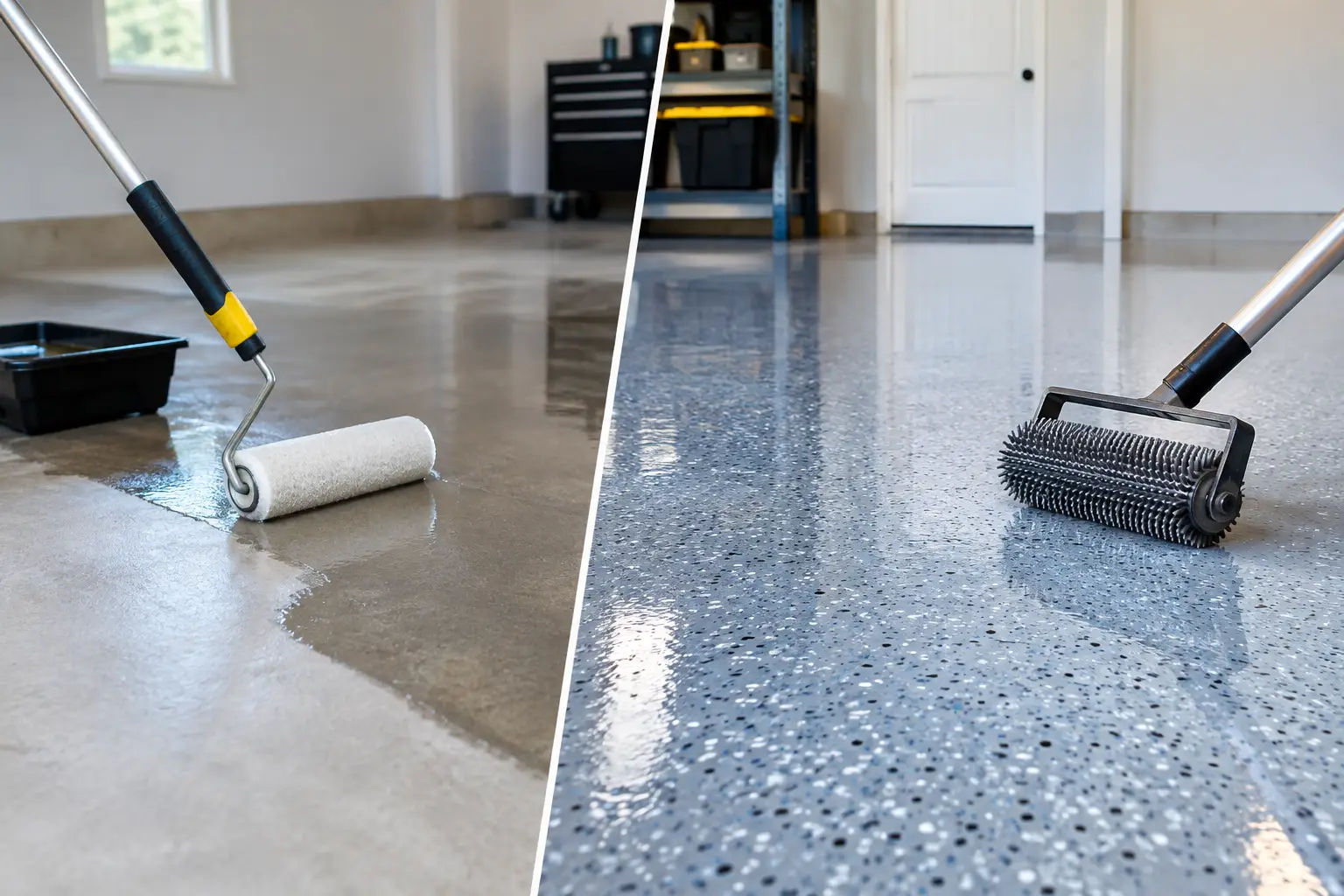
A driveway can look clean after pressure washing, yet still absorb water, oil and tyre marks. A garage floor may be structurally sound but dusty, stained and difficult to keep presentable. That is where concrete sealing versus epoxy coating becomes a practical decision, not just a cosmetic one.
Both options protect concrete, but they work in very different ways. The right choice depends on where the surface is located, how it is used, the condition of the concrete and the finish you expect to maintain. For most exterior concrete around Southeast Queensland homes and commercial properties, a professional sealer is often the sensible option. For selected indoor or covered areas that need a harder decorative surface, epoxy may be worth considering.
Concrete sealing versus epoxy coating: the key difference
Concrete sealers are designed to protect the concrete itself. Depending on the product, they either penetrate into the pores of the slab or form a light protective layer over the top. A quality sealer helps reduce moisture absorption, oil staining, mould growth and surface weathering while retaining much of the concrete’s natural appearance.
Epoxy is a thicker, resin-based coating applied as a visible film across the surface. It creates a more uniform, often glossy finish and can be coloured or finished with decorative flakes. Rather than simply reducing absorption, it covers the concrete with a protective layer.
This distinction matters outdoors. Exterior slabs expand and contract in Queensland heat, collect moisture during heavy rain and can be affected by UV exposure. A penetrating or purpose-made exterior sealer works with the concrete. Epoxy can look excellent in the right setting, but it demands much more from the slab and the preparation underneath it.
When concrete sealing is the better fit
Concrete sealing is usually the stronger choice for driveways, paths, patios, pool surrounds, entry areas and exposed commercial hardstands. These surfaces face sun, rain, leaf tannins, vehicle drips, dirt and regular foot traffic. The aim is generally to preserve the concrete, make cleaning easier and improve presentation without creating an artificial-looking finish.
A properly selected sealer can help slow down water penetration. That matters because moisture carries dirt into the pores, encourages mould and algae in shaded areas, and can contribute to gradual surface deterioration. Sealed concrete is not maintenance-free, but it is far easier to wash and maintain than an untreated, porous slab.
For property owners preparing to sell, lease or hand back a property, sealing can provide a noticeable finish after professional pressure cleaning. It can deepen the colour of some concrete and pavers, reduce the dusty appearance of older surfaces and help the cleaned result last longer.
There are different sealer finishes to consider. A penetrating sealer is often subtle and practical for external areas. Film-forming sealers can offer a more noticeable sheen or colour enhancement, but they need to be selected carefully for slip resistance, UV stability and the condition of the surface. The glossiest option is not always the best option around wet pool areas, steep driveways or busy footpaths.
When epoxy coating makes sense
Epoxy is most at home on internal or well-covered concrete, particularly garage floors, workshops, showrooms and selected commercial work areas. It can produce a clean, high-impact finish that is easier to wipe down than bare concrete. When installed correctly, it offers good resistance to many spills, tyre marks and day-to-day wear.
It is also a design choice. A plain grey garage can be transformed with a coloured epoxy system, while decorative flakes can help disguise minor marks and create a more finished look. For businesses with a customer-facing indoor floor, epoxy can support a tidy, professional presentation.
However, epoxy is only as good as the preparation beneath it. The slab must be clean, dry, sound and properly profiled so the coating can bond. Oil contamination, moisture vapour, loose concrete, old sealers and previous failed coatings can all cause problems. If the concrete is not prepared properly, epoxy may blister, peel or delaminate.
Outdoor epoxy also comes with extra risks. Many standard epoxy products can yellow or chalk under direct sunlight. Rain and standing water can challenge adhesion, while a smooth coating can become slippery when wet unless an appropriate non-slip additive is used. For an exposed driveway or pool surround, a sealer is generally more practical and lower risk.
Appearance, durability and maintenance
The better-looking finish depends on what you want the surface to be. Sealing typically keeps the character of the concrete visible. It is ideal when the goal is a cleaner, more even and better-protected version of the surface you already have.
Epoxy creates a more dramatic change. It hides variation in the concrete and gives the floor a finished coating. That suits a garage or indoor workspace, but it can look out of place on an exposed driveway or older outdoor slab where natural movement and weather exposure are part of the equation.
In terms of durability, neither option has one fixed lifespan. Sun exposure, drainage, traffic, cleaning methods, the condition of the slab and product quality all make a difference. A sealer may need periodic reapplication, particularly in high-traffic areas or full sun. This is usually straightforward when the surface has been cleaned and prepared correctly.
Epoxy can last well in a suitable indoor environment, but repairs are often more involved if it fails. A small worn patch can be difficult to blend into the surrounding coating, and widespread peeling may require extensive mechanical preparation before recoating. That is why choosing epoxy simply because it sounds tougher can be an expensive mistake.
Cost is more than the initial quote
A concrete sealer is usually less costly to apply than a full epoxy system because the installation process is generally simpler. The concrete still needs thorough cleaning, stain treatment and drying time, but most exterior sealing projects do not require the same level of grinding, moisture testing and multi-coat application as epoxy.
Epoxy’s higher upfront cost reflects the preparation and materials required. It may represent good value for an indoor garage or commercial floor where appearance and easy clean-up are priorities. It is less attractive when the slab is exposed to weather, has unresolved moisture issues or is likely to move and crack.
Before comparing quotes, check what work is included. A proper scope should address cleaning, stain removal, crack treatment where appropriate, surface preparation, product type, number of coats and slip-resistance requirements. A coating applied over dirty, damp or poorly prepared concrete is not a bargain.
Start with the condition of your concrete
No sealer or epoxy coating will fix major structural problems. If the slab has active cracking, spalling, drainage issues or loose surface material, those concerns should be assessed before any protective finish is applied. Coating over a problem may hide it briefly, but it will not stop the problem from returning.
Cleaning is the first step in either approach. Mould, algae, tyre residue, oil, old coatings and built-up grime must be removed using methods suited to the surface. High pressure is not automatically the answer. Different concrete finishes and surrounding materials need the correct pressure, equipment and treatment to avoid damage while achieving a clean, sound surface.
For exterior concrete, Boost Exterior Cleaning can professionally clean and prepare driveways, paths, patios and other hard surfaces before applying an appropriate sealer. The aim is a cleaner result that protects the surface and improves the way the property presents, without treating every slab as though it needs the same solution.
Which option should you choose?
Choose concrete sealing when the surface is outside, exposed to weather or valued for its natural concrete appearance. It is the practical option for most driveways, walkways, patios and external common areas where easier cleaning, reduced staining and long-term surface care are the priorities.
Choose epoxy coating when you have an indoor or protected concrete floor, a stable and properly prepared slab, and a clear reason to want a coloured or high-build finish. Garages, workshops and covered commercial floors are the usual candidates.
The best result starts with an honest assessment of the slab, not the shiniest product brochure. Clean the surface properly, address the cause of stains or moisture, and choose a finish that suits how the area is actually used. That approach keeps concrete looking better for longer and avoids paying twice for a finish that was never right for the job.


