

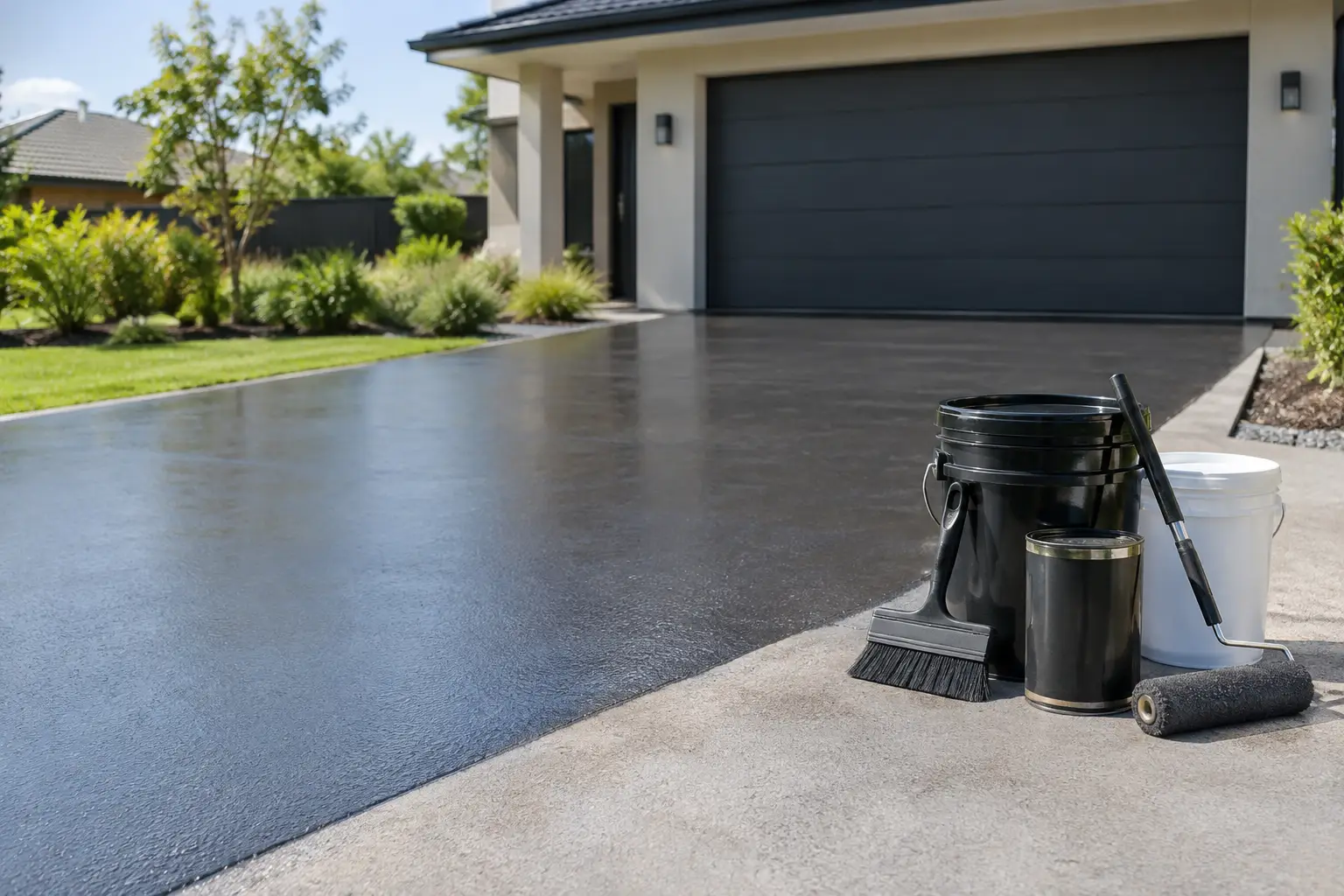
A clean driveway can lift the whole presentation of a property, but Queensland sun, heavy rain, tyre marks and mould can quickly take that fresh finish away. Choosing from the best driveway sealer types is about more than making a surface look better on the day. The right product helps reduce water penetration, staining, fading and premature surface wear – provided it suits the material beneath it.
There is no single sealer that works best for every driveway. Concrete, pavers and asphalt all react differently to moisture, traffic and UV exposure. A sealer that gives one surface a rich, glossy finish may leave another too slippery, patchy or unable to breathe. The most reliable result starts with identifying your driveway material, its condition and the finish you want to maintain.
Best driveway sealer types by surface and finish
Penetrating sealers for natural-looking concrete and pavers
Penetrating sealers soak below the surface instead of creating a visible coating on top. They are commonly used on plain concrete, exposed aggregate, porous pavers and some natural stone surfaces where owners want protection without a noticeable change in colour or sheen.
These sealers work by reducing the amount of water, oil and contaminants able to enter the pores of the material. That can make routine cleaning easier and limit moisture-related issues such as efflorescence, surface staining and mould growth. Because there is little or no film on the surface, penetrating sealers are usually a practical choice around sloped driveways, pool-adjacent paving and walkways where slip resistance matters.
The trade-off is appearance. A penetrating product will not usually deliver the darker “wet look” or glossy finish that some homeowners want. It also will not hide existing marks, worn areas or colour variation. If the driveway is already heavily stained, cleaning and stain treatment need to be completed before sealing.
Water-based acrylic sealers for everyday concrete protection
Water-based acrylic sealers are a popular option for residential concrete driveways. They form a light protective film on the surface and are available in matte, satin and gloss finishes. Depending on the product, they can slightly deepen the colour of concrete or exposed aggregate while providing useful resistance against water, dirt and general wear.
For many homes, a quality water-based acrylic strikes a sensible balance between appearance, protection and future maintenance. It generally has a lower odour than solvent-based products and is often easier to recoat when the time comes. A matte or low-sheen formula can be a good fit for driveways where a natural finish is preferred.
However, acrylic coatings need proper preparation. Applying them over dust, mould, tyre residue or trapped moisture can result in whitening, peeling or uneven gloss. They can also wear faster in high-traffic areas, particularly where vehicles regularly turn their wheels while stationary. A non-slip additive may be worthwhile on steep driveways or where a gloss finish is selected.
Solvent-based acrylic sealers for colour enhancement
Solvent-based acrylic sealers are often chosen where a stronger colour enhancement or more pronounced finish is the goal. They can make decorative concrete, coloured concrete and certain pavers look richer and more uniform, creating the freshly finished appearance many property owners are after before a sale or tenancy changeover.
They can perform well in demanding outdoor conditions, but they are not automatically the better option. The higher sheen can show scratches, tyre marks and application inconsistencies more readily. Some solvent-based products also have a stronger smell during application, and surface preparation remains critical.
This type of sealer is best used when the driveway is structurally sound, thoroughly clean and completely dry. It should be applied in suitable weather, with the manufacturer’s coverage rate followed closely. Applying too much product in one pass is a common cause of sticky patches, roller marks and a finish that looks uneven once cured.
Polyurethane sealers for high-traffic areas
Polyurethane sealers create a tougher surface film than standard acrylic options. They are often considered for driveways with frequent vehicle movement, commercial forecourts, parking areas and decorative concrete that needs stronger abrasion and chemical resistance.
A well-specified polyurethane can offer excellent durability against tyre traffic, fuel drips and general wear. Some products also hold their finish longer than basic acrylic sealers. This makes them a worthwhile option when the upfront cost is less important than extending the time between maintenance coats.
The downside is that polyurethane systems are less forgiving. They require very good surface preparation and compatibility with any existing sealer. In some cases, a primer or a specific base coat is required. A professional assessment is especially valuable if the driveway has previously been sealed, as applying an incompatible product can lead to delamination or blotchy results.
Epoxy sealers for controlled commercial settings
Epoxy coatings are known for their strength and chemical resistance. They are commonly used on garage floors, workshops and industrial surfaces, but they are rarely the first choice for an exposed residential driveway.
Direct sun can cause some epoxy products to yellow or degrade over time unless they are protected by a UV-stable topcoat. Their smooth finish may also become slippery when wet. For outdoor driveways, polyurethane or a purpose-made exterior concrete sealer is generally a more practical option unless a coating system has been specifically designed for that exposure.
Asphalt sealers for bitumen driveways
Asphalt needs a different approach to concrete and pavers. Asphalt sealers are formulated to refresh faded blacktop, protect it from oxidation and help limit damage from water and spills. Options may include asphalt emulsion sealers and other specialist coatings designed for flexible bitumen surfaces.
Do not apply a concrete or paver sealer to asphalt. Asphalt expands, contracts and flexes with heat and traffic, so it needs a coating that can move with it. Cracks, soft spots and drainage problems should also be repaired before sealing. Sealer can improve appearance and provide protection, but it cannot correct a failing asphalt base.
What determines the right choice?
The driveway’s material is the starting point, but the condition of the surface matters just as much. A newer exposed aggregate driveway may only need a penetrating sealer to preserve its natural texture. Older plain concrete with fading and light surface wear may benefit from a low-sheen acrylic. Decorative paving may need a product that enhances colour while still allowing moisture vapour to escape.
Traffic is another deciding factor. A driveway used by one family car has different demands from a shared complex entry or a commercial parking area. Frequent turning tyres, utes, delivery vehicles and hot vehicle tyres place extra stress on film-forming sealers. In those situations, durability and correct application are more valuable than a high-gloss finish.
Also consider drainage and shade. Surfaces that stay damp after rain are more likely to develop mould and algae. Sealing can reduce moisture absorption, but it will not solve water pooling, blocked drainage or overhanging vegetation that keeps the driveway shaded. Those issues need to be addressed to keep the finish looking good.
Cleaning and preparation matter as much as the sealer
A premium sealer applied to a poorly prepared driveway will not deliver a premium result. Before sealing, the surface should be free of mould, algae, dirt, tyre marks, oil residue, loose material and old failing coatings. Cracks and damaged sections should be assessed and repaired where needed.
Pressure cleaning needs to suit the surface. Too much pressure can damage older concrete, dislodge jointing sand from pavers or leave visible striping. Too little cleaning leaves contaminants behind that interfere with adhesion. At Boost Exterior Cleaning, driveway preparation is approached with the same focus used across exterior surface restoration: use the correct pressure, treatment and technique for the material being cleaned.
Drying time is equally important. Concrete and pavers can hold moisture below the surface even when they look dry from above. Sealing too soon after cleaning or rain can trap moisture and cause cloudy areas, whitening or coating failure. Weather, humidity, shade and the sealer manufacturer’s instructions all affect how long a surface needs to dry.
A practical finish that lasts
For most Australian homes, the best choice is not necessarily the shiniest or toughest product on the shelf. It is the sealer designed for your specific surface, applied to a properly cleaned and dry driveway, with a finish that suits how the area is used. A natural penetrating sealer is often ideal for safe, low-maintenance protection, while a quality acrylic or polyurethane system can suit owners seeking more visible colour enhancement and durability.
A driveway should make the property look cared for without becoming another ongoing problem. Start with a sound surface, fix drainage and staining issues first, then choose protection that works with the material rather than simply coating over it.


