

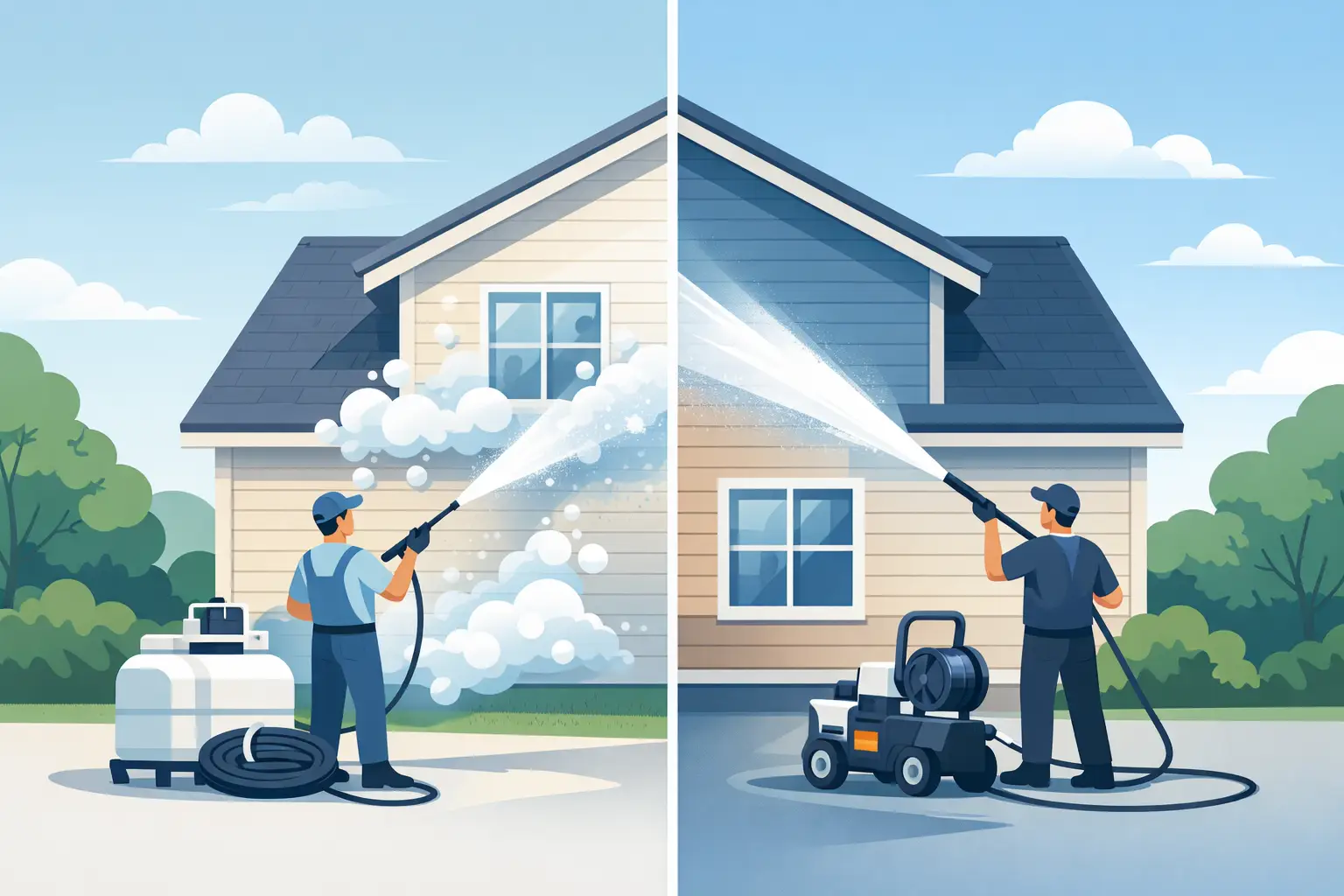
If your house is looking streaky, green, or flat-out tired, the cleaning method matters just as much as the cleaning itself. When homeowners compare soft washing vs pressure washing house surfaces, the real question is not which one is stronger. It is which one gets the result without damaging paint, forcing water where it should not go, or shortening the life of the surface.
A lot of people assume higher pressure means a better clean. On some exterior surfaces, that is true. On many parts of a house, it is not. The right approach depends on what you are cleaning, what condition it is in, and what is actually causing the staining.
Soft washing vs pressure washing house exteriors
Soft washing uses low pressure and purpose-made cleaning solutions to treat mould, algae, mildew, bacteria, and built-up grime. Instead of blasting contamination off the wall, it breaks it down and kills it at the source. That is why it is commonly the better option for painted exteriors, render, weatherboard, coated surfaces, and other more delicate materials.
Pressure washing relies on higher water pressure to physically remove dirt, stains, and surface buildup. It can be very effective on hard-wearing surfaces like concrete driveways, some pavers, and certain masonry areas. Used in the wrong place, though, it can strip paint, scar surfaces, damage pointing, and drive water behind cladding or into gaps around windows and trims.
That difference matters because a house exterior is rarely made of one material. You might have painted walls, rendered sections, eaves, soffits, paths, retaining walls, and a driveway all on the same property. Treating every surface the same way is where problems start.
Why soft washing is often the safer choice
For most residential house washing, soft washing is the safer and more effective method. The reason is simple. Much of what builds up on a home is organic growth, not just dirt.
Mould, algae, and mildew do not only sit on the surface. They attach themselves to it. If you only use pressure, you may remove the visible layer while leaving behind spores and biological residue. That can mean the growth returns faster, especially in shaded or damp areas.
Soft washing deals with the cause as well as the appearance. The cleaning solution does the heavy lifting, while low pressure helps rinse the surface without the kind of force that can rough up paintwork or damage finishes.
This is especially important for older homes, repainted homes, and homes with delicate exterior materials. A surface might look solid from the street but still be vulnerable to high-pressure cleaning. Paint can be oxidized. Render can be hairline cracked. Timber trim can have weak spots. In those cases, aggressive washing creates repair work that did not need to happen.
When pressure washing makes sense
Pressure washing still has a place. It is not the bad option. It is the right option for the right surface.
If you are cleaning a concrete driveway with built-up grime, a paved entertaining area with slippery residue, or a solid masonry surface that can handle higher pressure, pressure washing can deliver a fast, visible result. It is also useful where thick surface buildup needs to be lifted before any sealing or restoration work.
The key is control. Professional pressure cleaning is not just about turning the machine on and aiming it at the dirt. Pressure needs to be adjusted for the surface, nozzle selection matters, distance matters, and technique matters. Too much pressure in the wrong hands can etch concrete, leave wand marks, strip coatings, or cause splashing damage to nearby areas.
That is why experienced operators do not ask, “What machine should we use?” first. They ask, “What surface are we dealing with, and what is the safest way to clean it properly?”
The biggest mistake homeowners make
The biggest mistake is choosing the method based on how dramatic it looks rather than how suitable it is. High-pressure water looks powerful, so people assume it must be the best answer for every stained wall or dirty exterior. But visible force is not the same as correct treatment.
If the exterior has black mould spotting, green algae staining, cobweb buildup, traffic film, or general weathering, soft washing is usually the smarter house-washing solution. It cleans more gently and more thoroughly on surfaces where appearance and preservation both matter.
Pressure washing becomes the better fit when the surface is hard, durable, and built to handle that level of force. Think driveways, paths, certain retaining walls, and other ground-level surfaces designed for wear.
Which method is better for common house surfaces?
For painted exterior walls, soft washing is generally the better choice. It removes contamination without the risk of peeling or scarring the finish.
For render and stucco-style surfaces, soft washing is also usually preferred. These materials can hold organic growth in tiny pores, and excessive pressure can cause surface damage or force water into weak points.
For weatherboards, cladding, fascia, gutters, soffits, and eaves, soft washing is commonly the safer option because these areas often include painted finishes, joins, and edges where high pressure can do more harm than good.
For brick walls, it depends on the condition. Sound brick may handle more pressure, but older mortar joints or painted brick often call for a softer approach.
For driveways, concrete, and some paved surfaces, pressure washing is often the best tool. These areas collect ground-in grime, oil residue, algae, and surface staining that respond well to controlled high-pressure cleaning.
For roofs, especially painted or coated roofs, soft washing is typically the right method. High pressure on roofs can dislodge coatings, affect pointing, and create water ingress risks if handled poorly.
Results now versus results that last
Another practical difference in soft washing vs pressure washing house cleaning is how long the result holds.
Pressure washing can give an immediate visual improvement, especially on solid surfaces. But if the staining is biological and the underlying growth is not properly treated, regrowth can happen sooner than expected.
Soft washing usually performs better for long-term cleanliness on house exteriors because it targets the organisms causing the staining. That can help the home stay cleaner for longer, particularly in humid areas or properties with heavy shade, surrounding trees, or poor airflow.
For property owners thinking about resale, rental presentation, or regular maintenance, that matters. A house that not only looks clean on the day but stays cleaner longer is the better value result.
Why professional assessment matters
No two properties age the same way. A newer painted home in full sun needs a different approach from an older home with oxidized paint and years of mould growth on the southern side. The method should match the material, the contamination, and the condition.
That is where a professional inspection saves guesswork. A trained exterior cleaner can identify whether the staining is dirt, mould, algae, lichen, oxidation, or runoff marks, and then choose the right treatment. In many cases, the best result comes from combining methods across the property rather than using one process everywhere.
A house wash might involve soft washing the walls, eaves, and trims, then pressure cleaning the paths and driveway separately. That approach protects the home while still delivering the sharp before-and-after difference people want.
At Boost Exterior Cleaning, that surface-by-surface approach is a big part of getting strong results without creating avoidable damage.
So which one should you choose?
If you are deciding between soft washing and pressure washing for your house, start with the surface, not the stain. For most home exteriors, especially painted and delicate finishes, soft washing is the better choice because it cleans effectively while protecting the material underneath. For harder ground surfaces like driveways and some paving, pressure washing is often the right fit.
The best exterior cleaning is not about using the most force. It is about using the right pressure, the right treatment, and the right method for each part of the property.
If your home is starting to show mould, algae, grime, or weather staining, a careful clean now is usually cheaper than repainting or repairing damage later. The smart move is not choosing the harshest method. It is choosing the one that leaves your home cleaner, safer, and in better condition after the job is done.


