

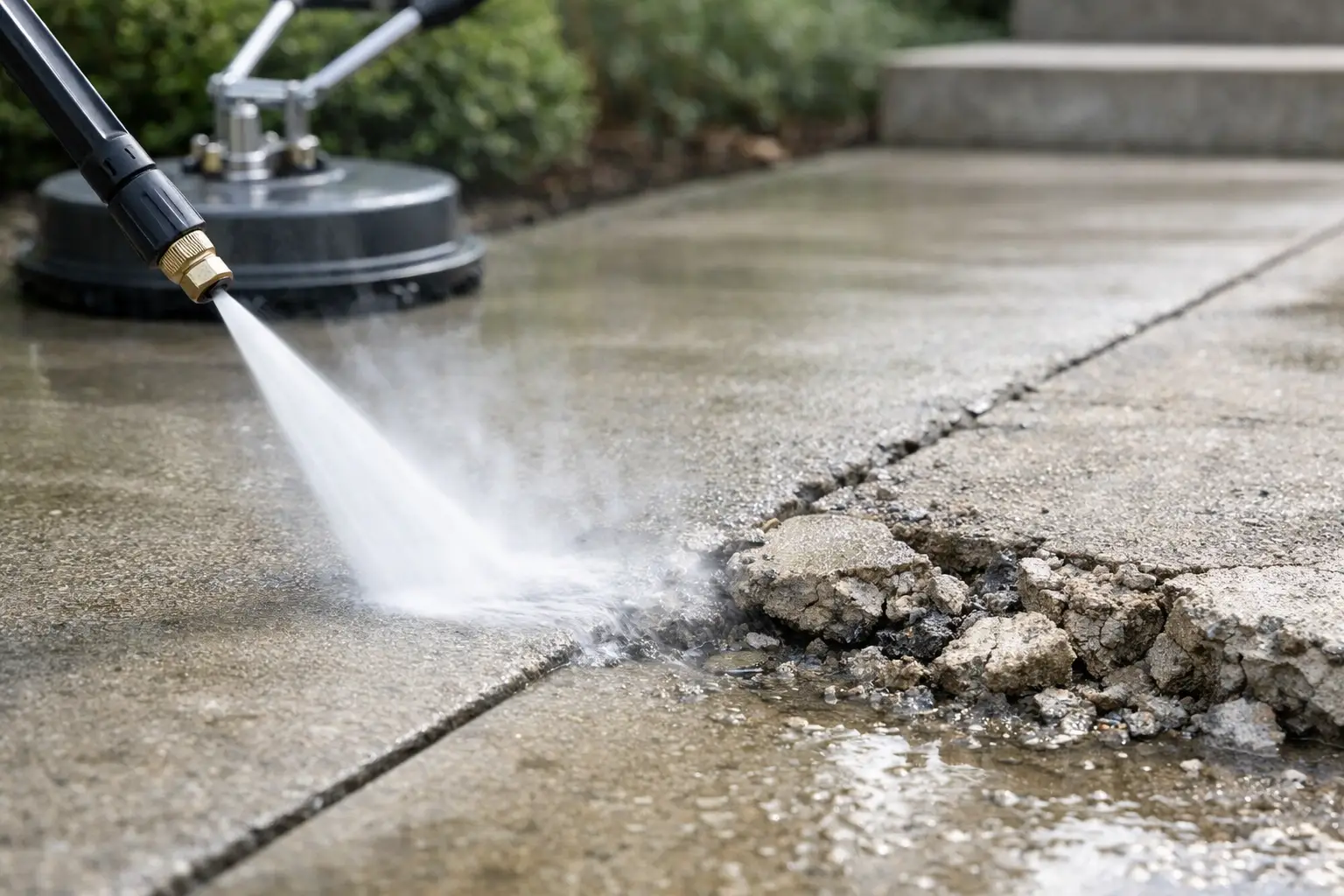
A lot of concrete damage starts with good intentions. Someone sees built-up grime, mould or black algae on a driveway, grabs a high-pressure cleaner, and assumes more force will mean a better result. That is exactly why property owners ask, can pressure cleaning damage concrete? The short answer is yes – it can. But the real issue is not pressure cleaning itself. It is using the wrong pressure, the wrong technique, or treating every concrete surface as if it is the same.
Concrete is tough, but it is not indestructible. Different slabs vary in age, finish, mix quality, porosity and condition. A newer exposed aggregate driveway will respond differently to cleaning than an older plain concrete path that has already started to wear. Once you understand that, the goal changes from blasting dirt away to cleaning the surface properly without shortening its life.
Can pressure cleaning damage concrete if the pressure is too high?
Yes, and it happens more often than people think. Excessive pressure can strip away the top layer of the concrete, leaving it rougher and more porous than before. That top surface matters because it helps the slab resist moisture, staining and everyday wear. Once it is damaged, the concrete can start holding more dirt and organic growth, which means it looks dirty again faster.
You may also see visible lines from the cleaning wand, patchy etching, or a furry-looking surface where the cement paste has been disturbed. On decorative concrete, the damage can be even more obvious. Exposed aggregate, coloured finishes and sealed surfaces can all be marked or stripped if the operator uses too much pressure or gets too close with the nozzle.
This is where experience counts. Professional cleaning is not about running the machine at maximum power. It is about matching the pressure, nozzle type, water flow and cleaning solution to the condition of the concrete.
Why concrete gets damaged during cleaning
Concrete damage usually comes down to method, not just machine size. A surface cleaner used correctly spreads pressure more evenly than a concentrated wand blast. The wrong nozzle can cut into the slab. Holding the lance too close can leave lines and pitting. Cleaning a weak or already deteriorated surface can expose problems that were hidden under grime.
There is also the issue of pre-treatment. In many cases, mould, algae and ground-in grime do not need extreme pressure at all. They need the right chemical treatment first, followed by controlled rinsing or surface cleaning. When operators skip that step, they often compensate by turning up the pressure. That is when damage becomes more likely.
Older driveways are especially vulnerable. If concrete has started to dust, crack, flake or spall, aggressive pressure cleaning can speed up the breakdown. The slab may already have water ingress, salt exposure or wear from traffic. Cleaning it harshly will not fix those problems. It can make them easier to see and worse over time.
Signs your concrete may be at risk
Not every slab should be cleaned the same way. Some surfaces need a lighter touch, especially if they show early signs of wear. If your concrete has loose aggregate, hairline cracking, flaking edges, old sealant failure or a chalky surface, it needs careful assessment before any cleaning starts.
Shaded areas around pools, garden edges and south-facing walls often build up heavy organic growth. Those surfaces can look like they need strong pressure, but the safer approach is usually treatment first. Once the biological growth is broken down, much less pressure is needed to remove it.
This is also true for commercial sites and school grounds where appearance matters, but surface safety matters just as much. Over-cleaned concrete can become uneven, hold water differently and wear inconsistently across high-traffic areas.
When pressure cleaning concrete is the right choice
Pressure cleaning is still one of the best ways to restore concrete when it is done properly. Driveways, pathways, bin areas, parking zones, courtyards and pool surrounds all benefit from professional cleaning. It removes slippery algae, built-up grime, tyre marks, leaf staining and general weathering that can make a property look neglected.
The key is using the right level of pressure for the specific surface. In some cases, a standard pressure cleaning approach is suitable. In others, lower pressure combined with targeted treatment gets a better result and reduces risk. That balance is what separates effective cleaning from surface damage.
A properly cleaned concrete area does more than improve street appeal. It can also reduce slip hazards, prepare the surface for sealing, and help extend the life of the slab by removing contaminants that trap moisture and encourage deterioration.
Can pressure cleaning damage concrete that has been sealed?
It can, especially if the seal has started to fail or if the wrong pressure is used. Sealed concrete has an added protective layer, and that layer can be stripped, scuffed or lifted if cleaning is too aggressive. Once that happens, the finish may look patchy, and the slab can become more exposed to moisture and stains.
That does not mean sealed concrete should not be cleaned. It means it should be cleaned with the seal in mind. Some surfaces only need a lower-pressure wash and the right treatment to remove dirt without affecting the coating. If the seal is already peeling, whitening or wearing unevenly, cleaning should be approached carefully so it does not create a worse visual result.
This matters for driveways, decorative concrete and commercial entry areas where presentation is part of the property’s value. A clean surface should look refreshed, not stripped back and uneven.
DIY pressure cleaning versus professional cleaning
DIY pressure cleaners are easy to hire, but easy to hire does not mean easy to use well. Many property owners focus on visible dirt and underestimate how quickly concrete can be etched by poor technique. The risk is not always dramatic at first. Sometimes the damage shows up later, when the cleaned area starts absorbing more water, staining faster or looking rougher than the surrounding slab.
Professional operators work differently. They assess the age and condition of the concrete, choose equipment based on the surface, and often combine chemical treatment with controlled pressure. That approach is more consistent and usually delivers a better finish across large areas.
For body corporates, schools and commercial facilities, that consistency matters. Uneven cleaning can leave high-visibility areas looking patchy, and damaged concrete is far more expensive to repair than it is to clean properly the first time.
How to clean concrete safely
Safe concrete cleaning starts with inspection. If the slab is cracked, flaking or already weakened, the cleaning method needs to account for that. From there, pressure should be set to suit the surface rather than the stain. Stubborn contamination is often better handled with treatment than brute force.
Using the correct nozzle and keeping a consistent working distance helps avoid lines and gouging. Surface cleaners are often the better option for broad areas because they distribute pressure more evenly. For mould, algae and organic staining, pre-treatment can do much of the heavy lifting before the rinse even begins.
After cleaning, some concrete benefits from sealing, especially if it is exposed aggregate, decorative, or in a high-traffic area. Sealing can help reduce future staining and make regular maintenance easier. It is not always necessary, but on the right surface it adds real long-term value.
The real answer to can pressure cleaning damage concrete
Pressure cleaning can absolutely damage concrete when it is done with too much force, poor technique or no understanding of the surface being cleaned. At the same time, avoiding pressure cleaning altogether is not the answer. Dirty concrete does not just look tired. It can become slippery, hold moisture, and age faster if grime, mould and algae are left to build up.
The smarter approach is to clean concrete with a method that suits its condition. That is why professional exterior cleaning is less about blasting and more about judgement. At Boost Exterior Cleaning, that means using the appropriate pressure and treatment for the job so the surface comes up cleaner without unnecessary risk.
If your driveway, path, pool area or commercial concrete is looking worn, the best result usually comes from slowing down long enough to choose the right method. Clean concrete should not just look better on the day. It should still be holding up well long after the equipment is packed away.


