

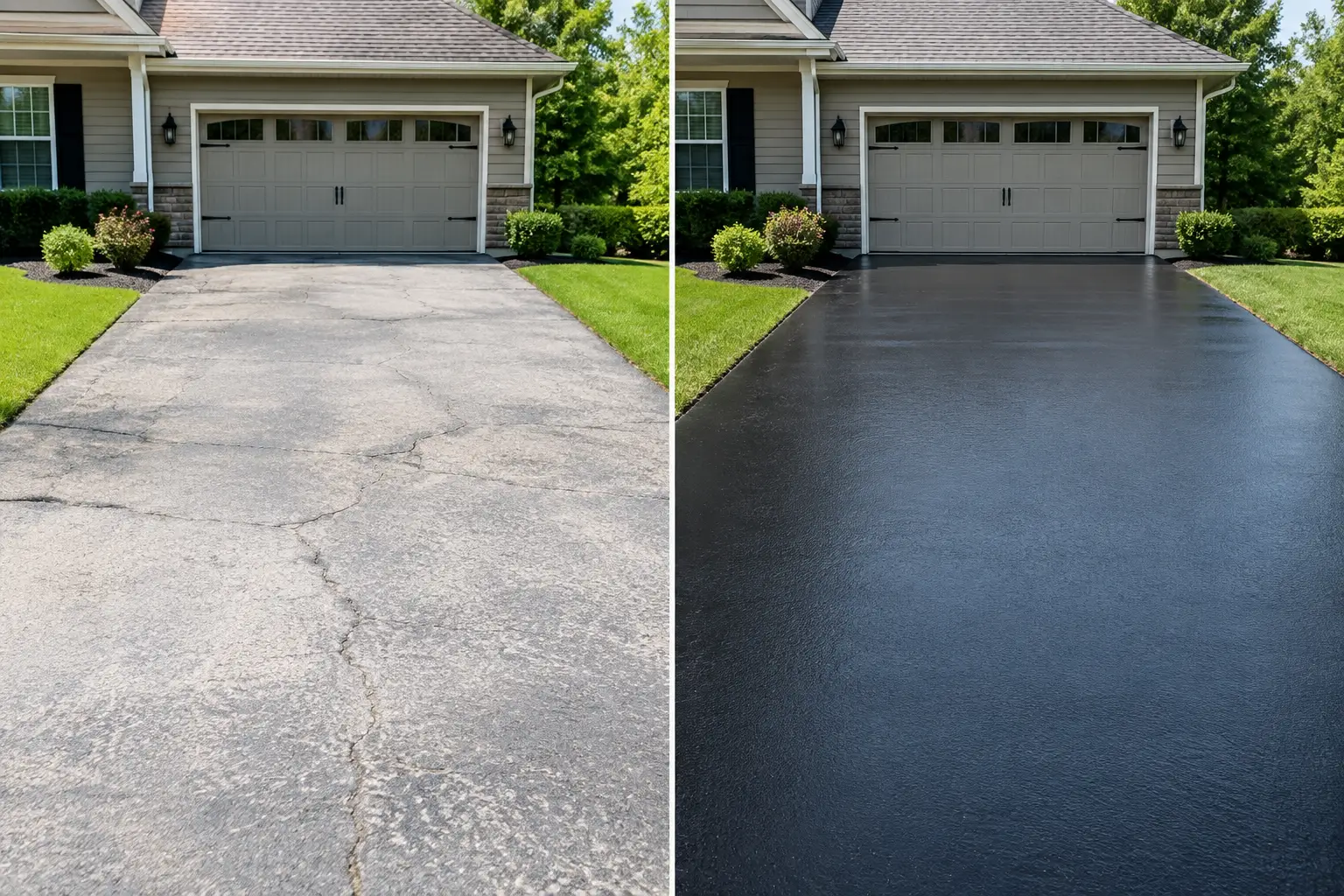
A driveway can look tired long before it is beyond saving. Oil spots near the garage, black mould in shaded areas, tyre marks, leaf tannins and faded concrete all build up gradually, so it is easy to stop noticing the change. The right before after driveway sealing result is not just about making the surface look cleaner for a week. It is about removing embedded grime, improving presentation and adding a protective layer that helps the driveway stand up to Queensland conditions.
For homeowners preparing to sell, property managers organising maintenance or commercial sites wanting a more presentable entry, sealing can make a highly visible difference. However, the result depends on the surface type, its existing condition and the preparation work completed before the sealer goes on.
Before and After Driveway Sealing: The Real Difference
Before sealing, most driveways show the effects of daily use. Concrete is porous, which means it can absorb moisture, oil, dirt and organic material. Pavers collect grime in joints and often develop mould or algae where water sits. Exposed aggregate can lose its depth and colour under a film of dirt, while plain concrete may look blotchy, pale or permanently marked.
After professional cleaning and sealing, the surface usually looks more even in colour and noticeably fresher. On exposed aggregate and decorative concrete, the stones and finish can become more defined. On pavers, the cleaned surface and joints look sharper. Depending on the sealer selected, the final finish may be natural-looking, low sheen or have a more noticeable enhancement of colour.
The best result is not always the glossiest result. A high-sheen sealer may suit some decorative surfaces, but it is not automatically right for every driveway. The goal is a finish that complements the material, handles vehicle traffic and does not create an unnecessarily slippery surface when wet.
Cleaning Comes Before Protection
Sealer locks in the condition of the surface underneath it. That is why preparation matters so much. Applying a coating over mould, tyre marks, dust or old residue can leave those issues visible and may affect how well the product bonds.
A proper driveway sealing job starts with an assessment of the material and contamination. Concrete, pavers, exposed aggregate, natural stone and tiled areas need different pressure settings, cleaning methods and treatments. Aggressive pressure is not the answer for every surface. Used incorrectly, it can etch concrete, disturb paver joints, strip weak coatings or damage delicate finishes.
Professional cleaning is designed to lift surface grime and treat mould, algae and organic growth without causing avoidable damage. Stubborn oil staining may need targeted treatment. Rust marks, paint overspray and old failed sealer can also require separate attention. These marks do not always disappear completely, especially if they have been sitting in porous concrete for years, but cleaning gives the sealer the best possible base.
The driveway must then dry properly. Moisture trapped beneath a sealer can lead to whitening, cloudiness, poor adhesion or premature failure. Drying time depends on the surface, weather, shade and recent rainfall. In Southeast Queensland, that often means planning around humid weather and afternoon storms rather than rushing to finish on a questionable day.
What Sealing Actually Helps With
A quality driveway sealer acts as a protective barrier. It reduces how easily water, dirt and common contaminants enter the surface, which can make ongoing maintenance much easier. When spills are dealt with promptly, oil and other stains are less likely to soak in as deeply as they would on unsealed concrete or pavers.
Sealing can also help slow down the weathering caused by sun, rain and regular traffic. It will not make a driveway indestructible, but it gives the surface a better chance of retaining its appearance between cleans. This matters on busy family driveways, rental properties, strata complexes and commercial sites where the entry area contributes to first impressions.
For pavers, sealing may help stabilise jointing sand when the correct system is used. This can reduce washout and make the paved area look tidier. For exposed aggregate, a suitable sealer can bring back some visual depth after cleaning. For plain concrete, it can provide a more uniform, cared-for appearance while limiting everyday grime absorption.
What Driveway Sealing Will Not Fix
A convincing after photo should still be honest. Sealing improves and protects a surface, but it is not a structural repair service. Deep cracks, spalling concrete, loose pavers, sinking sections and major drainage problems need to be addressed before sealing. Coating over them may make the area look better temporarily, but it will not stop the underlying issue from progressing.
Old stains can also be unpredictable. Fresh oil is usually easier to treat than a stain that has worked its way into concrete over several summers. Some discolouration is permanent, particularly where chemicals, fertiliser, rust or vehicle fluids have reacted with the material. A good contractor will explain what is realistic before work begins rather than promising a brand-new driveway every time.
There is also a trade-off with appearance. A colour-enhancing or gloss finish can create a stronger visual transformation, but it may show dust, tyre marks or application inconsistencies more readily than a natural finish. The right choice comes down to the driveway material, how it is used and the look you want to maintain.
Choosing the Right Sealer for Your Surface
There is no single sealer that suits every driveway. Penetrating sealers are often chosen where a natural appearance and water resistance are the priority. Film-forming sealers sit closer to the surface and can provide a more enhanced finish, but they need careful product selection and application. Existing coatings also matter, as a new product needs to be compatible with what is already there.
Before any product is applied, consider vehicle traffic, shade, drainage, the age of the surface and whether the driveway is exposed to salt air or heavy leaf drop. A steep driveway or frequently wet area needs particular attention to slip resistance. At Boost Exterior Cleaning, the approach is to match the cleaning and sealing method to the surface rather than treating every driveway the same.
How Long Does a Sealed Driveway Last?
The lifespan of driveway sealer varies. Exposure to harsh sun, standing water, frequent vehicle use, poor drainage and the type of product used can all affect performance. As a general guide, a professionally prepared and sealed driveway may need attention every few years, but high-traffic or exposed areas can need maintenance sooner.
Rather than waiting until the driveway looks heavily stained again, watch for signs that water is no longer beading on the surface, colour is becoming uneven or dirt is harder to remove. Regular sweeping, prompt spill clean-up and gentle periodic washing help extend the value of the sealing work.
Avoid harsh acids, strong degreasers and high-pressure cleaning without understanding how they may affect the coating. If you are unsure, test a small inconspicuous area first or ask the company that completed the work for care advice.
Is Your Driveway Ready for Sealing?
A driveway is a good candidate when the surface is sound but looking dull, stained or difficult to keep clean. It can be especially worthwhile before putting a home on the market, completing a tenancy turnover or refreshing a commercial frontage. The visual lift is immediate, but the ongoing benefit comes from making routine maintenance less demanding.
If your driveway has widespread cracking, loose pavers or drainage issues, deal with those first. Once the surface is stable, a professional clean and correctly selected sealer can protect the investment you have already made in your property. A well-prepared driveway does more than look good from the street – it gives dirt, moisture and daily wear less opportunity to take hold.


