

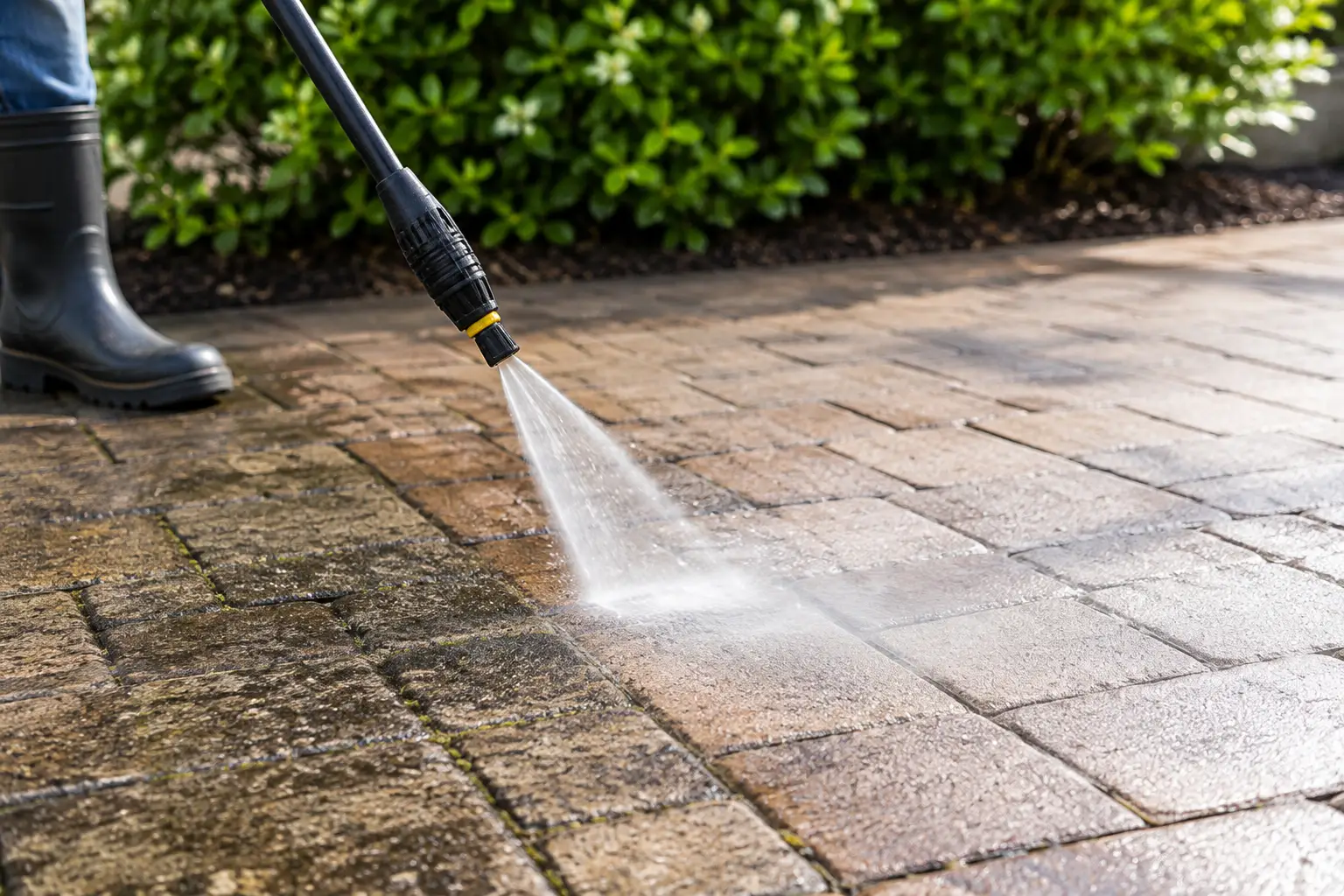
A paver patio or driveway can look dramatically cleaner after a wash, but a harsh approach can leave behind a different problem: loose jointing sand, etched faces, faded colour and pavers that shift over time. So, can pressure washing damage pavers? Yes, it can – particularly when the machine is too powerful, the nozzle is held too close, or the paving is already worn. Done correctly, however, pressure cleaning is one of the most effective ways to remove built-up grime, mould and algae while protecting the surface underneath.
The difference comes down to surface assessment, water pressure, cleaning technique and what happens after the wash. Pavers are not a one-setting-fits-all surface.
How pressure washing can damage pavers
Pavers are made to handle foot traffic, weather and regular use, but they are not indestructible. Concrete pavers, clay bricks, natural stone and travertine all react differently to water pressure and cleaning products. Even within the same driveway, older areas may be more fragile than newer sections.
The most common issue is the loss of jointing sand. High-pressure water directed into the joins between pavers can blast out the sand that locks each unit in place. At first, this may simply look untidy. Left unaddressed, the pavers can move, develop uneven edges and allow more weeds to take hold.
Pressure that is too high can also roughen the paver face. This is especially noticeable on older concrete pavers, soft sandstone and some clay pavers. Once the finished surface is stripped or etched, dirt can lodge more easily in the newly rough texture. The paving may then look patchy even after it has dried.
There is also a risk of forcing water beneath the pavers. If drainage is poor, bedding sand has washed away or the base has already shifted, excess water can worsen instability. Pressure cleaning does not usually create a sound base problem on its own, but it can expose or aggravate an existing one.
The signs your pavers need extra care
A quick inspection before cleaning helps avoid preventable damage. Loose, rocking or cracked pavers should not be aggressively pressure cleaned. Nor should areas with deep, empty joints, crumbling edges or visible subsidence.
Watch for white powdery marks, known as efflorescence, as well. These marks are caused by salts moving through the paving and are not simply surface dirt. They may need a targeted treatment rather than more pressure. Oil stains, rust marks and heavy organic growth also respond better to the right cleaning solution followed by controlled rinsing, rather than repeated high-pressure passes.
Natural stone deserves particular caution. Some stones are porous and can discolour, flake or lose their natural finish if treated with unsuitable chemicals or excessive pressure. Around pools, the cleaning method also needs to consider slip resistance, surrounding glass, coping and nearby landscaping.
Safe pressure cleaning is about control, not force
The goal is to lift contamination off the surface, not cut into the paver or excavate the joins. Professional equipment can be adjusted to suit the material, condition and level of soiling. A fan-style nozzle, appropriate working distance and steady movement are generally far safer than a narrow jet held close to one spot.
For widespread grime, mould or algae, pre-treatment often does much of the hard work. A surface-appropriate cleaning solution breaks down organic growth so it can be rinsed away at lower pressure. This is particularly useful on shaded paths, pool surrounds and driveways where black mould and green algae return quickly after wet weather.
A surface cleaner can also produce a more even result over large paved areas. It distributes water consistently and reduces the tiger-striping that can occur when a wand is moved unevenly across concrete pavers. Edges and tight corners still require careful hand work, but they should never be rushed with a concentrated jet.
There is no single pressure figure that is safe for every paver. The right setting depends on whether the paving is sealed, how old it is, its material, the condition of the joints and the type of contamination being removed. Testing an inconspicuous area first is a sensible safeguard, especially on decorative paving or natural stone.
Sealed pavers need a different approach
Sealer helps reduce staining and can improve the appearance of many paved areas, but it is not a guarantee against damage. High pressure can prematurely wear a failing sealer, leaving an uneven or cloudy finish. Strong chemicals can cause similar issues if they are not selected for the specific sealer and paver type.
If the sealer is peeling, patchy or noticeably worn, cleaning may reveal the true condition of the surface rather than create the problem. In those cases, the practical solution may be a proper clean, preparation and reseal rather than trying to wash the old coating back into shape.
After pressure cleaning unsealed pavers, joints should be checked and refilled where necessary. Re-sanding restores support between the pavers and helps limit movement. Depending on the paving system and location, polymeric sand may be suitable, but it must be installed correctly and is not appropriate for every surface or drainage arrangement.
Why DIY pressure washing sometimes goes wrong
Hiring or buying a pressure washer can seem like a straightforward weekend job. The risk is that machines marketed for home use can still be powerful enough to damage paving in inexperienced hands. The damage often appears gradually: sand disappears, weeds increase, an edge starts to sink, or the surface looks noticeably lighter in the areas cleaned most heavily.
DIY cleaning is most likely to cause trouble when the operator uses the narrowest nozzle, works too close to the surface or tries to remove a stain with pressure alone. A stubborn stain is usually a treatment issue, not a signal to turn the pressure up.
It is also easy to overlook runoff. Cleaning solutions, loosened dirt and dirty water need to be managed carefully around gardens, pools, stormwater drains and neighbouring properties. Commercial sites, schools and body corporate properties may have additional access, safety and operational considerations that make planned professional cleaning the safer option.
When to call a paver cleaning professional
A professional assessment is worthwhile if pavers are loose, heavily stained, coated in thick mould or algae, or made from natural stone. It is also a sensible choice for large driveways, shared pathways, retail areas and pool surrounds where an inconsistent finish or surface damage can be costly to rectify.
At Boost Exterior Cleaning, the focus is on matching the cleaning method to the surface. That can mean controlled pressure cleaning, soft washing or targeted treatment before rinsing. The aim is a visibly cleaner result without sacrificing the condition, stability or finish of the paving.
Regular maintenance also makes the work easier. Removing leaves, attending to spills promptly and addressing mould before it becomes established reduces the need for aggressive cleaning later. In humid Southeast Queensland conditions, shaded paving may need more frequent attention than open areas exposed to full sun.
A cleaner paved area should still look like your paving
Good paver cleaning does not leave the surface stripped, pale or unstable. It removes the grime that makes a property look uncared for while preserving the texture, colour and practical function of the paving. If you are unsure how your pavers will respond, treat a small area first or arrange advice before putting high pressure across the whole surface. A careful clean now is far less expensive than repairing loose or damaged paving later.


