

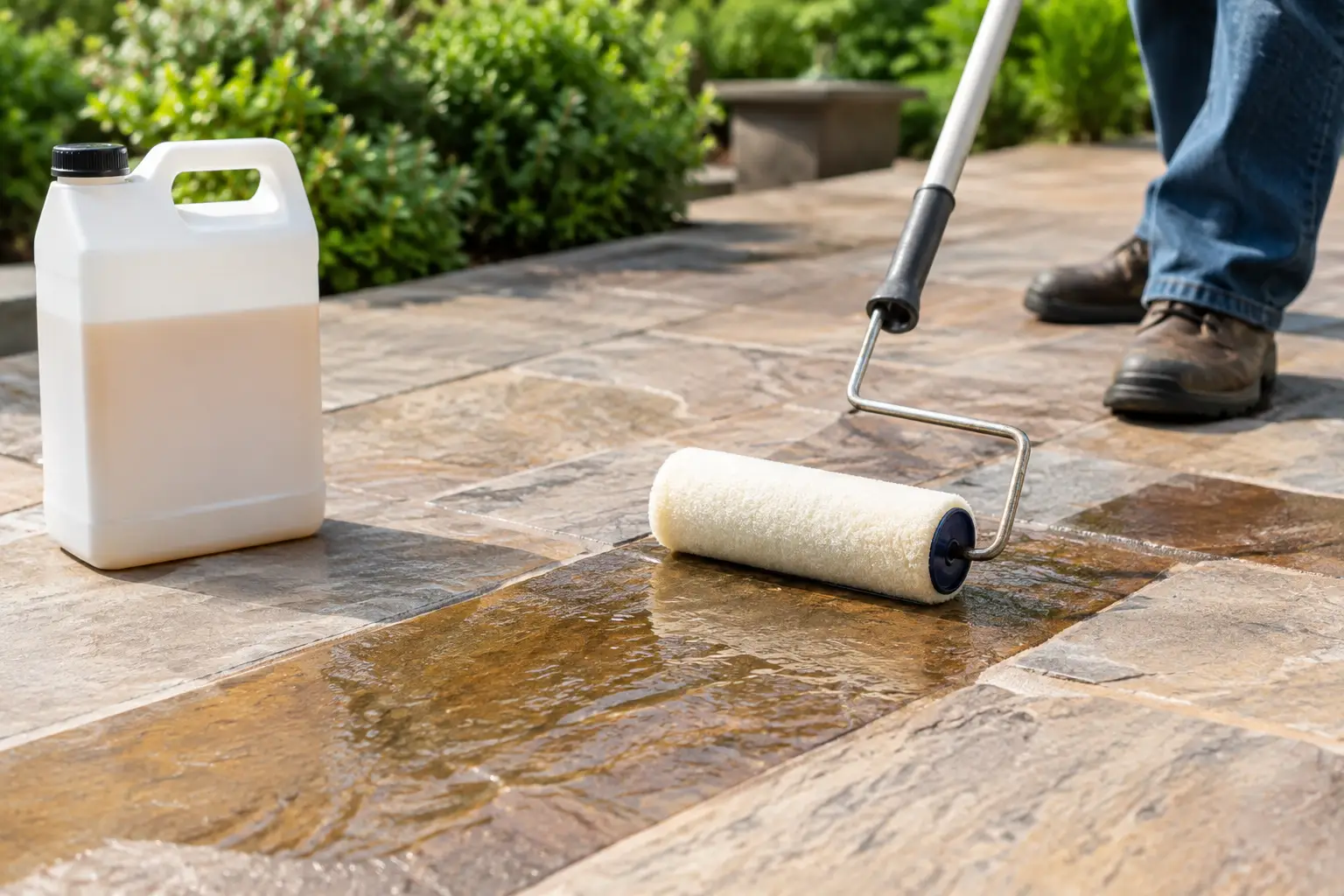
A clean driveway can look tired surprisingly quickly after an oil drip, a rust mark from outdoor furniture, leaf tannins after rain, or a patch of mould near a shaded garden bed. So, can sealers prevent staining? In many cases, yes. A correctly selected and professionally applied sealer makes outdoor surfaces far less absorbent, giving spills and contaminants less opportunity to soak in and leave a permanent mark.
The important word is less. Sealing is not a force field. It will not make concrete, pavers, tiles or natural stone immune to every stain, nor does it replace regular cleaning. What it does provide is practical protection that helps surfaces stay cleaner, makes spills easier to remove and can extend the useful life of a driveway, patio, pool area or path.
How sealers help prevent staining
Most exterior hard surfaces contain tiny pores. Concrete is particularly porous, but pavers, grout and many types of natural stone can also absorb moisture, oils and coloured contaminants. Once a substance penetrates below the surface, it is much harder to clean without stronger treatments or specialised restoration work.
A quality sealer either penetrates into the surface or forms a protective barrier over it. This reduces water absorption and slows the entry of oils, dirt, tannins and other staining materials. Instead of immediately soaking into the surface, a fresh spill is more likely to sit on top long enough to be wiped, absorbed or cleaned away.
That extra response time matters. On a sealed driveway, an oil leak from a car may be easier to treat before it becomes a dark, set-in patch. Around a pool, sealing can help limit water marks, sunscreen residue and grime build-up. On pavers beneath trees, it can reduce the chance that wet leaves leave brown tannin stains behind.
Sealing also makes routine maintenance more effective. Dirt, mould and algae have fewer places to lodge, so professional cleaning can restore the surface more efficiently and with less aggressive treatment. For property owners and managers, that can mean better presentation between maintenance visits and less risk of premature surface deterioration.
Can sealers prevent staining from every source?
No sealer prevents every stain, and a reputable contractor should be clear about that. The level of protection depends on the surface, the type of sealer, its condition and the material causing the stain.
Oil, grease, food spills, leaf tannins and general grime are often easier to manage after sealing. Water-based marks and everyday contaminants usually have less chance of penetrating deeply. However, highly acidic products, harsh chemicals, fertiliser, rust, paint, tyre marks and long-standing oil leaks can still stain a sealed surface. Hot tyres can also transfer rubber and plasticisers onto some driveway finishes, particularly in warm Queensland conditions.
Natural stone needs extra care. Some stones are dense and cope well with certain sealers, while more porous materials such as travertine, sandstone and some limestone can absorb contaminants readily if left untreated. Acidic cleaners can etch calcium-based stone regardless of whether it has been sealed. The right product and cleaning method need to suit the actual material, not just the desired look.
There is also a time factor. A spill cleaned within minutes has a much better outcome than the same spill left for weeks. Sealing provides a useful buffer, but it is still best to attend to oil, wine, rusting metal furniture and fallen leaves promptly.
The surface must be properly cleaned first
Sealer should not be used to hide dirt or lock in existing stains. If a driveway has mould, embedded grime, oil spotting or old residue, sealing over the top can make the problem harder to correct later. It may also lead to a blotchy finish, poor adhesion or visible discolouration beneath the sealer.
Proper preparation starts with identifying the surface and the contamination. Concrete may need pressure cleaning and targeted degreasing. Pavers can require joint cleaning and treatment for organic growth. Natural stone often needs gentler, surface-safe products and controlled pressure to avoid damage. Tile and grout may need a different process again.
The surface then needs enough time to dry before sealing. Trapped moisture can interfere with penetration, create cloudy patches or shorten the life of the coating. This is one reason exterior sealing is not simply a quick coat applied after a rinse. Good results come from cleaning, treating, drying and applying the correct sealer in suitable weather conditions.
At Boost Exterior Cleaning, surface assessment is part of achieving a finish that looks good and performs as intended. The pressure, chemical treatment and sealing approach should be matched to the material, especially where painted finishes, delicate stone or older surfaces are involved.
Choosing the right sealer for the job
There is no single best sealer for every outdoor area. The right option depends on the material, the type of staining risk and the finish you want.
Penetrating sealers soak into the pores and create water and stain resistance without dramatically changing the appearance. They are often a good choice where homeowners want to retain a natural, low-sheen finish on concrete, pavers or stone.
Topical or film-forming sealers sit closer to the surface and may provide a stronger visual enhancement, from a slight colour boost to a wet-look finish. They can be suitable for particular pavers or decorative concrete, but they need careful product selection and application. A finish that is too glossy or poorly applied can become slippery, peel, show roller marks or make future maintenance more complicated.
For driveways, consider vehicle traffic, hot tyres, oil exposure and whether the concrete has been previously sealed. For pool surrounds, slip resistance and chemical exposure are key concerns. For sandstone or other natural stone, breathability matters because moisture needs a safe path out of the material. A sealer that performs well on a concrete path may be a poor choice for a stone patio.
Sealing does not stop mould and algae on its own
Queensland’s humidity, rainfall and shaded outdoor areas create ideal conditions for mould, mildew and algae. A sealer can reduce water absorption and make the surface easier to clean, but it does not remove the underlying conditions that allow organic growth to develop.
Shade, poor drainage, overhanging vegetation, irrigation overspray and built-up dirt can all encourage slippery green or black growth. If these conditions remain, mould and algae may still appear on sealed concrete, pavers and tiles. Regular exterior cleaning, sensible drainage and trimming back vegetation where practical will help keep growth under control.
This matters for more than appearance. Algae on paths, driveways and pool areas can become a slip hazard. For strata managers, schools and commercial sites, a planned cleaning and sealing program can support safer, more presentable grounds while reducing the need for major restoration later.
How long does stain protection last?
Sealers wear down over time. Foot traffic, vehicle traffic, UV exposure, heavy rain, pool chemicals and repeated cleaning gradually reduce their effectiveness. A lightly used covered patio may keep its protection longer than a sun-exposed driveway used every day.
Rather than relying only on a set number of years, look for practical signs that water is no longer beading on the surface, spills absorb quickly, or the area begins to hold dirt and darken more easily than before. These are good indicators that the sealer may need to be assessed and refreshed.
Avoid treating resealing as an automatic annual task. Applying new sealer over a failing or incompatible old coating can cause issues. The existing surface should be inspected, cleaned and prepared correctly first. In some cases, old sealer may need to be removed before a new system is applied.
Get more value from a sealed surface
Sealing works best as part of routine property care. Clear leaves from pavers, clean up oils quickly, avoid leaving metal pots or furniture directly on porous surfaces, and use cleaning products suited to the material. Do not assume a strong acid or bleach is the answer to every stain, particularly on natural stone or coloured concrete.
For high-traffic driveways, pool decks, commercial entries and shared outdoor spaces, professional cleaning before sealing is usually the worthwhile step. It gives the sealer a clean, dry surface to protect and helps ensure the finished area looks consistent.
A properly sealed surface will still face spills, weather and daily use, but it is better prepared for all three. That means less time fighting stubborn stains and more time enjoying a cleaner, safer and better-presented property.


