

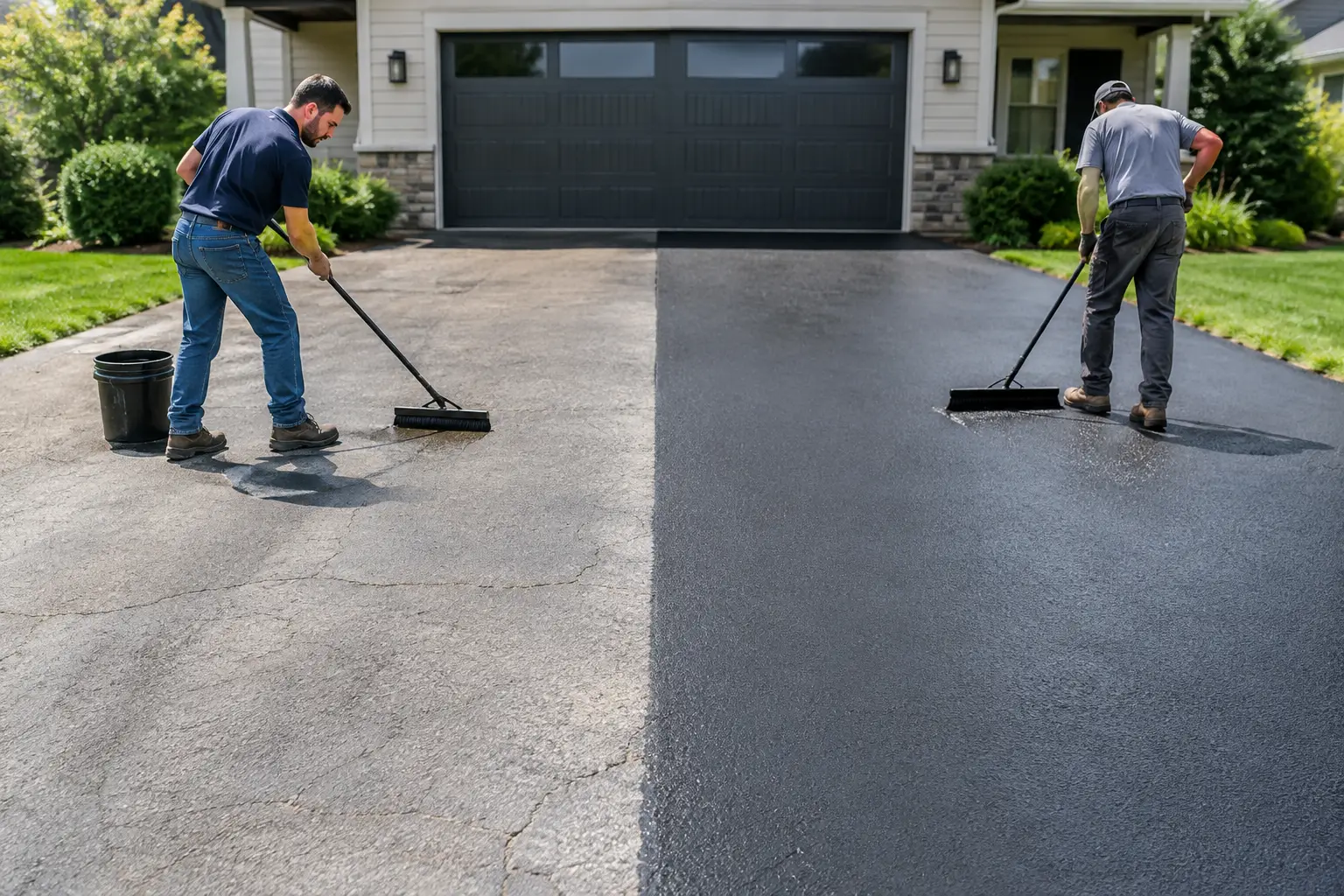
A driveway can look tired long before it has reached the end of its useful life. Oil spots, mould, fading, tyre marks and a rough surface can make an otherwise well-kept property feel neglected. When comparing driveway resealing versus resurfacing, the right choice comes down to one question: is the driveway basically sound, or has the surface itself started to fail?
Resealing protects and refreshes a sound surface. Resurfacing creates a new wearing layer over a driveway with more significant cosmetic or surface-level damage. Neither option is a shortcut for a failed base, drainage issue or major structural cracking. Getting that distinction right can save money now and prevent a disappointing result later.
What driveway resealing actually does
Driveway resealing is a protective treatment applied to an existing concrete, exposed aggregate, paved or certain coated driveway surfaces. After a thorough clean and suitable preparation, the sealer is applied to reduce moisture absorption and help guard against dirt, stains, UV exposure and general weathering.
For many Queensland homes, this is a practical maintenance step. Our climate is hard on exterior surfaces. Heat, heavy rain, humidity, leaf litter and airborne grime all work into porous concrete and pavers over time. In shaded areas, mould and algae can also make a driveway look dull and become slippery when wet.
A quality sealer will not turn badly damaged concrete into new concrete. What it can do is revive the existing appearance, deepen the colour of some finishes, make future cleaning easier and slow the rate at which contaminants penetrate the surface. The result should look clean and well maintained, not artificially glossy or overly coated.
Resealing is usually the right fit when
Resealing is worth considering when the driveway has sound concrete or stable pavers, with only light surface wear. Fading, water marks, ingrained dirt, minor staining and loss of the original finish are all common reasons to reseal.
It also suits owners who want to protect a driveway after professional pressure cleaning. Cleaning removes the grime that hides the surface, but it can also reveal how porous and unprotected older concrete has become. Sealing helps preserve that freshly cleaned result.
Small, stable hairline cracks do not always rule out resealing, particularly if they are assessed and repaired first. The key word is stable. If cracks are widening, uneven, or returning after repair, the issue may be below the surface and needs a different solution.
When resurfacing makes more sense
Resurfacing involves applying a new finish over a prepared existing slab. Depending on the system and driveway condition, it may be a cement-based overlay, decorative coating, spray-on finish or another purpose-designed resurfacing product. It changes the visible surface rather than simply protecting what is already there.
This can be a strong option where the driveway is structurally stable but looks beyond the help of cleaning and sealing alone. A worn, patchy finish, widespread discolouration, shallow spalling, old coating failure or a dated decorative look can often be addressed with resurfacing.
The preparation stage is where good resurfacing work is won or lost. The existing surface must be clean, sound and properly profiled so the new layer can bond. Oil contamination, loose concrete, active mould, flaking coatings and moisture issues all need attention first. Applying a fresh coating over a poorly prepared driveway may look good briefly, then peel, bubble or wear unevenly.
Resurfacing has limits too
Resurfacing is not a cure for a moving slab. If sections are sinking, rocking, lifting from tree roots or cracking through the full depth of the concrete, an overlay may only hide the issue temporarily. The same applies to poor drainage. Water that sits on the driveway after rain will continue to put pressure on any new finish.
Major structural cracks, substantial subsidence, crumbling concrete and failed edges may require concrete repair or replacement before any cosmetic treatment. A reputable contractor should be clear about this, even if it means resurfacing is not the immediate answer.
Driveway resealing versus resurfacing: key differences
The biggest difference is the condition of the existing surface. Resealing works with the driveway you have. Resurfacing gives you a new top layer.
Resealing is generally less invasive and more cost-effective where the driveway is still in good condition. It is a maintenance investment. You retain the existing concrete, paver or exposed aggregate appearance and add a protective barrier to help it resist everyday wear.
Resurfacing is usually a larger project with more preparation, material and labour involved. It is the better choice when you want a major visual change or when the old surface is too worn, uneven in colour or locally damaged for sealer to improve it. It can offer a broad range of colours and textures, but the selected finish needs to suit vehicle traffic, drainage and slip resistance.
Both options depend on cleaning. Dirt, algae and residue can compromise adhesion, interfere with the finish and leave flaws visible underneath. The driveway should be cleaned using the right pressure and treatment for the surface, not simply blasted with maximum pressure. Excessive pressure can damage weaker concrete, disturb jointing material or leave a visibly uneven finish.
Signs your driveway needs more than a clean
A professional clean can make a dramatic difference, particularly where mould, algae and grime are the main problems. However, certain signs suggest the surface needs sealing, repair or resurfacing as well.
Look closely for repeated oil staining that has soaked into the concrete, a chalky or dusty surface, exposed aggregate that is becoming loose, widespread flaking, faded patches that do not improve after cleaning, or water soaking in quickly rather than beading on top. These signs point to a surface that has lost protection.
For resurfacing, pay attention to shallow pits, worn high-traffic paths, failed old coatings, patches from previous repairs and an overall finish that is uneven or outdated. These are often cosmetic surface issues, provided the underlying slab remains stable.
Cracks need a more careful assessment. Fine, isolated hairline cracks can be part of normal concrete movement. Wide cracks, cracks with one side sitting higher than the other, and cracks that continue into surrounding paths or garage slabs are more serious. Before spending money on a new finish, find out why the cracking occurred.
Factors that affect the best option
Your driveway material matters. Plain concrete, exposed aggregate, decorative concrete, pavers and asphalt each need different products and preparation. A sealer that suits pavers may not be suitable for exposed aggregate, and a coating system that works on concrete may not be appropriate over an unstable or contaminated surface.
Traffic matters too. A driveway used by a family car has different demands from a steep accessway, a property with frequent deliveries, or a commercial car park. Tyre heat, turning movements and heavier vehicles can place extra stress on coatings and exposed edges.
Drainage should never be overlooked. Brisbane, Logan, the Gold Coast and the Sunshine Coast can receive intense rainfall, often after long dry periods. A driveway should direct water away from buildings and avoid persistent pooling. Resealing may reduce water absorption, while resurfacing can improve appearance, but neither corrects the fall of a slab.
Finally, think about your goal. If you are preparing a property for sale or tenancy, a deep clean and reseal may provide the sharp, cared-for presentation you need. If you are renovating and want the driveway to match a new exterior colour scheme, resurfacing may deliver the larger visual change.
Get the preparation right before making a decision
The smartest first step is to have the driveway assessed after it has been properly cleaned. Grime can hide staining, cracks, loose aggregate and coating failure. Once the true condition is visible, it is easier to decide whether cleaning and resealing will deliver the result you want or whether resurfacing is the better long-term investment.
At Boost Exterior Cleaning, driveway cleaning and sealing are approached as surface-preservation work, not a one-pressure-fits-all job. The correct pressure, cleaning treatment and drying time matter just as much as the sealer chosen for the surface.
A well-maintained driveway does more than improve kerb appeal. It keeps the entry to your home, school, strata complex or commercial site safer, cleaner and easier to manage. Choose resealing when the surface is sound and needs protection; choose resurfacing when the slab is stable but the finish has genuinely worn out. If the driveway is moving or breaking down, address the cause first, then invest in the finish with confidence.


