

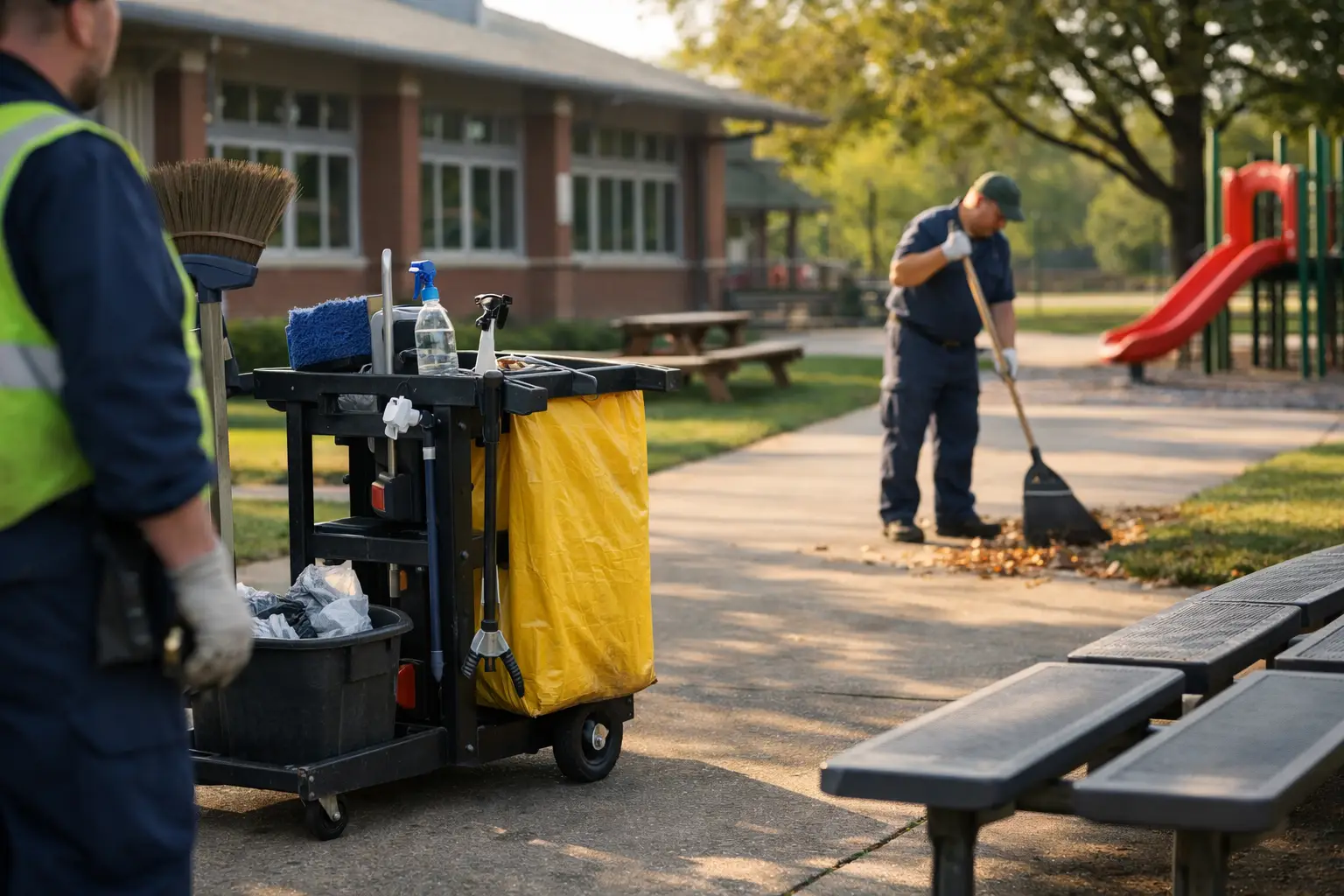
A muddy walkway after morning drop-off, slippery algae around shaded paths, bins attracting pests near the oval – school grounds get dirty fast, and the impact is more than cosmetic. This guide to school grounds cleaning is built for principals, facility managers, business managers and school maintenance teams who need grounds that look presentable, stay safer underfoot and hold up better over time.
School sites are different from most commercial properties. You are dealing with constant foot traffic, outdoor eating areas, weather exposure, sporting zones, painted surfaces, covered walkways, boundary paths and shared entry points used by students, staff, families and contractors. A cleaning plan has to do more than make the place look neat. It needs to reduce slip risks, manage mould and grime, protect surfaces and fit around school operations.
Why school grounds cleaning needs a planned approach
When school grounds cleaning is left to ad hoc wash-downs, the same issues keep returning. Organic build-up on concrete and paved areas comes back quickly in damp or shaded spots. Dust, leaf litter and soil move across high-traffic areas every day. Food spills near seating zones attract birds and insects. If those problems are not addressed properly, they shift from a presentation issue to a maintenance and safety issue.
A planned approach helps schools prioritise the right areas at the right times. It also avoids a common mistake – using too much pressure on surfaces that do not need it. Pressure cleaning has its place, especially on hard-wearing concrete and heavily soiled exterior areas, but not every surface should be treated the same way. Painted walls, some coated finishes, soft surfaces and delicate exterior materials often need a gentler method with the correct chemical treatment to remove mould, algae and grime without causing damage.
That matters on school sites where budgets are tight and surface replacement is expensive. Cleaning should improve presentation and hygiene while helping surfaces last longer.
The areas that usually need the most attention
Most schools have a few outdoor zones that cop the worst of the dirt and wear. Entryways are one of them. They set the first impression for families and visitors, but they also collect dust, chewing gum, dirt from shoes and run-off from nearby gardens or car parks. If they are shaded, they can become slippery before anyone notices.
Covered walkways and external corridors are another trouble spot. They may look protected, but they often trap moisture and grime. That creates ideal conditions for algae and mould, especially during humid periods or after extended rain.
Playgrounds, lunch areas and seating zones need regular attention because of food residue, drink spills, bird droppings and general grime. The issue here is not only appearance. These are high-use areas where build-up can affect hygiene and create odours.
Sport courts, pool surrounds and assembly spaces each have their own cleaning demands. Hard courts can become slick with surface contamination. Pool areas often need more specialised treatment because of moisture, chemical residue and the need to maintain safe traction. Open assembly areas and courtyards tend to show every stain, especially if they are light-coloured concrete or decorative paving.
Car parks, loading areas and perimeter paths are often overlooked until they look visibly dirty. Oil spots, tyre marks, leaf staining and wind-blown rubbish can make the whole property feel poorly maintained, even if the central grounds are tidy.
A guide to school grounds cleaning by surface type
The best results usually come from matching the cleaning method to the surface, not the other way around. Concrete paths and drive areas can often handle pressure cleaning well, particularly where dirt, grime and built-up organic growth are embedded in the surface. Even then, the pressure level still needs to be right. Too aggressive, and you can etch the surface or leave it looking patchy.
Painted walls, rendered finishes and delicate exterior surfaces are a different story. These often respond better to soft washing. Instead of relying on brute force, soft washing uses lower pressure with suitable treatment to break down mould, algae and grime at the source. It is a safer option where surface preservation matters.
Pavers and stone can be more variable. Some hold up well under controlled pressure cleaning, while others are more porous or prone to surface wear. The same goes for sealed surfaces. A method that strips or weakens a protective coating can create more maintenance later. This is where experience counts, because the wrong approach may clean the area today but shorten the life of the finish.
Sports surfaces also need care. Tennis courts and similar hard-court areas can be cleaned effectively, but they need methods that remove contamination without compromising line marking, coatings or grip. There is no one-size-fits-all method across a school site.
How often should school grounds be cleaned?
It depends on the layout, the age of the site, surrounding vegetation and how heavily each area is used. A school under large trees will need more frequent attention for leaf litter, staining and organic build-up. A coastal or humid location may see faster mould and algae growth. A campus with heavy drop-off traffic will deal with more grime around entries and car parks.
For most schools, the best approach is a mix of routine maintenance and scheduled deep cleaning. High-traffic entries, eating areas and obvious slip-risk zones may need frequent spot cleaning or regular service intervals. Broader external cleaning of paths, walls, courts and surrounding hard surfaces is often handled seasonally or during quieter periods such as school holidays.
Holiday scheduling usually makes sense because it reduces disruption and allows larger areas to be cleaned thoroughly without students moving through wet zones. That said, some schools prefer staged works during term if there are urgent safety concerns or if only selected areas need treatment.
Safety, compliance and disruption management
School cleaning is not just about getting surfaces clean. It also has to be carried out safely, with clear attention to access, timing and site use. Wet surfaces need to be managed properly. Equipment movement needs to be controlled. Chemical use needs to be appropriate for the environment and the task.
For schools, disruption matters almost as much as the cleaning itself. The best operators work around bell times, pedestrian movement, staff access and site restrictions. They isolate work areas clearly, plan around school calendars and avoid methods that create unnecessary mess or risk.
This is one reason professional exterior cleaning is often a better option than relying on general maintenance teams for everything. Grounds staff do a lot, but specialist exterior cleaning requires the right machinery, the right treatment selection and the judgement to know when high pressure will help and when it will cause avoidable damage.
What to look for in a school grounds cleaning provider
If you are comparing contractors, the first thing to check is whether they understand surface-specific cleaning. A school site includes more than just concrete. You want a provider who can assess surfaces properly and explain why they recommend pressure cleaning in one area and soft washing in another.
Reliability matters too. Schools need contractors who arrive when they say they will, communicate clearly and work with minimal fuss. Fast quoting helps, but it should not come at the expense of a proper site assessment.
It also helps to choose a team that understands the value of visible results. Schools are public-facing spaces. Parents notice presentation. Staff notice it. Prospective families notice it. Clean, well-maintained grounds send a message that the site is cared for.
That does not mean every school needs every surface cleaned at once. In some cases, a staged approach is smarter. Start with the entries, high-risk paths and the most visibly affected common areas, then schedule broader treatment across the rest of the grounds. A good provider will help you prioritise based on safety, appearance and budget.
Making cleaning part of long-term grounds maintenance
The best school grounds cleaning plans do not treat grime, mould and algae as one-off problems. They treat them as part of broader site maintenance. Regular cleaning helps prevent deep staining, reduces long-term wear and makes it easier to keep standards up across the year.
It can also support other property goals. If the school is preparing for enrolment tours, community events, inspections or capital works handover, exterior presentation matters. Clean grounds photograph better, feel safer and reflect better on the whole facility.
For schools across Southeast Queensland, conditions can turn exterior surfaces quickly. Heat, rain, humidity and heavy use make reactive cleaning expensive. Planned maintenance is usually the more cost-effective path.
If your grounds are starting to look tired, slippery or harder to manage, the fix is often simpler than it seems. The right method, used on the right surface, can lift presentation fast and help protect the site for the next busy term.


