

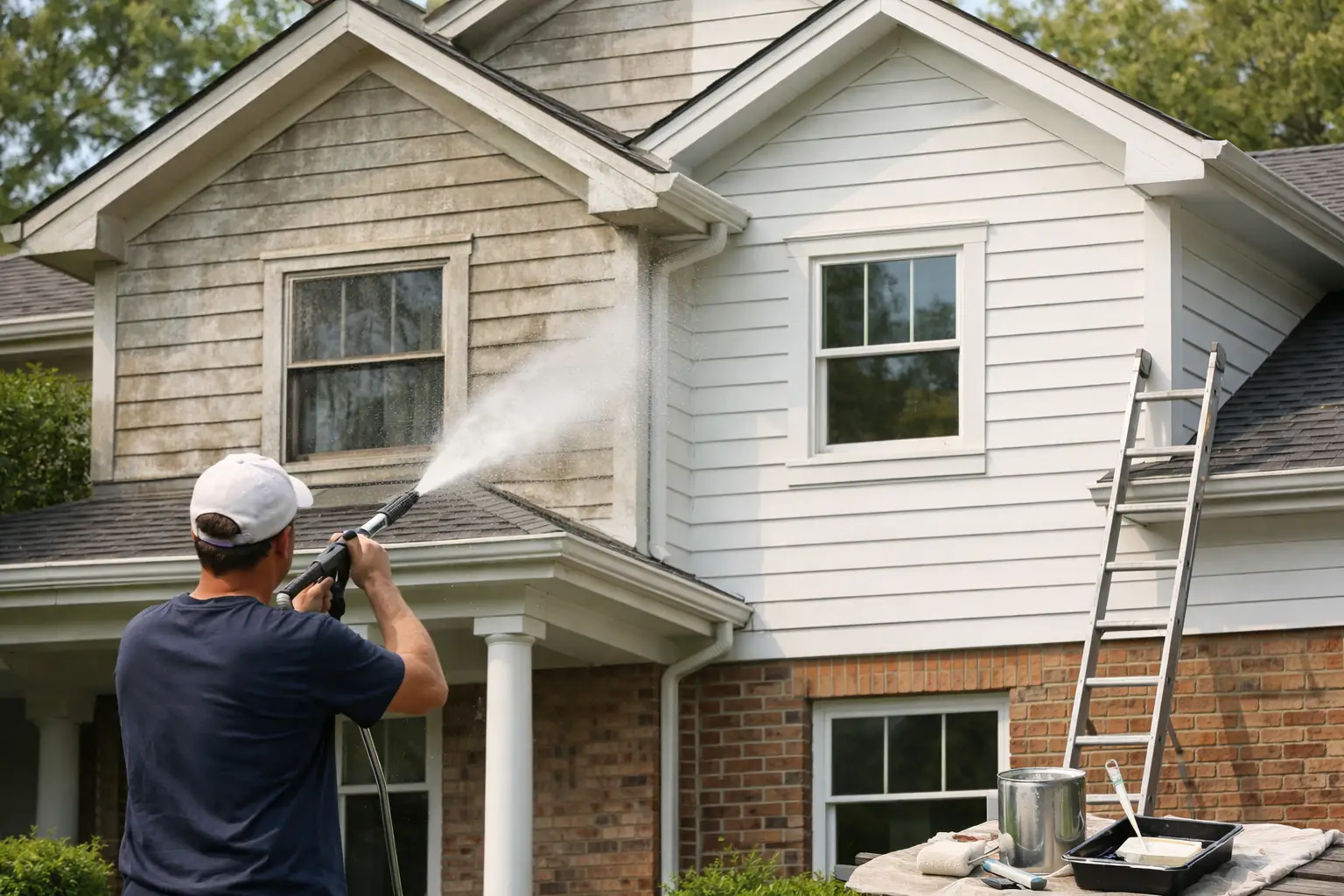
A repaint can make an older Queensland home look new again, but fresh paint will not fix mould stains, chalky residue or traffic grime sitting on the existing surface. This house wash before repainting example shows why cleaning is a proper preparation step, not an optional cosmetic extra. When the surface is clean, dry and sound, painters have a far better base for a finish that looks even and holds up through heat, rain and humidity.
The house wash before repainting example
Picture a weatherboard home in Brisbane with faded paint, green mould along the shaded southern wall and dark streaks beneath the gutters. The owner plans to repaint the exterior because the colour has dulled and several areas are starting to look tired. At first glance, the job appears to need only scraping and paint.
On closer inspection, the walls also carry airborne dust, cobwebs, pollen, oxidised paint residue and mould spores. If a painter applies coatings over that contamination, the new paint may bond to the dirt rather than the building surface. The result can be patchy adhesion, early peeling or stains returning through the finish.
The right approach is to assess the cladding, existing paint condition, roof runoff areas, windows, eaves and any delicate features before cleaning begins. A professional soft wash treatment is then applied at a surface-safe pressure to break down organic growth and lift grime without blasting water behind weatherboards or damaging paint that is still well adhered.
After an appropriate dwell time, the walls are rinsed thoroughly. The difference is usually immediate: mould staining is reduced, original paint colour is clearer, and the painter can see exactly where loose coatings, cracks and repairs need attention. Cleaning has not replaced paint preparation, but it has made that preparation more accurate and effective.
Why washing first protects the repaint
Exterior paint is designed to adhere to a clean, stable surface. It is not designed to compensate for mould, algae, salt deposits, dust or chalking from old paint. Even a wall that looks reasonably clean from the footpath can have a fine layer of contamination that affects the final result.
In Southeast Queensland, humidity and regular rainfall create ideal conditions for mould and algae, particularly around eaves, shaded walls, fences and areas with limited airflow. These organisms can spread across painted surfaces and hold moisture against the building. Simply painting over them may hide the discolouration for a short time, but it does not address the underlying growth.
A proper house wash also helps identify problems that would otherwise be missed. Once dirt is removed, small paint failures, cracked render, deteriorated sealant and water marks are easier to spot. That gives the owner, painter or property manager a clearer scope before repainting starts, reducing unwelcome surprises halfway through the job.
Soft washing versus high-pressure cleaning
Not every exterior needs the same method. This is where experience matters. High-pressure cleaning can be useful for durable hard surfaces such as concrete driveways, but it is often the wrong choice for painted cladding, rendered walls, timber trims and older exterior finishes.
Soft washing combines the right cleaning solution with controlled, low-pressure application and rinsing. The treatment does the cleaning work rather than relying on force alone. For a painted house, this can remove mould, algae and grime while helping preserve sound paintwork and reducing the risk of etched surfaces, water ingress or damage around seals and joins.
There are exceptions. Heavily weathered or peeling paint may need extra care because cleaning will reveal coatings that have already failed. That is not damage caused by the wash – it is a useful indication that the surface needs scraping, sanding or repair before painting. Likewise, homes with exposed electrical fittings, fragile timber, heritage features or active leaks should be assessed carefully before any exterior cleaning takes place.
What a painter needs after the wash
A clean house is not automatically ready for a paint brush the same afternoon. The building needs adequate drying time, and the exact timeframe depends on the material, weather and level of saturation. Timber cladding generally needs more caution than masonry or rendered surfaces, especially after wet weather.
Once dry, the painter can complete the remaining preparation. This commonly includes removing loose or flaking paint, sanding rough edges, filling cracks, replacing failed sealant, treating exposed timber and applying the suitable primer. The wash removes surface contamination; the paint preparation addresses coating failure and substrate repairs. Both steps matter.
For owners arranging separate trades, timing is worth planning. Book the wash far enough ahead to allow drying, inspection and repairs, but not so far ahead that fresh mould, dust or bird droppings build up again before painting. In humid months, it is sensible to allow additional flexibility rather than working to a tight next-day schedule.
A practical sequence for repainting preparation
For most homes, the process is straightforward when each trade has a clear role:
- Inspect the exterior for mould, algae, loose paint, damaged cladding and water-entry concerns.
- Soft wash the house with a treatment suited to the surface and level of organic growth.
- Rinse thoroughly and allow the exterior to dry fully.
- Complete repairs, sanding, scraping and priming as required.
- Paint during suitable weather conditions, following the coating manufacturer’s requirements.
Skipping the first step can make every stage after it less reliable. A painter may spend valuable time cleaning walls by hand, or worse, apply a quality coating over residue that shortens its service life.
When a full house wash is especially worthwhile
A wash before repainting is particularly valuable for homes near busy roads, coastal areas, leafy streets or construction activity. Fine dust and airborne pollutants settle on walls gradually, while salt-laden air can be hard on coastal properties. Pool areas and damp garden beds can also contribute to localised mould growth on nearby exterior walls.
It is also a smart step for rental properties and homes being prepared for sale. A clean exterior gives owners a more honest view of the property’s condition and helps painters quote accurately. For property managers and body corporate representatives, planned washing before repainting can reduce the risk of rework across units, common areas and boundary walls.
The same principle applies to commercial buildings, schools and retail sites. Clean facades present better, but the maintenance value is just as significant. Removing biological growth and grime before repainting helps maintenance teams address surface defects before they become larger, more costly repairs.
Questions homeowners often ask
Can I wash the house myself before painting?
You can, provided you understand the surface, use the correct cleaning products and avoid excessive pressure. The risk with DIY pressure washers is that they can strip sound paint, force water into gaps, damage timber fibres or leave cleaning residues behind. For older homes, delicate finishes or widespread mould, professional soft washing is usually the safer option.
Will washing remove all loose paint?
It may remove paint that has already lost adhesion, especially in severely weathered areas. This is useful because failed paint needs to come off before repainting anyway. A house wash should not be treated as a replacement for scraping and sanding, but it can expose exactly where those tasks are needed.
How long should I wait to paint after washing?
There is no single answer. Allow the exterior to dry completely and follow your painter’s advice, particularly for timber. Recent rain, high humidity, shaded walls and poor airflow can all extend drying time. Rushing this stage can trap moisture beneath the coating.
A clean wall gives fresh paint its best chance to perform, and it gives you a clearer picture of the repairs the property really needs. Before booking the painter, arrange a surface-safe exterior wash so the next coat starts on the right foundation.


