

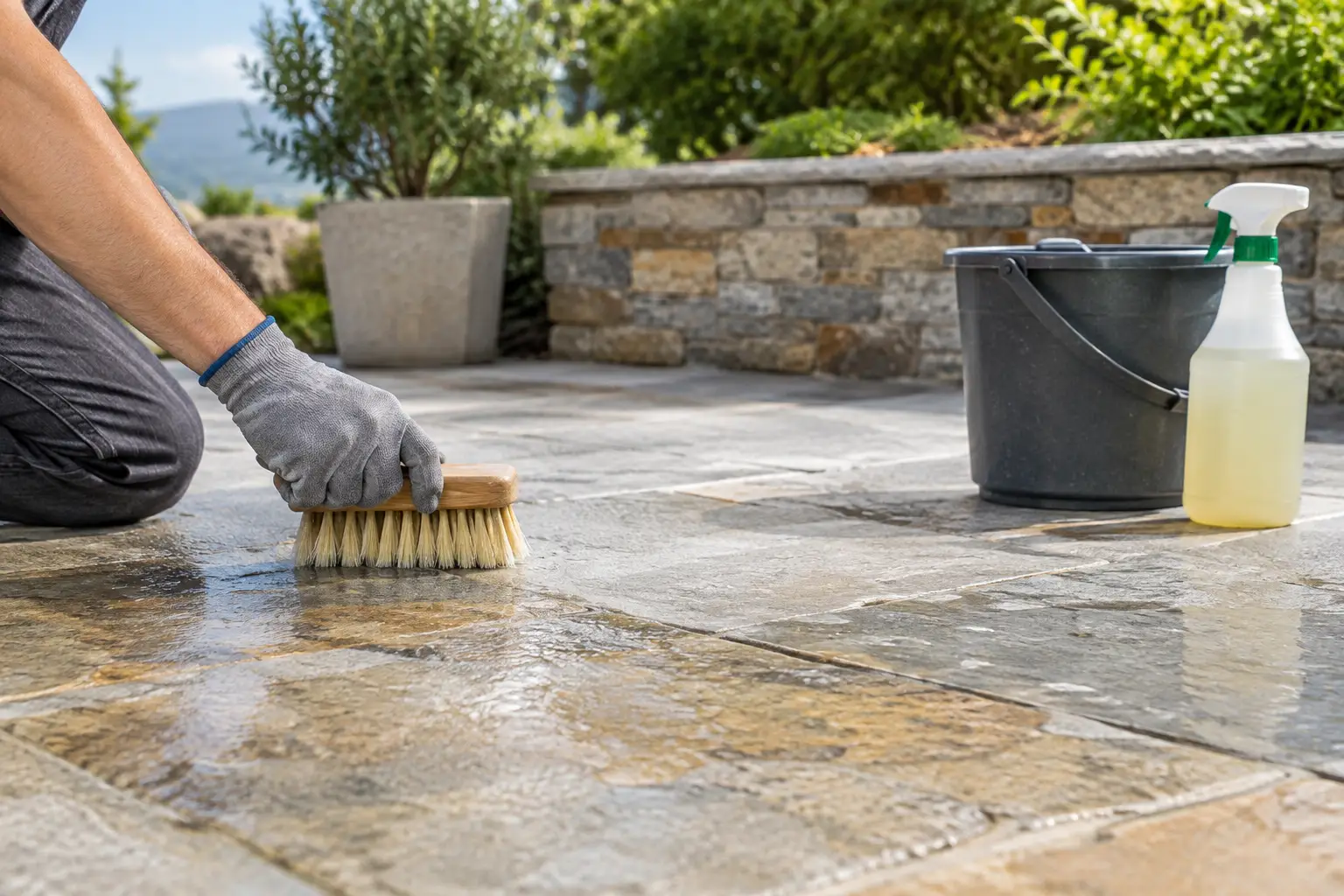
A sandstone path can look beautifully weathered one year and patchy, dark and tired the next. Around Southeast Queensland, humidity, heavy rain, leaf litter and pool splash create ideal conditions for mould, algae and staining to take hold. Proper natural stone care is not about blasting every mark away. It is about removing contamination safely while protecting the stone’s texture, colour and finish.
Natural stone is durable, but it is not indestructible. The wrong pressure, harsh chemical or poorly chosen sealer can leave lasting damage that is far more noticeable than the original grime. A considered maintenance plan keeps outdoor stone looking clean, safer underfoot and easier to maintain over time.
Why natural stone needs a different cleaning approach
Stone pavers, retaining walls, cladding, steps and pool surrounds are not all made from the same material. Sandstone, travertine, limestone, bluestone, slate and granite each react differently to moisture, cleaning agents and pressure. Even two areas made from the same stone may need different treatment if one sits beneath trees and another receives full sun.
Many natural stones are porous. Their small surface pores can hold water, organic growth, dirt, oils and tannin stains from leaves. If mould and algae are left in place, they can make paths and pool areas slippery, while trapped moisture can contribute to ongoing discolouration. In shaded areas, growth can return quickly unless the surface is treated properly rather than simply rinsed.
High pressure can be useful on some hard exterior surfaces, but it is not automatically the right answer for stone. Excessive pressure can roughen soft stone, expose aggregate, disturb jointing material and create an uneven finish. Once a softer stone surface is damaged, it may hold dirt more easily and become harder to clean in future.
The best method depends on the stone, its condition, the type of contamination and the surrounding area. That is why an on-site assessment matters, particularly for older paving, heritage-style stonework and areas around gardens or pools.
Common problems affecting exterior stone
Most stone cleaning work begins with a visible issue, but the cause is often more than surface dirt. Mould and algae are common across Brisbane, Logan, the Gold Coast and the Sunshine Coast, especially on south-facing paths, shaded courtyards and pool surrounds. They leave dark spotting or green growth and can quickly affect both presentation and safety.
Organic staining is another frequent concern. Fallen leaves, seed pods, mulch and garden beds can leave brown marks, while rusting furniture legs, fertiliser overspray and metal fixtures may create orange staining. Near outdoor kitchens and driveways, oils and grease can penetrate porous stone if they are not dealt with promptly.
Efflorescence can also appear as a pale, powdery residue. This occurs when salts move through masonry or grout with moisture and settle on the surface as the water evaporates. It is not always a sign that the stone itself is failing, but it should be assessed before aggressive cleaning takes place.
Pool areas bring their own challenges. Water, sunscreen, body oils and chemical residue can build up on pavers, while wet shaded edges encourage algae. The goal is a clean, even surface with enough natural grip, not an overly stripped or glossy finish that becomes hazardous when wet.
Safe natural stone care starts with identification
Before cleaning begins, the surface should be identified as accurately as possible. Softer stones such as sandstone and limestone generally require more care than dense granite. Honed, tumbled, split-face and polished finishes also respond differently. A finish that looks rough may still be vulnerable to high pressure, while a polished or honed surface can show etching or chemical marks more readily.
The next step is to identify what is actually on the stone. Mould, algae, dirt, mineral deposits, grease and rust do not respond to the same treatment. Applying a strong cleaner without diagnosing the problem can cause bleaching, etching or inconsistent colour.
A professional approach generally involves controlled application of an appropriate treatment, sufficient dwell time to break down organic growth, and a low-pressure rinse or carefully adjusted surface clean. Nearby plants, painted surfaces, glass, pool water and metalwork need protection throughout the process. Good preparation is often what separates a clean result from an expensive mistake.
Cleaning stone without causing surface damage
For routine homeowner maintenance, regular sweeping is one of the simplest and most effective habits. It removes abrasive grit, leaves and organic material before they become stains. Use a soft-bristled broom rather than a harsh wire brush that can scratch or leave metal fragments behind.
For small spills, act early. Blot oils rather than rubbing them deeper into the stone, and use a stone-safe cleaner suited to the stain. Avoid assuming a general-purpose outdoor cleaner is safe because it is sold for patios. Acidic products can etch calcium-based stone such as limestone, travertine and some sandstones. Strong alkaline degreasers can also cause issues if used incorrectly or left to dry on the surface.
Pressure washers are often hired with the best intentions, but they can do uneven damage in inexperienced hands. Holding the nozzle too close, working in a fixed pattern or using too much pressure can create visible lines, strip softer grains and wash out joints. It may look clean initially, but the surface can weather unevenly afterwards.
For larger areas or stubborn biological growth, professional cleaning is the safer option. The right combination of chemical treatment, water flow and pressure removes contamination while respecting the surface. This is particularly worthwhile for pool surrounds, expensive stone paving, entrances, stairs and commercial walkways where safety and presentation matter every day.
Do not overlook grout, joints and edges
Stone is only part of the system. Grout, mortar joints, sand-filled paver joints and drainage all affect how an area performs. If joints are already loose or eroded, aggressive washing can make the problem worse. Water pooling along an edge can also lead to repeat mould growth, even after a thorough clean.
After cleaning, inspect the area for movement, cracked grout, damaged edging and drainage problems. Correcting these issues can reduce repeat staining and help protect the investment in the surface.
When sealing is worth considering
Sealing can be an excellent part of natural stone care, but it is not a cure-all and it should never be applied over dirt, moisture or active staining. A sealer helps reduce the amount of water, oil and contaminants that absorb into the stone. This can make future cleaning easier and help limit staining, particularly around pools, outdoor dining areas, driveways and entrances.
The right sealer depends on the stone and the desired appearance. Penetrating sealers are designed to work below the surface while retaining a more natural look. Enhancing sealers can deepen colour and bring out character, which suits some stones but may be too dramatic for others. Film-forming sealers can create a more noticeable finish, but may alter slip resistance or require more maintenance as they wear.
A quality sealer does not mean the surface will never stain, and it does not remove the need for cleaning. It is a protective layer, not a permission slip to ignore spills or mould. It also needs to be applied at the correct coverage rate and allowed to cure under suitable weather conditions. Over-application can leave a patchy, sticky or shiny appearance that is difficult to correct.
For property managers and commercial operators, sealing is often most valuable in high-traffic zones where appearance, cleaning efficiency and long-term surface preservation all matter. For homeowners, it can make sense after a deep clean has restored the stone and before seasonal rain or heavier outdoor use.
A practical maintenance schedule for outdoor stone
How often stone needs attention depends on shade, tree cover, foot traffic, nearby gardens and exposure to water. A sunny front path may only need regular sweeping and an occasional wash. A damp pool deck beneath overhanging foliage may need more frequent inspection and treatment.
As a guide, clear leaves and debris weekly or as needed, especially after storms. Check shaded paths, steps and pool surrounds monthly for slippery growth. Deal with spills as soon as practical, and organise a professional clean when mould, staining or general dullness starts to affect the look or safety of the area. Waiting until the stone is heavily blackened usually means a more involved restoration job.
For commercial properties, schools and body corporate sites, scheduled exterior maintenance is often more cost-effective than reactive cleaning. It keeps entries, common areas and pedestrian routes presentable, while reducing the risk of algae becoming a slip hazard between inspections.
Know when to call in a specialist
Some issues need more than a quick rinse. Seek professional advice if stone has widespread black mould, a slippery green film, deep oil staining, rust marks, failed sealer, white salt deposits or visible surface erosion. The same applies if you are unsure what type of stone you have or whether a product is suitable.
Boost Exterior Cleaning uses surface-appropriate treatment and controlled cleaning methods to restore natural stone without treating every area like concrete. The aim is a visible improvement that respects the material underneath and supports a cleaner, safer property.
A well-maintained stone surface should still look like stone – natural variation, texture and character included. Keep debris moving, act early on stains, and choose gentle, informed care over the quickest-looking fix. That approach gives your paths, paving and pool surrounds the best chance of looking good for years to come.


