

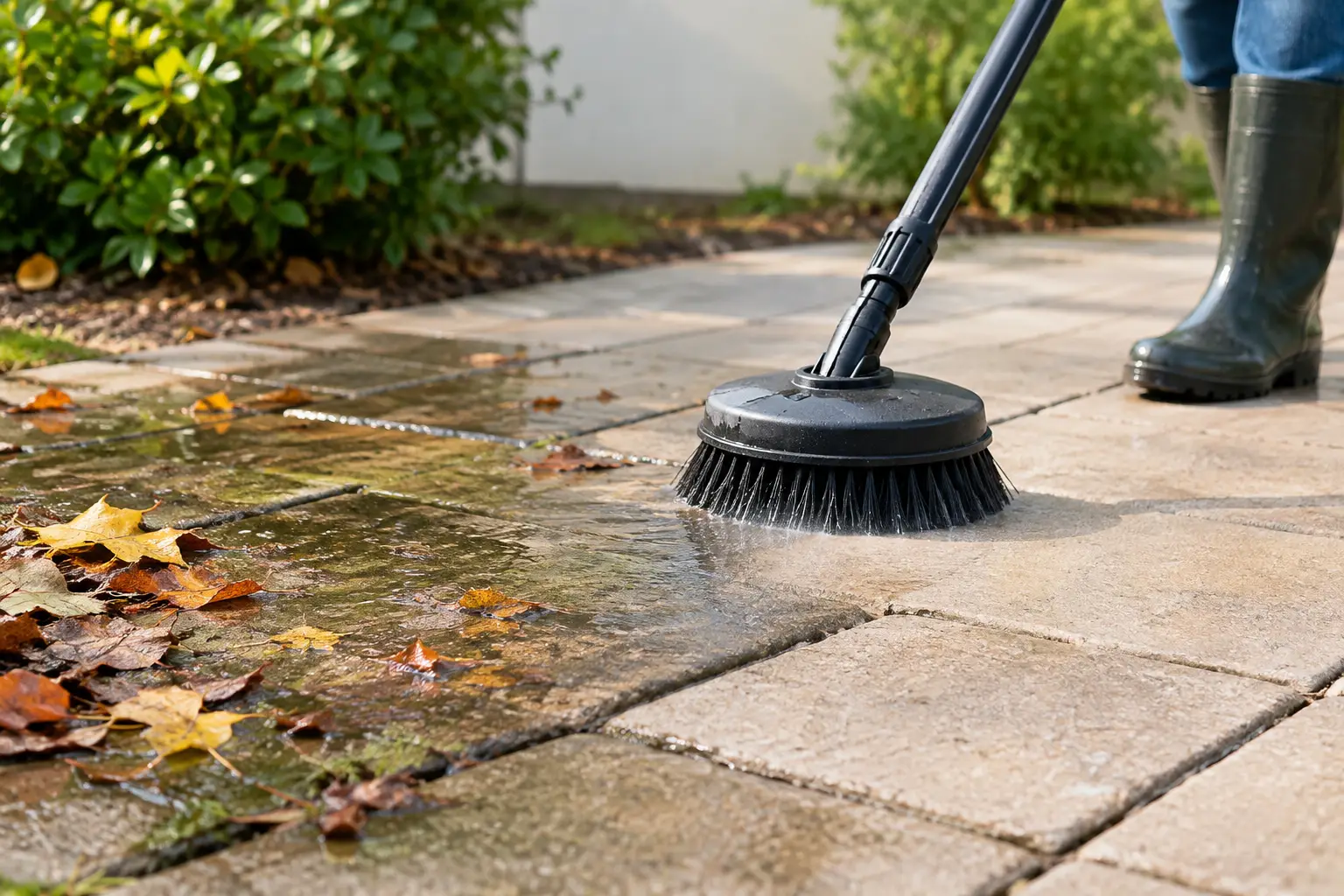
A layer of wet leaves can turn a clean driveway, patio or pool surround into a patchy brown mess surprisingly quickly. To remove leaf stains from paving properly, you need to treat the tannins left behind by decomposing leaves, not simply blast the surface with more pressure. The right approach restores the appearance of the paving while protecting its finish, joints and surrounding garden.
Leaf staining is particularly common across Southeast Queensland after storms, humid weather and periods when gutters, gardens and outdoor entertaining areas collect fallen foliage. Concrete, porous pavers and natural stone can all absorb colour from leaves, berries and seed pods. Acting early makes the job easier, but older stains can often be improved with the right treatment.
Why leaf stains can be hard to shift
Leaves contain natural tannins, the same compounds that can stain timber, fabric and outdoor furniture. When leaves sit on damp paving, those tannins leach into the surface. Porous materials such as unsealed concrete, sandstone, travertine and some clay pavers are more likely to hold the discolouration below the top layer.
A high-pressure cleaner may remove loose dirt and the remaining leaf material, but it does not always lift embedded tannin staining. Used too aggressively, it can also etch concrete, strip the face from pavers, damage soft stone or wash out jointing sand. This is why the strongest pressure setting is rarely the best answer.
The result depends on the surface, how long the stain has been there and whether the paving is sealed. A fresh mark on sealed concrete may come away with a mild clean. Deep brown stains on old, unsealed pavers may need a staged chemical treatment and controlled pressure cleaning.
Check the paving before you start
Before applying any cleaner, identify what you are working with. Standard concrete and many manufactured pavers are generally more tolerant than natural stone, but both can be damaged by unsuitable products. Sandstone, limestone, travertine, marble and coloured decorative concrete need particular care.
Look for signs of an existing sealer, such as water beading on the surface or a slight sheen. A stain may sit on top of a sealed surface, but harsh chemicals can dull, strip or patch the sealer. If you are unsure, test a small, inconspicuous area first and allow it to dry fully before treating the rest.
Also clear the surface thoroughly. Sweep away leaves, soil and mulch, then wet nearby plants and lawn before using any cleaning solution. Keep runoff away from garden beds, ponds and stormwater drains where possible. Good preparation reduces the chance of creating a second problem while fixing the first one.
How to remove leaf stains from paving at home
For light or recent leaf stains, start with the least aggressive method. Wet the paving, apply a surface-appropriate outdoor cleaner according to the product directions, and allow it to dwell for the recommended time. Do not let the solution dry on the surface, especially in direct Queensland sun.
Agitate the stained area with a stiff nylon broom or brush. Avoid wire brushes, which can leave metal marks or scratch softer stone. Rinse thoroughly with clean water and reassess once the area is dry. Wet paving often looks cleaner than it really is, so give it time before deciding whether another treatment is needed.
For a more stubborn stain on concrete or hard pavers, an oxygen-based cleaner may help break down organic staining without the harshness of some stronger products. Use it only where it is suitable for the material and follow the dilution and safety instructions exactly. More chemical does not necessarily mean a better result.
If pressure cleaning is needed, use a wide fan tip and keep the wand moving at a consistent distance. Start at low pressure and work up only if required. Concentrating a narrow jet in one spot can leave visible lines, roughen the surface or create a clean patch that does not match the surrounding paving. On pavers, take care not to disturb jointing sand.
Avoid common stain-removal mistakes
Bleach is often the first product people reach for, particularly when the paving also has mould or algae. It can brighten some surfaces, but it is not a universal leaf-stain solution. Strong bleach can affect plants, corrode nearby metal, alter coloured pavers and cause uneven results if applied without proper dilution and rinsing.
Acid cleaners are another risky shortcut. They may be used for specific mineral or concrete-related issues by trained operators, but they are not a general treatment for leaf tannins. Acid can permanently damage natural stone and may alter the finish of concrete or pavers. Never use an acidic product on limestone, marble, travertine or sandstone unless a stone-care professional has confirmed it is appropriate.
Do not mix cleaning chemicals. Combining products can create hazardous fumes or make the treatment less effective. Wear gloves, enclosed shoes and eye protection, keep children and pets clear, and read the product label from start to finish before use.
When professional cleaning is the safer option
Call in a professional if the stains cover a large driveway, courtyard, footpath or commercial entry, if they have been sitting for months, or if the surface is natural stone. It is also worth getting advice when you see uneven colour, previous pressure-cleaning marks, flaking sealer or persistent black mould and algae around the stained area.
Professional surface cleaning is not simply about having a bigger machine. It involves matching pressure, water flow, detergents and dwell time to the surface. Soft washing may be the better method for delicate finishes and surrounding building surfaces, while controlled pressure cleaning can lift built-up grime from more durable concrete. A good operator will test the surface, manage runoff and aim for an even finish rather than a quick strip-clean.
For strata properties, schools, shopping centres and commercial sites, this approach also helps manage presentation and slip risks without disrupting the area unnecessarily. Leaf-stained pathways often collect moisture, mould and organic residue at the same time. Treating the whole issue can make the surface cleaner, safer and more presentable for residents, customers, staff and visitors.
Boost Exterior Cleaning uses surface-safe methods to assess and treat stained paving across residential and commercial properties. The goal is a visible improvement without unnecessary damage to the paving, landscaping or adjacent finishes.
Prevent leaf stains from returning
The most effective prevention is simple: do not let wet leaves sit on the paving. Sweep or blow them away regularly during high-drop periods, especially after rain. Pay extra attention to shaded corners, along fences, below trees and around pool areas, where moisture lingers longer.
Trim overhanging branches where practical and keep gutters clear so organic debris is less likely to wash onto paths and driveways. For porous concrete, pavers and natural stone, a suitable sealer can reduce how readily tannins, dirt and moisture soak in. Sealing is not a licence to ignore spills and leaf build-up, but it can make routine cleaning faster and help preserve the surface over time.
Regular maintenance costs less than waiting for the paving to become heavily stained, slippery or uneven in colour. A quick sweep after a storm and a planned professional clean when needed will keep outdoor areas looking cared for, whether you are preparing a home for sale, managing a tenancy or maintaining a busy premises.


