

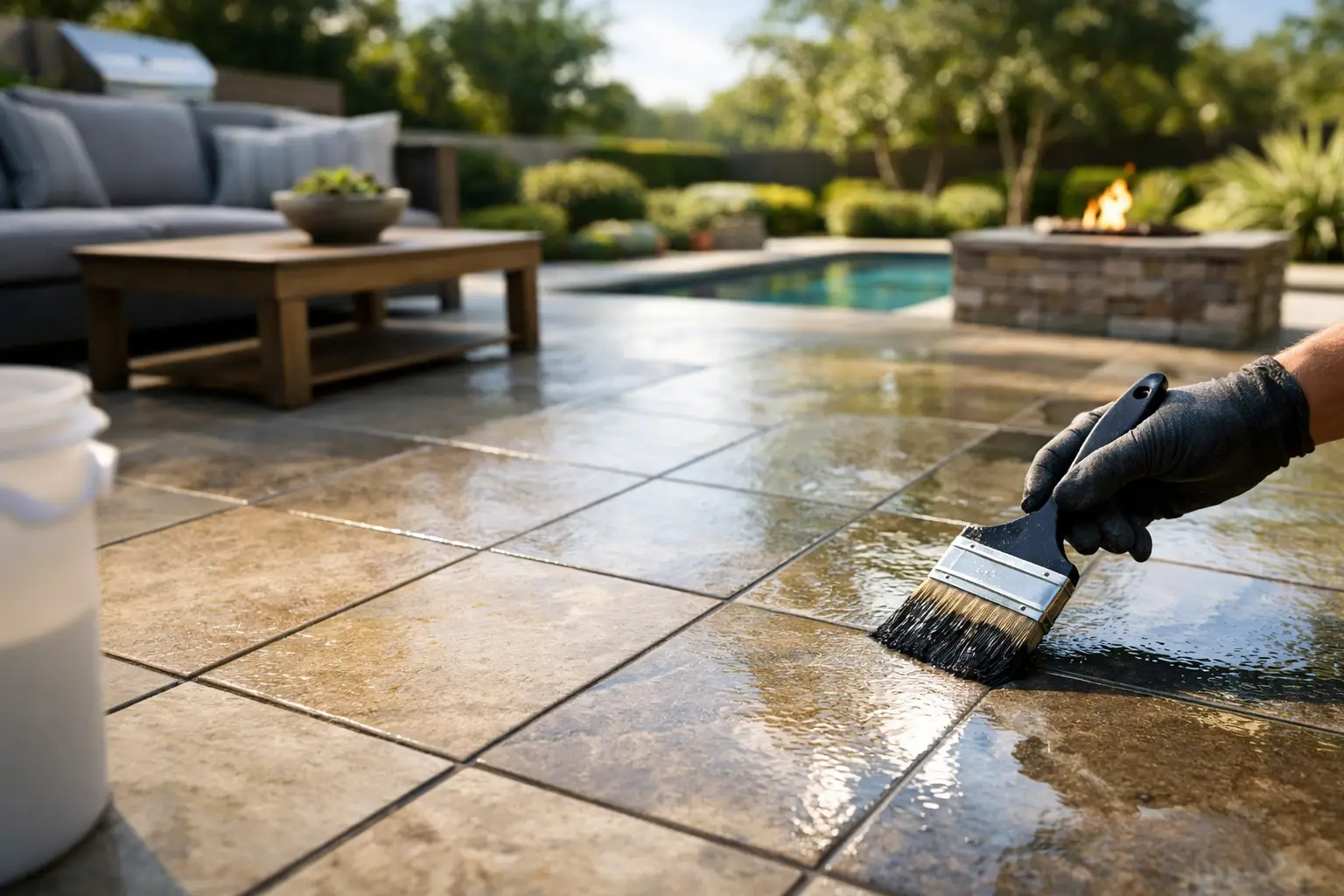
A clean outdoor tiled area can change the way a whole property looks. But after a Queensland wet season, porous tiles and grout can quickly hold moisture, algae, leaf tannins and grime. Tile sealing for outdoor areas gives patios, paths, courtyards and pool surrounds a protective barrier that makes ongoing maintenance easier and helps preserve the surface beneath.
Sealing is not a substitute for proper cleaning, and it is not right for every tile. The result depends on the tile material, the condition of the grout, drainage, shade and the type of sealer used. Done properly after thorough preparation, it is a practical way to protect an outdoor area that sees regular sun, rain and foot traffic.
Why outdoor tiles need more protection
Outdoor surfaces work harder than indoor floors. They are exposed to harsh UV, heavy rain, damp conditions, barbecue spills, pot-plant stains, pool water and windblown dirt. In Brisbane, Logan, the Gold Coast and the Sunshine Coast, humidity also creates ideal conditions for mould, mildew and algae growth.
Many outdoor tiles, natural stone products and cement-based grouts have small pores. These pores can absorb water and contaminants. Over time, this can leave dark patches, discolouration and stubborn stains that do not lift with a standard wash. Moisture moving through grout can also contribute to deterioration around joints and edges.
A suitable penetrating sealer reduces absorption without leaving the surface looking overly coated. This gives water, dirt and spills less opportunity to soak in, while still allowing the material to breathe where required. For property owners and managers, that usually means a cleaner presentation and less intensive maintenance over the life of the surface.
What tile sealing for outdoor areas can protect
The main benefit of sealing is prevention. It will not repair cracked tiles, loose grout or poor drainage, but it can reduce the day-to-day damage caused by exposure and use.
On a well-prepared surface, sealing may help limit staining from leaves, food, oil, rust marks, garden soil and general outdoor grime. It can also slow water absorption in porous tile and grout, making the area easier to clean before marks become embedded.
Pool surrounds are a common example. These areas are regularly wet and exposed to sunscreen, body oils, chlorine or salt residue, depending on the pool system. A correctly selected sealer can assist with cleanability while preserving the intended finish of the tile. It must not create a slippery film, especially around a pool.
For commercial properties, sealed outdoor tiles can support a more consistent appearance around entryways, common areas, alfresco dining spaces and amenities. That matters for tenancy presentation, visitor safety and routine maintenance planning.
Not every outdoor tile should be sealed the same way
The biggest mistake is treating every tiled surface as though it needs the same product and application method. Porcelain, ceramic, terracotta, quarry tile, travertine, sandstone and other natural stone surfaces all behave differently.
Dense glazed ceramic and porcelain tiles are generally far less absorbent than natural stone or unglazed clay tiles. In some cases, the tile face may not need sealing at all, while the grout lines still benefit from protection. Natural stone and porous tiles often require more careful product selection because the wrong sealer can alter the colour, leave a haze or trap moisture.
The finish also matters. A glossy or smooth surface, particularly near a swimming pool, needs a sealer that does not compromise slip resistance. If a surface is already slick due to algae, grease, drainage problems or worn texture, sealing alone will not solve the issue.
Before work begins, the surface should be assessed for porosity, existing coatings, staining, cracks, loose tiles and failed grout. This is where professional experience saves costly rework. The goal is not simply to apply a product. It is to select a treatment that suits the material and how the area is used.
Preparation determines the finish
Sealer can lock in what is already on the surface. If tiles are still carrying mould, mineral deposits, soap residue, old coating residue or embedded grime, those marks may remain visible after sealing. Proper cleaning is the foundation of a successful result.
A professional process usually starts with identifying the tile and the source of staining. The cleaning method should suit the material, rather than relying on maximum pressure. Delicate tiles, ageing grout and natural stone can be damaged by aggressive pressure cleaning or unsuitable chemicals.
The area is then cleaned with the appropriate treatment to remove organic growth and surface contaminants. Problem spots, such as rust stains or efflorescence, may need separate attention. Once the surface is clean, it must dry fully before sealing. Applying sealer to damp tiles or grout can affect penetration and performance.
Weather timing is part of the job too. Rain, high humidity and insufficient drying time can all affect the outcome. For this reason, sealing is best planned when there is a suitable weather window and the area can be kept clear while the product cures.
Signs your outdoor tiles may be ready for sealing
If water darkens the tile or grout quickly instead of beading on the surface, the existing protection may have worn away or the material may be unsealed. Repeated staining around pot plants, barbecue areas and garden edges is another useful indicator.
You may also notice that the area becomes difficult to clean soon after washing, particularly in shaded spots. This does not always mean sealing is the answer – drainage, overhanging vegetation and persistent moisture may need to be addressed first – but it is worth having the surface assessed.
How long does outdoor tile sealing last?
There is no single timeframe that applies to every property. A covered courtyard with light foot traffic will usually retain protection longer than an exposed pool deck or busy commercial entrance. Tile type, product quality, surface preparation, cleaning routines and local conditions all influence durability.
As a general guide, outdoor sealing should be viewed as ongoing property maintenance rather than a once-only treatment. High-traffic or heavily exposed areas may need inspection and reapplication sooner. Regular cleaning helps maximise the useful life of the sealer because dirt, algae and chemical residue are less likely to build up on the surface.
Avoid harsh acid cleaners, abrasive scrubbing and high-pressure cleaning at close range unless the surface has been assessed for it. These methods can damage grout, strip protective treatments or etch certain natural stone products. A surface-safe cleaning approach is often the better long-term choice.
Sealing, safety and drainage go together
A freshly sealed tile surface should look clean and well maintained, not unnaturally shiny or slippery. This is especially relevant around pools, stairs, entry paths and shared outdoor spaces where duty of care matters.
Good drainage is equally important. If water repeatedly sits on a tiled area, algae will return regardless of sealing. Blocked drains, incorrect falls, leaking irrigation and shaded corners can all create recurring maintenance problems. Addressing the moisture source will produce a better result than repeatedly treating the visible growth.
For body corporate managers, schools and commercial facilities, a planned approach is usually more cost-effective than waiting until surfaces become stained, slippery or visibly run-down. Routine cleaning, periodic inspections and targeted sealing can help protect presentation while reducing the risk of major restoration work later.
When professional sealing is worth it
DIY products can be suitable for a small, straightforward area when the tile type is known, the surface is clean and dry, and the manufacturer instructions are followed exactly. The risk rises with porous stone, large areas, pool surrounds, older grout, existing coatings or persistent staining.
Professional tile sealing is often worthwhile when the finish matters, when safety is a concern or when an incorrect product could be expensive to remove. The work involves more than applying sealer with a roller or sprayer. It requires matching cleaning methods, treatment products and application techniques to the surface in front of you.
At Boost Exterior Cleaning, the focus is on preparing exterior surfaces properly and using surface-appropriate methods that protect the material as well as improve its appearance. A clean, sealed outdoor tiled area is easier to maintain, more inviting to use and better placed to handle the next spell of wet weather.


