

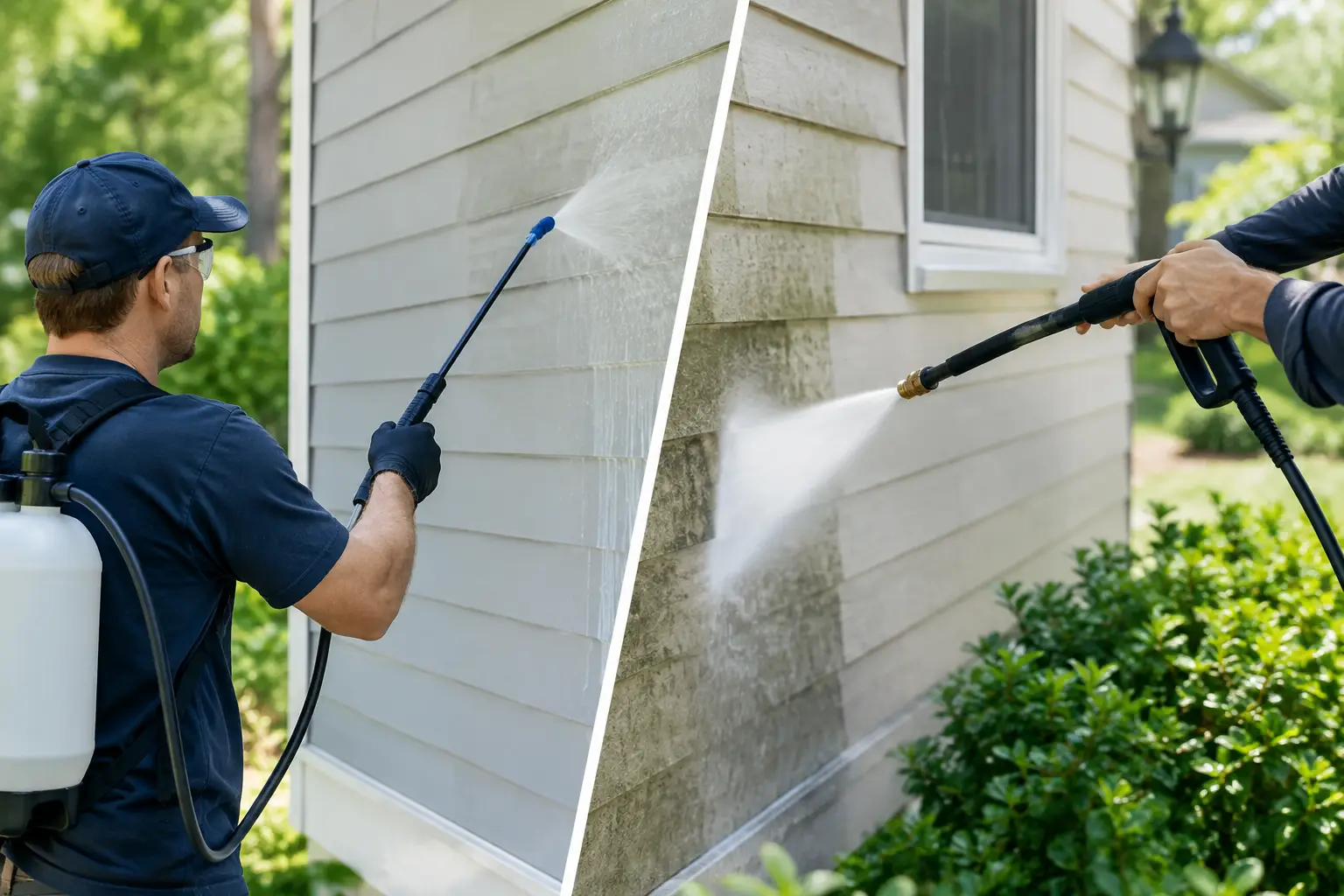
A driveway can look clean after a hard blast of water, yet green algae may return within weeks. Likewise, a house exterior may be covered in mould that should never be attacked with high pressure. That is why chemical treatment versus pressure washing is not a simple choice between two competing methods. The best result often comes from using the right treatment, pressure and technique for the surface in front of you.
For homes, strata properties, schools and commercial sites across South East Queensland, exterior cleaning needs to do more than create a quick visual change. It needs to remove grime safely, manage mould and algae, protect finishes, and help surfaces last longer in our humid, wet climate.
Chemical Treatment Versus Pressure Washing: The Main Difference
Pressure washing relies on water delivered at controlled force to lift and rinse away built-up dirt, loose contaminants, mud, tyre marks and surface grime. It is particularly effective on hard-wearing materials such as concrete driveways, paths, car parks and some paved areas. The key word is controlled. More pressure is not automatically better pressure.
Chemical treatment uses purpose-selected cleaning solutions to break down or kill organic growth, lift stains and loosen embedded contaminants before rinsing. In exterior cleaning, this is commonly used for mould, mildew, algae, lichen and atmospheric grime. When applied at the correct strength and allowed appropriate dwell time, a chemical treatment can clean areas that water pressure alone cannot properly address.
Soft washing combines this approach with low-pressure application and rinsing. It is often the safer choice for painted walls, rendered surfaces, roofing materials, cladding, eaves, fences, delicate stone and other areas where high pressure could cause damage.
The practical difference is this: pressure removes material from a surface, while treatment targets the cause of biological staining. On many properties, both have a role.
When Pressure Washing Is the Better Option
Pressure washing is a strong performer where there is a durable surface and a physical build-up that needs lifting. Concrete driveways, footpaths, loading areas, hardstand spaces and parking lots can collect compacted dirt, tyre residue, leaf tannins and general traffic grime. Proper pressure cleaning restores the colour and texture of these areas far more effectively than a garden hose.
It is also useful for rinsing surfaces after treatment. Once algae or mould has been treated, controlled pressure or a thorough low-pressure rinse can remove the remaining residue and leave a clean, even finish.
That said, the operator matters as much as the machine. Incorrect pressure, a poor nozzle choice or holding the wand too close can leave visible lines in concrete, etch soft stone, strip paint, disturb mortar and force water behind cladding or into gaps around windows. This is why professional cleaning starts with identifying the surface rather than simply selecting the highest setting.
Best uses for pressure cleaning
Pressure cleaning is generally well suited to concrete driveways, paths, car parks, pool surrounds, some pavers, tennis courts and commercial hard surfaces. It may also be used on tiles and other paved areas, but these need closer assessment because old grout, loose tiles, sealers and fragile edges can change the safest method.
For heavily soiled concrete, a surface cleaner can produce a more consistent result than a pressure wand alone. It helps avoid striping and provides an even clean across larger areas, which is particularly valuable for driveways and commercial premises where presentation matters.
When Chemical Treatment Is the Better Option
Green, black or red staining on walls, roofs, fences and shaded outdoor areas is often organic growth rather than ordinary dirt. If the underlying mould or algae is not treated, pressure washing may remove the visible layer without addressing what is attached to or growing within the surface. The area can then discolour again sooner than expected.
Chemical treatment is especially valuable for painted exteriors, render, weatherboards, cladding, eaves, soffits and other surfaces that can be damaged by aggressive water pressure. It works with the surface rather than relying on force to scour it clean.
In Queensland conditions, this matters. Warm weather, humidity, rain and shaded areas create ideal conditions for mould and algae. Homes near trees, waterways or the coast may see faster build-up, while commercial entries and school grounds can develop slippery growth where moisture sits for long periods.
A trained exterior cleaner assesses the contamination, surface material, surrounding vegetation and drainage before selecting a solution and dilution. The goal is enough cleaning power to deliver a visible result without unnecessarily putting paintwork, landscaping, pets or people at risk.
Soft washing protects vulnerable finishes
Soft washing is not a weaker version of pressure cleaning. It is a different method designed for different materials. The cleaning solution does much of the work, while low-pressure rinsing removes the loosened residue.
This makes it a practical option for older homes with ageing paintwork, rendered façades, decorative surfaces and exterior areas where water intrusion is a concern. It also suits building washing where a clean finish is required without the risk of pressure marks or paint damage.
The Trade-Offs Property Owners Should Know
There is no one-size-fits-all method. A pressure-only clean may look effective on day one but be less durable when organic growth is the main issue. On the other hand, chemical treatment alone may not remove thick mud, heavy soil, loose leaves or years of compacted grime from a hard concrete surface.
Cost should also be considered in terms of surface life, not just the initial clean. Repainting a damaged wall, repairing disturbed grout or replacing etched stone costs far more than choosing the appropriate cleaning method from the start. For strata managers and facility operators, the same principle applies across larger areas: a planned maintenance approach is generally easier to budget for than emergency restoration.
Environmental care is part of the assessment too. Responsible application includes managing runoff, protecting nearby gardens and avoiding unnecessary overspray. Conditions such as wind, rain, drainage points and proximity to pools or waterways affect how a job should be planned.
How Professionals Choose the Right Method
A proper inspection looks beyond the visible dirt. The cleaner should consider what the surface is made from, its age and condition, the type of staining, previous coatings or sealers, drainage and the risk of water entering adjacent areas.
For example, a concrete driveway with black traffic marks may benefit from targeted treatment followed by pressure cleaning. A painted rendered wall with mould staining is more likely to need soft washing. Natural stone requires extra care because some products and pressure levels can alter its finish. Pool areas need a method that improves cleanliness and safety without damaging surrounding materials.
Sealing can also be part of the longer-term plan. After suitable cleaning and drying, sealing concrete, tiles or natural stone may help reduce staining, simplify future maintenance and improve the appearance of the surface. It is not a replacement for cleaning, but it can protect the investment in a restored area.
Choosing a Cleaner for Homes and Commercial Sites
Ask how the contractor will clean each surface, not just whether they offer pressure washing. A reliable provider should be able to explain why a driveway is treated differently from a rendered wall, roof edge, pool surround or shopping centre entry.
For commercial properties, the cleaning plan should also account for public access, pedestrian safety, operating hours and the need to keep entrances, car parks and common areas presentable. Schools and body corporate sites benefit from scheduled maintenance that tackles slippery growth and visible staining before it becomes a larger issue.
Boost Exterior Cleaning uses the appropriate pressure and chemical treatment for the material being cleaned, whether the job is a house wash, driveway restoration, pool area clean or larger commercial site. The focus is on a result that looks sharp without taking shortcuts that can damage the property.
A cleaner exterior does more than lift street appeal. It helps protect the surfaces you already own, keeps outdoor areas more welcoming, and gives tenants, visitors and buyers a better first impression. When mould, algae or grime starts to build up, choosing the method that suits the surface is the smart place to start.


